2026-05-29
Content
The service life of composite siding cladding typically ranges from 25 to 50 years, with premium co-extrusion and high-performance WPC products in well-maintained installations frequently exceeding this range. Most reputable manufacturers back their composite cladding products with warranties of 15 to 25 years covering structural integrity, resistance to rot and insect damage, and significant color fade — a level of warranty coverage that reflects genuine confidence in product longevity that no natural wood cladding manufacturer can match.
This service life advantage over competing materials is not incidental — it is the result of deliberate engineering. Composite siding is specifically designed to resist the moisture ingress, UV degradation, biological attack, and mechanical wear that are the primary causes of premature cladding failure in natural wood, vinyl, and unprotected fiber cement. Understanding what drives this longevity, and what factors can extend or shorten it, helps building owners make informed decisions about installation, maintenance, and product selection.
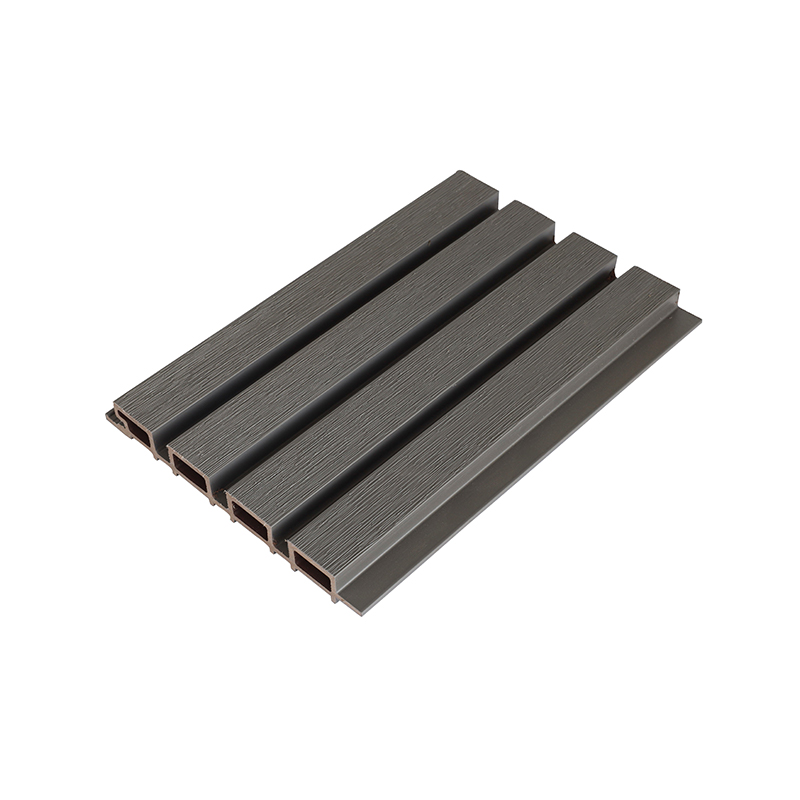
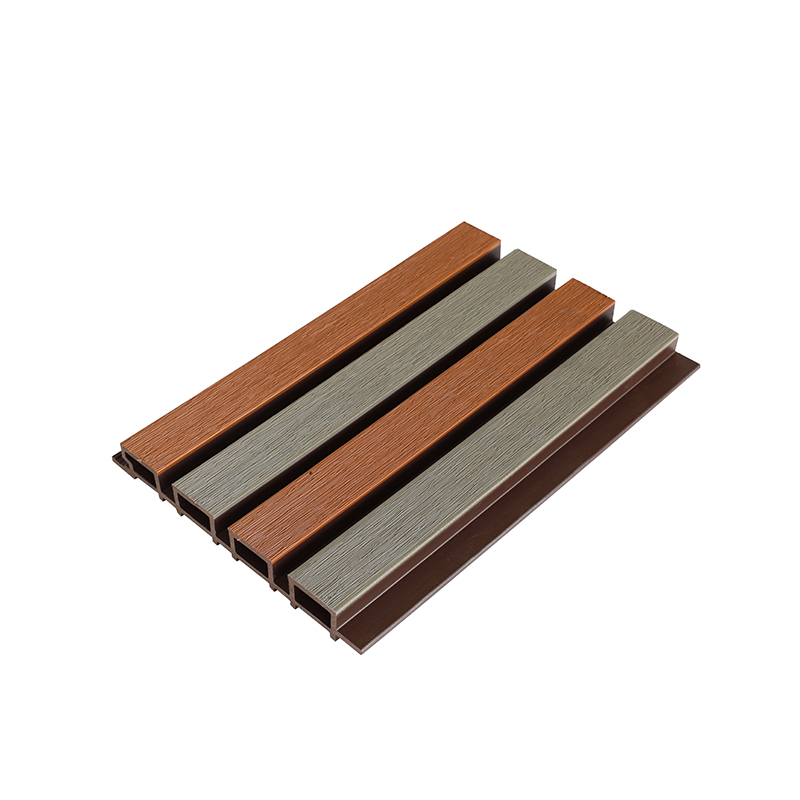
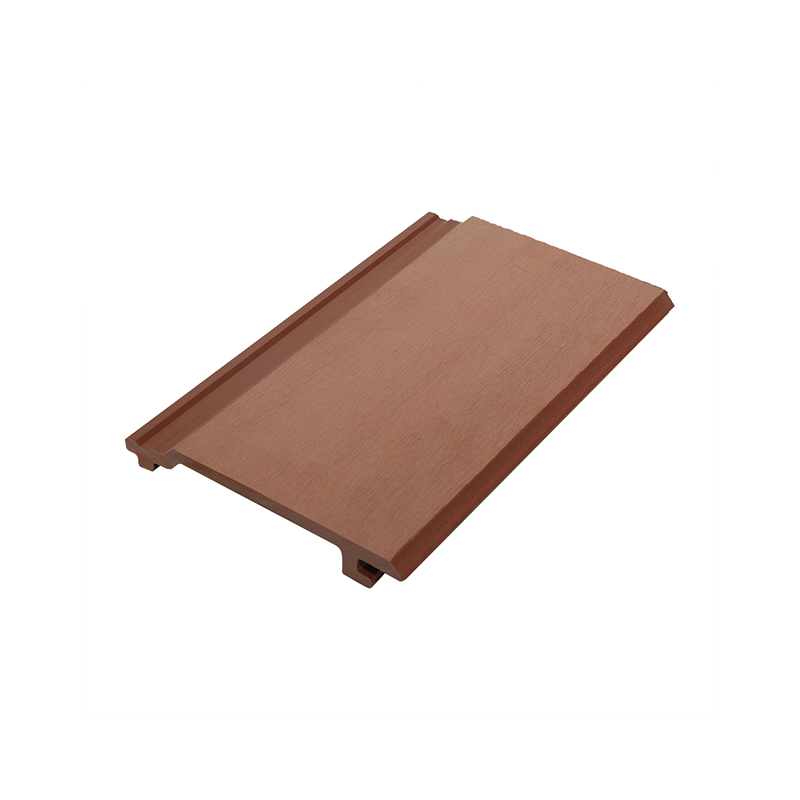
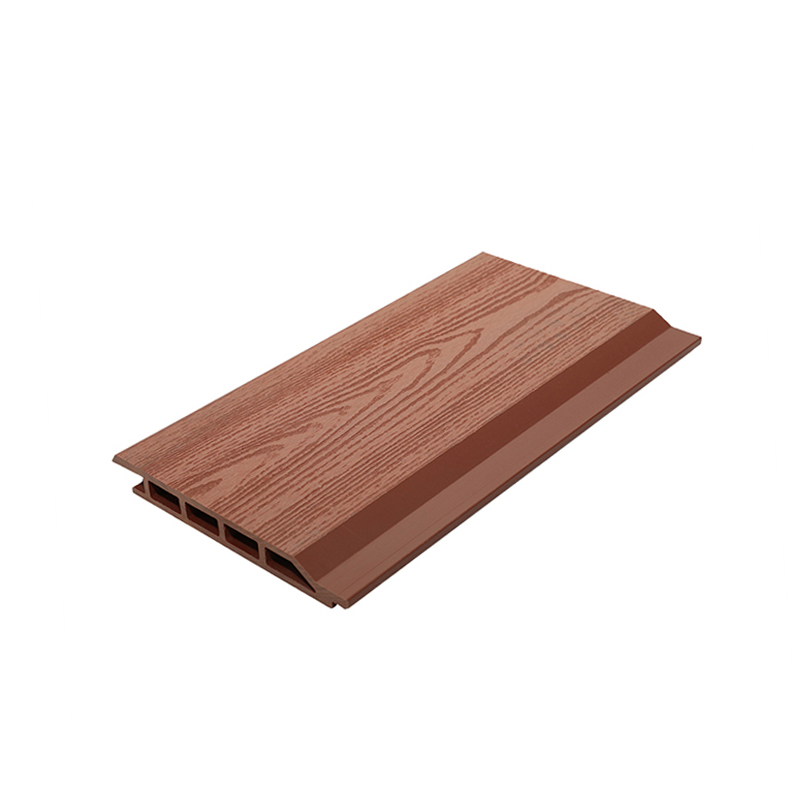
Composite siding cladding encompasses three distinct engineered panel types — WPC wall cladding, 3D embossed cladding, and co-extrusion cladding — each with different compositions and, consequently, different expected service lives under typical outdoor conditions.
Standard WPC (Wood-Plastic Composite) wall cladding, which combines 50% to 70% wood fiber with thermoplastic polymer (typically polyethylene or polypropylene), delivers a service life of approximately 25 to 35 years under normal residential and light commercial conditions. This life expectancy assumes correct installation with adequate ventilation behind the panels, appropriate gap allowances for thermal expansion, and basic maintenance (annual washing). WPC cladding with a higher polymer-to-wood ratio — reducing the wood fiber exposure at the surface — will typically perform toward the upper end of this range.
3D embossed composite cladding uses compression molding or hot-press technology to create deeply textured surface finishes that replicate specific timber species. When the embossed surface incorporates a UV-stabilized outer layer — as it does in quality manufacturing — this type achieves a service life of 25 to 40 years. The deep surface texture can trap moisture and debris in the relief channels if not periodically cleaned, making annual maintenance slightly more important for this type than for smooth-profile WPC panels. Products where the embossed texture extends through a co-extruded outer layer perform at the longer end of the service life range.
Co-extrusion cladding — manufactured by simultaneously extruding a structural composite core with a hard, UV-resistant outer shell of ASA (acrylic styrene acrylonitrile) or HDPE polymer — represents the longest-lived category of composite cladding. The solid outer shell creates a virtually impermeable barrier between the environment and the core material, providing exceptional resistance to UV radiation, surface abrasion, moisture penetration, and chemical attack. Premium co-extruded composite cladding products are rated for service lives of 30 to 50 years or more, with some manufacturers offering 25-year product warranties backed by accelerated weathering test data showing minimal degradation equivalent to 50+ years of real-world exposure. This type is the preferred specification for commercial facades, buildings in extreme climate zones, and any application where maximum longevity and minimum lifecycle cost are the primary design criteria.
| Cladding Type | Typical Service Life | Manufacturer Warranty (Typical) | Key Longevity Driver |
|---|---|---|---|
| WPC Wall Cladding | 25–35 years | 10–15 years | Polymer matrix moisture barrier |
| 3D Embossed Cladding | 25–40 years | 10–20 years | UV-stabilized outer surface layer |
| Co-Extrusion Cladding | 30–50+ years | 15–25 years | Solid ASA/HDPE impermeable outer shell |
The exceptional service life of composite siding cladding compared to natural wood and other organic building materials is not simply a marketing claim — it results from specific engineering decisions made at the material composition level that address the known failure mechanisms of traditional cladding.
Water is the primary enemy of natural wood cladding, driving rot, dimensional instability, paint delamination, and ultimately structural failure. The polymer matrix in composite cladding encapsulates the wood fiber content, creating a hydrophobic barrier around every fiber. Quality composite cladding absorbs less than 1% moisture by weight after 24 hours of submersion — compared to 20–40% for untreated softwood. This near-zero moisture absorption eliminates the wet-dry cycling that causes wood to crack, check, and ultimately decay, and prevents the freeze-thaw damage that progressively destroys moisture-laden materials in cold climates.
Ultraviolet radiation from the sun breaks down organic polymer chains and bleaches natural pigments, causing surface chalking, color fading, and eventual surface embrittlement. Natural wood cladding grays and checks within 1 to 3 years of unprotected UV exposure; painted wood surfaces require recoating every 3 to 7 years as the UV degrades the paint film from above.
Composite cladding incorporates UV stabilizer packages — typically hindered amine light stabilizers (HALS) and UV absorbers — throughout its outer layer or co-extruded shell. These additives interrupt the photochemical degradation chain reaction, absorbing UV energy and converting it to heat rather than allowing it to drive polymer chain scission. Accelerated weathering tests performed to ASTM G154 or ISO 4892 standards demonstrate that quality composite cladding retains more than 80 to 85% of its original color value and surface integrity after weathering equivalent to 25 or more years of real-world UV exposure.
Natural wood is degraded by three biological agents: wood-decay fungi (causing rot), wood-boring insects (termites, carpenter ants, woodworm), and surface mold and algae. All three require access to the cellulose and lignin in the wood fiber as a food and growth substrate. In composite cladding, the wood fiber is fully encapsulated within polymer that wood-destroying fungi cannot penetrate and that wood-boring insects cannot digest. The polymer surface does not support the sustained biological colonization that causes natural wood to fail biologically — providing permanent resistance without chemical preservative treatment.
Natural wood expands and contracts significantly with changes in moisture content — tangential movement of 1 to 3% of panel width per 4% change in equilibrium moisture content is typical for softwoods. This cyclic movement stresses paint films, opens joints, works fasteners loose, and eventually causes boards to cup, bow, or split. Composite cladding's much lower moisture absorption means its dimensional movement is correspondingly lower — most composite panels exhibit linear thermal expansion of approximately 2 to 3.5 mm per meter per 50°C temperature change, which is accommodated by correctly designed expansion gaps at panel ends and fixings. This reduced dimensional cycling dramatically reduces mechanical fatigue in the panel material and the supporting structure over a multi-decade service life.
While composite cladding is engineered for longevity, the actual service life achieved on a specific building is not solely a function of the panel material — it is influenced by installation quality, climatic conditions, maintenance practice, and product specification. Understanding these variables helps building owners maximize the service life of their investment.
Poor installation is the most common cause of premature composite cladding failure — more so than material quality. Critical installation factors that determine service life include:
The climate in which composite cladding is installed significantly influences its achieved service life relative to its design life:
Not all composite cladding products are engineered to the same standard, and the difference in service life between budget and premium products can be substantial. Key product quality indicators that correlate with service life include:
Composite siding cladding requires far less maintenance than natural wood, but the maintenance it does require has a meaningful impact on achieved service life — particularly on the surface appearance quality that determines when the cladding is visually considered to have reached end of life even if structural integrity remains.
Washing composite cladding with a garden hose or low-pressure washer (maximum 1,400 psi / 100 bar at 300 mm distance) once per year removes the accumulation of airborne pollutants, pollen, dirt, and early biological surface colonization that, if left uncleaned, can gradually degrade surface appearance and accelerate biological growth. Annual washing is the single highest-return maintenance action for composite cladding — requiring only 1 to 2 hours per 100 m² of facade area and cost of materials approaching zero. Buildings in industrial zones, near roads, or in high-pollen environments benefit from washing twice per year.
In high-humidity environments, north-facing elevations, or areas shaded by trees or adjacent structures, composite cladding may develop surface biological growth — green algae staining, black mold patches, or lichen — that does not penetrate the material but affects appearance and, if persistent, can slightly accelerate surface degradation. A dilute sodium hypochlorite (bleach) solution (1:20 with water) or a specialist composite cleaner applied by brush or low-pressure sprayer and rinsed after 10 to 15 minutes removes most biological surface deposits effectively. This treatment is typically needed every 2 to 5 years depending on exposure conditions — far less frequently than the repainting required for natural wood.
Leaves, plant debris, and soil accumulation in horizontal ledges, panel joints, and at the base of cladding installations create persistent moisture-retaining environments that accelerate biological growth and, in extreme cases, can contribute to localized surface degradation. Clearing debris from cladding profiles, checking that drainage channels in panel systems are unblocked, and ensuring that climbing plants do not grow directly on composite cladding surfaces all contribute to maintaining optimal drying conditions that protect service life.
An annual visual inspection — conducted at the same time as the annual wash — allows early identification of any mechanical damage (impact damage, cracking, loose fixings), sealant deterioration at panel joints and penetrations, and areas of abnormal biological growth that might indicate a ventilation or drainage problem. Addressing these issues promptly — replacing damaged panels, re-sealing compromised joints, and correcting drainage problems — prevents small issues from becoming failures that compromise the structural or moisture-protection performance of the whole facade system.
The service life advantage of composite siding is most clearly understood by comparison with the materials it most frequently competes with in building specification decisions.
| Cladding Material | Typical Service Life | Primary Failure Mechanism | Maintenance Frequency | Repainting Required |
|---|---|---|---|---|
| Composite (WPC) | 25–35 years | UV surface fading over long term | Annual wash only | Never |
| Composite (Co-Extrusion) | 30–50+ years | Minimal under normal conditions | Annual wash only | Never |
| Natural Softwood (pine, spruce) | 10–20 years | Rot, insect attack, paint failure | High — annual inspection, treatment | Every 3–7 years |
| Natural Hardwood (oak, teak) | 20–40 years | Surface checking, color change | Moderate — oiling/staining every 2–5 years | Every 5–10 years |
| Vinyl / PVC Cladding | 15–25 years | UV brittleness, color fading, impact cracking | Low — occasional washing | Not possible (color change only) |
| Fiber Cement Cladding | 25–50 years | Paint failure, edge moisture absorption | Moderate — repainting required | Every 8–12 years |
| Brick / Masonry Cladding | 50–100+ years | Mortar joint degradation, freeze-thaw spalling | Low — periodic repointing | None required |
This comparison illustrates the unique position composite siding occupies: it delivers service lives competitive with or exceeding fiber cement and natural hardwood, while requiring far less maintenance than either, at a lower weight and installation complexity than masonry, and with a much more natural and aesthetically versatile appearance than vinyl. The combination of competitive service life with minimal maintenance is what makes composite cladding the fastest-growing cladding material category globally.
Understanding when composite cladding is genuinely approaching functional end of life — as opposed to simply requiring cleaning — helps building owners plan replacement or renovation at the appropriate time rather than prematurely or too late. The following are the progression of degradation indicators from minor to significant:
Building owners who follow a structured approach to specification, installation, and maintenance can expect to achieve — and in many cases exceed — the stated service life of their composite siding cladding. The following practical guidelines consolidate the most impactful actions at each stage of the product lifecycle.
The service life of a cladding material is not just a technical specification — it is the primary driver of the material's total economic value to a building owner over the full ownership period. The longer the service life, the more the initial capital cost is amortized across years of service, and the fewer replacement cycles (each incurring full material and labor costs) the building owner must fund.
Consider a residential building with 150 m² of cladded facade area. Using indicative figures:
When the avoided replacement and maintenance costs are incorporated into the total cost calculation, composite siding's higher initial investment is typically recovered within 10 to 15 years of installation compared to natural wood, and within 15 to 20 years compared to vinyl. Beyond that payback point, every additional year of composite service life represents pure cost advantage over the alternative that would have required replacement or repainting by that time.



 English
 Français
 Español
 Deutsch