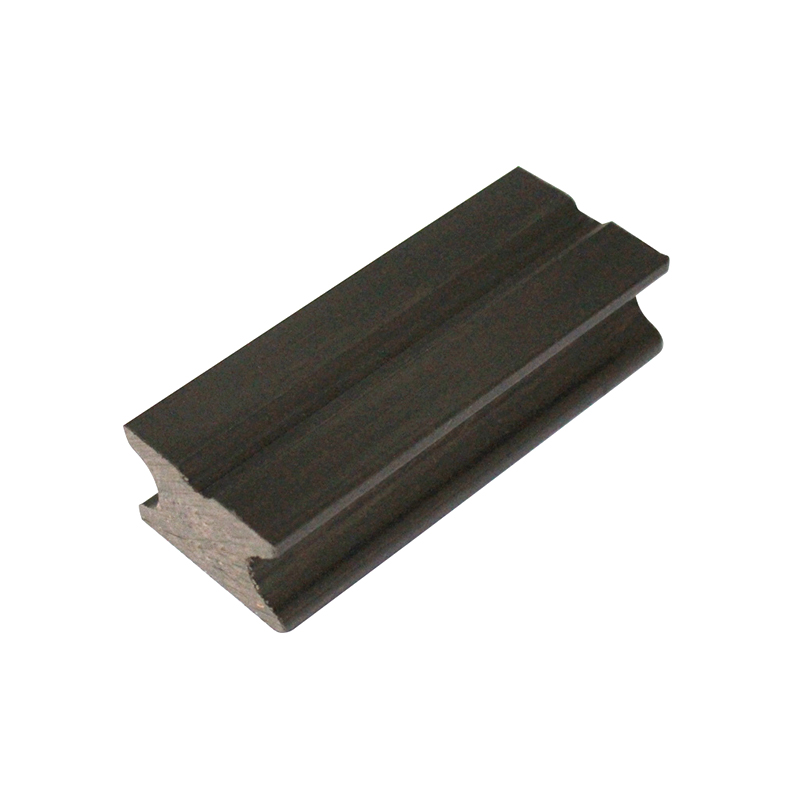
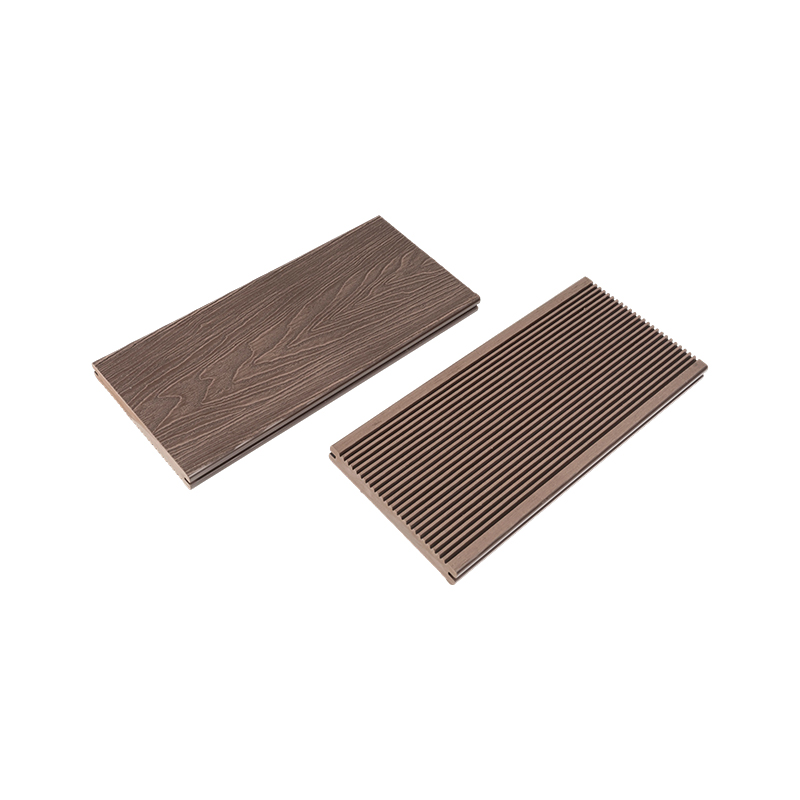
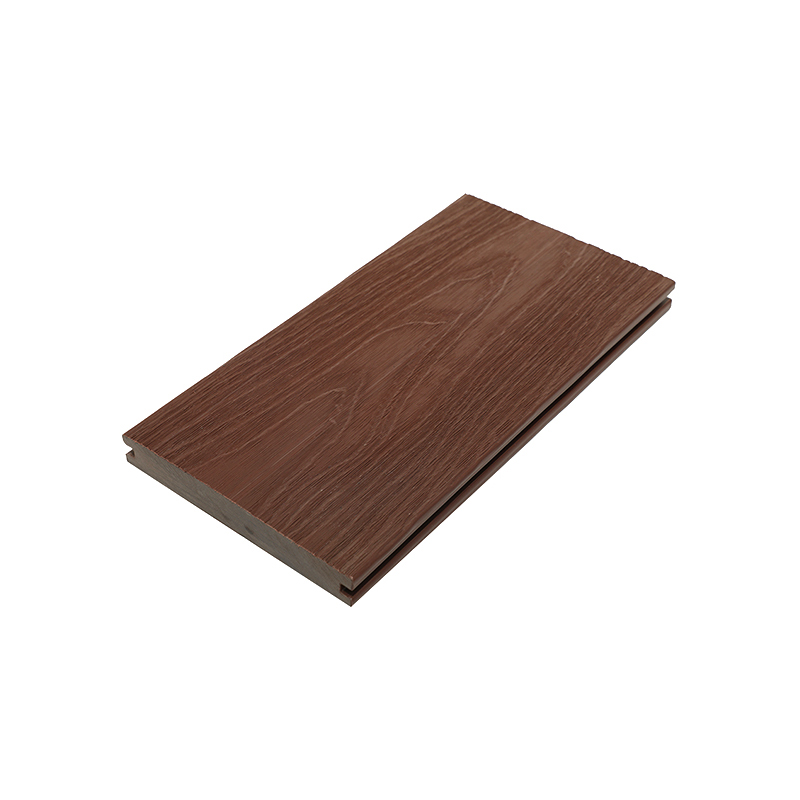
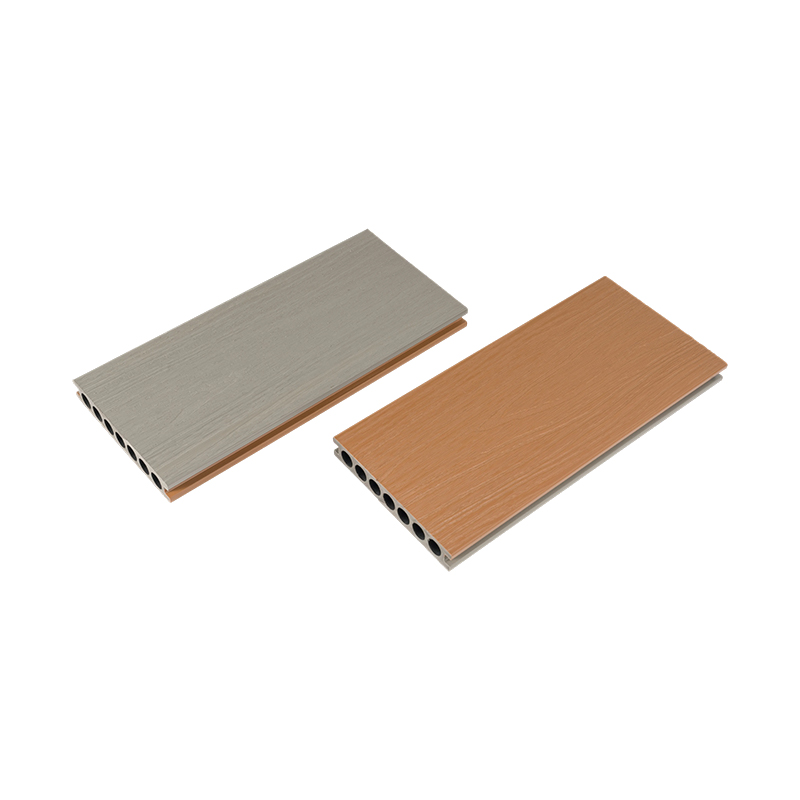
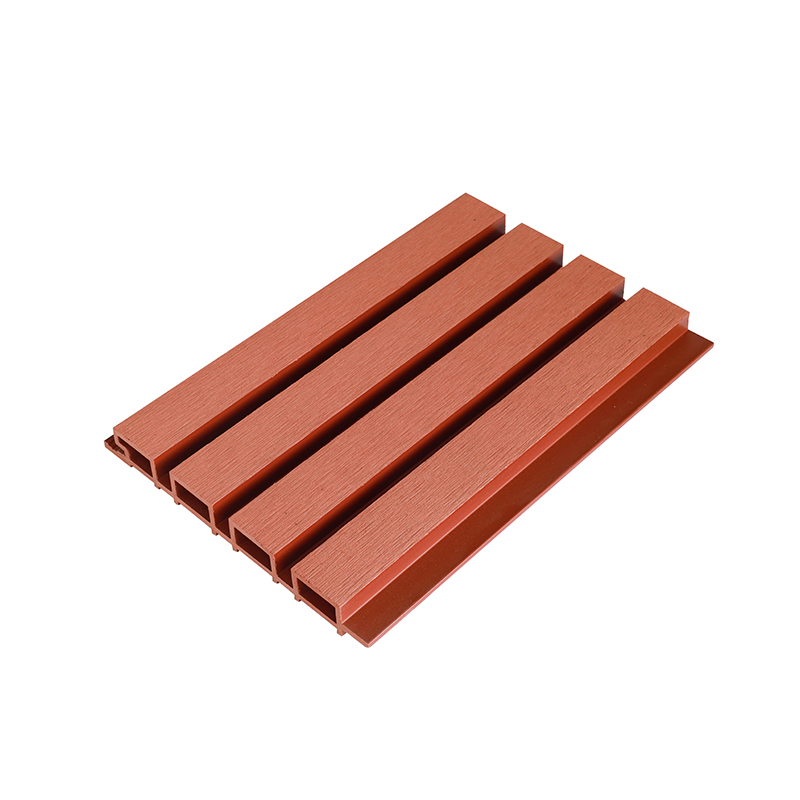
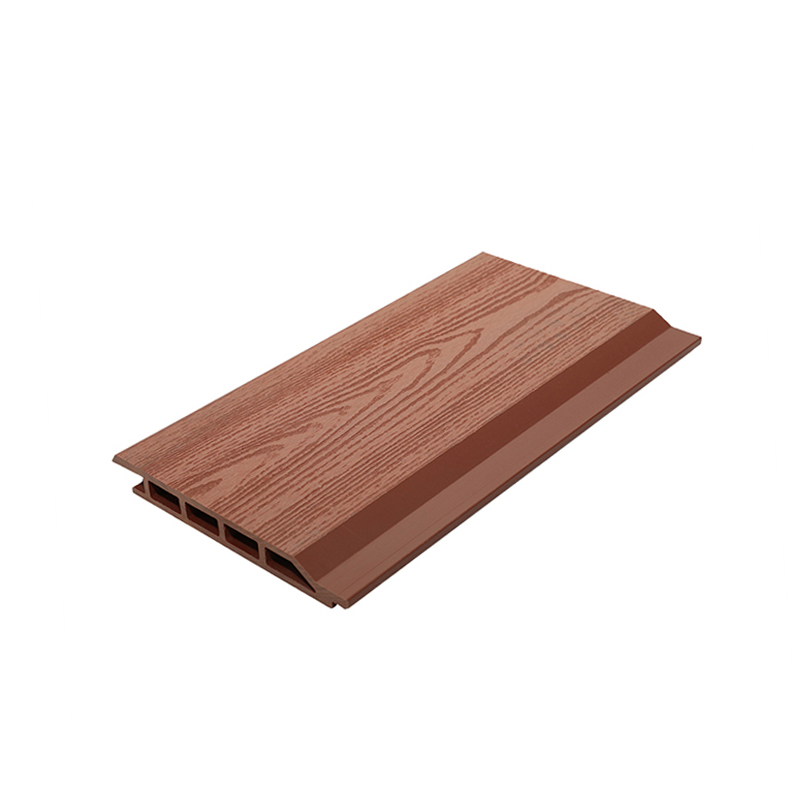
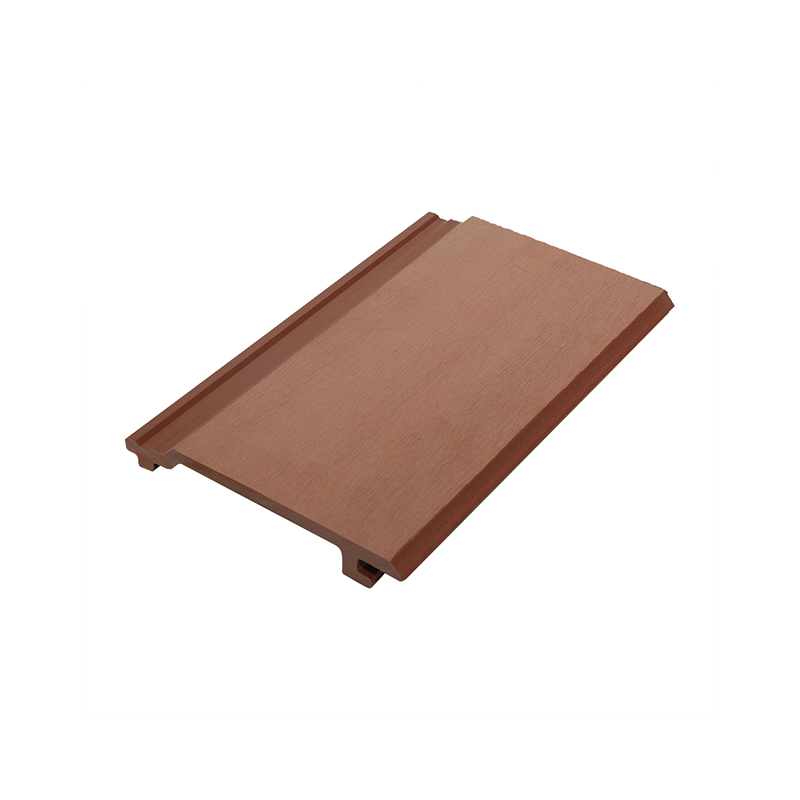
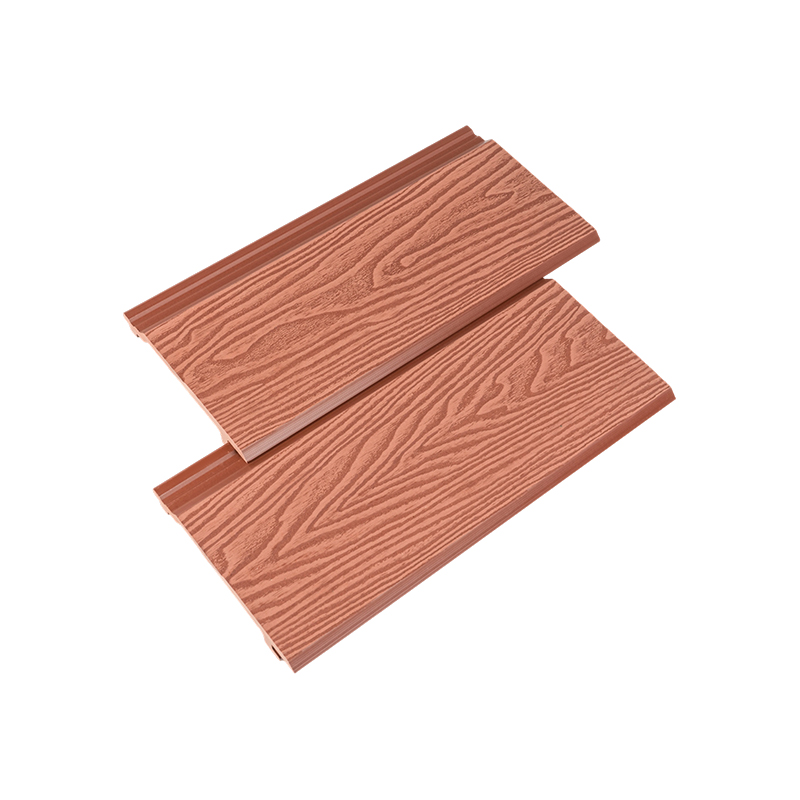
A WPC joist is a horizontal structural member that runs between primary supports — such as beams, walls, or posts — to carry and distribute the load of a floor, deck, ceiling, or wall panel system. In decking and cladding construction, joists form the secondary framing layer: they sit above the main support structure and directly below the finished surface material, transferring all live and dead loads downward into the primary frame and then into the ground or building structure.
The joist achieves this load distribution through its depth-to-width ratio. A joist oriented with its greater dimension vertical resists bending far more effectively than the same material laid flat — this is why standard deck joists are installed on edge. The deeper the joist, the greater its resistance to mid-span deflection under load, which is why joist depth is the single most important dimension when specifying a subframe for any flooring or decking application.
Quick-Connect Design Features
Modern joists — particularly WPC and extruded aluminium profiles — are manufactured with integrated grooves, channels, or protrusions along their length. These features serve multiple functions simultaneously: they provide a mechanical registration point for decking clips and board edges, ensure consistent spacing between framing members during installation, and in some systems allow adjacent joists to interlock for added lateral rigidity. This quick-connect geometry reduces installation time by 20–30% compared to traditional timber framing that requires manual marking and drilling at every fixing point.
Joist Materials Compared: Wood, WPC, and Metal
The three dominant joist materials each offer a distinct combination of structural performance, environmental resistance, cost, and sustainability credentials. Selecting the right material for the specific application and environment is one of the most consequential decisions in any decking or flooring project.
Solid Wood Joists
Solid wood WPC joists are the traditional choice for residential subframes and remain widely used due to their low cost, ease of cutting on site, and high availability. Structural softwood species such as pine and spruce are the most common, typically supplied pressure-treated with preservative to achieve hazard class ratings suitable for ground-contact or above-ground outdoor use. A well-specified treated timber joist in a ventilated above-ground application can provide a service life of 15–25 years. However, even treated timber is vulnerable to prolonged moisture exposure, poor ventilation, and insect attack — conditions that can reduce this lifespan significantly in poorly designed subframes.
WPC (Wood Plastic Composite) Joists
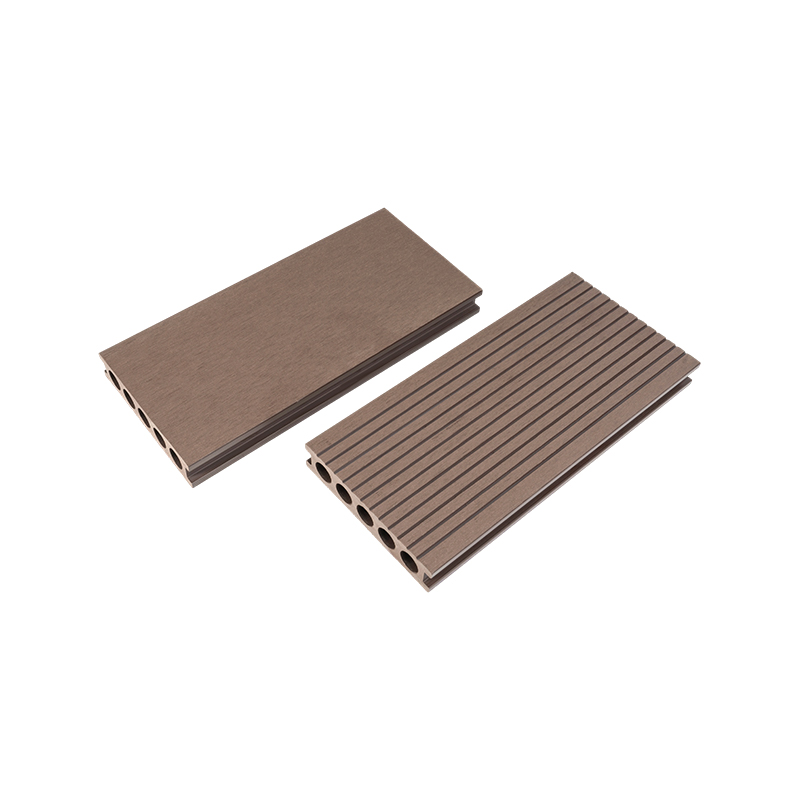
WPC joists are manufactured by extruding a blend of wood fibre and thermoplastic polymer — typically polyethylene or polypropylene — into a hollow or solid profile. The result is a joist that combines the workability and thermal comfort of wood with the moisture resistance, dimensional stability, and corrosion immunity of plastic. WPC joists do not rot, swell, splinter, or require chemical preservative treatment, making them the preferred choice for outdoor decking, wet-area flooring, and rooftop installations where long-term moisture exposure is unavoidable. Expected service life for quality WPC joists in outdoor applications exceeds 25–30 years with minimal maintenance.
Metal Joists: Aluminium and Galvanised Steel
Aluminium joists offer the highest strength-to-weight ratio of any common joist material and are entirely immune to corrosion in outdoor environments — including coastal locations with salt air exposure. Hollow aluminium extrusions are lightweight enough to be handled by a single installer yet rigid enough to span up to 1,200 mm between support points without significant deflection under standard residential loads. Galvanised steel joists provide even higher load capacity and are used in commercial and industrial applications where span lengths or imposed loads exceed the practical range of aluminium or WPC profiles. Both metal types have service lives exceeding 40 years in well-designed installations.
Comparison of common joist materials across key performance and practical criteria
| Criteria |
Solid Wood |
WPC |
Aluminium |
Galvanised Steel |
| Typical service life |
15–25 years |
25–30 years |
40+ years |
40+ years |
| Moisture resistance |
Moderate (treated) |
Excellent |
Excellent |
Good (coating dependent) |
| Weight |
Medium |
Medium |
Light |
Heavy |
| On-site workability |
Excellent |
Good |
Good |
Moderate |
| Relative material cost |
Low |
Medium |
Medium–High |
Medium |
| Environmental profile |
Renewable (certified) |
Recyclable, low-emission |
Fully recyclable |
Recyclable |
| Best application |
Budget residential |
Outdoor / rooftop decks |
Coastal / commercial |
Heavy-load commercial |
Joist Spacing: The Critical Dimension That Determines Deck Performance
Joist spacing — the centre-to-centre distance between adjacent parallel joists — directly controls how much unsupported span each deck board must bridge. Getting this dimension right is fundamental to a deck that feels solid underfoot, does not deflect visibly under load, and does not develop board sag over time.
Standard Spacing Guidelines for Composite Decking
For most composite and WPC deck boards installed perpendicular to the joists, a joist spacing of 400 mm centre-to-centre is the standard specification. This spacing satisfies the span rating of most 140–150 mm wide composite boards under typical residential live loads of 1.5–2.0 kPa. For board ends and any point where two boards butt-join mid-span, the joist below must be doubled up — two joists side by side — to provide full bearing for both terminating board ends simultaneously.
Reducing Spacing for Diagonal Installations
When deck boards are installed at 45° to the joist direction, the effective span of each board between supports increases by a factor of approximately 1.41 (√2). To maintain equivalent structural performance, joist spacing must be reduced from 400 mm to 300 mm centre-to-centre for diagonal composite board installations. Failing to reduce joist spacing for diagonal layouts is one of the most frequently observed subframe specification errors, resulting in noticeable board deflection and a surface that feels soft or springy underfoot.
Spacing for Wall Panel and Ceiling Applications
For wall cladding and ceiling applications, joist spacing is governed by the panel width and the fixing requirements of the cladding system rather than deflection under live load. Typical horizontal batten (joist) spacing for WPC wall cladding is 300–400 mm vertically, ensuring that each cladding board is supported at a minimum of three points along its length — a condition that prevents board bowing and ensures consistent clip or screw engagement at every support point.
WPC Joists and Green Building: Environmental Advantages
The shift toward green building materials has placed WPC joists at the centre of sustainable construction practice. Their environmental credentials are significant across the full material lifecycle — from raw material sourcing through to end-of-life disposal.
- Recycled content: The wood fibre component of WPC joists is typically sourced from post-industrial sawmill residues or reclaimed timber, diverting material from landfill. The plastic matrix frequently incorporates recycled polyethylene or polypropylene recovered from consumer packaging streams.
- No chemical preservatives: Unlike pressure-treated timber, WPC joists require no chromated copper arsenate (CCA), creosote, or other preservative chemicals to achieve outdoor durability. This eliminates the risk of preservative leaching into soil and groundwater around the installation.
- Low VOC emissions: Quality WPC joists comply with low-emission standards for formaldehyde and other volatile organic compounds, supporting healthy indoor air quality in interior flooring and wall applications.
- End-of-life recyclability: At the end of their service life, WPC joists can be re-granulated and reprocessed into new WPC products, making them part of a closed-loop material cycle — a key criterion for green building rating schemes including LEED and BREEAM.
- Reduced replacement frequency: The extended service life of WPC compared to untreated timber means fewer replacement cycles over a building's lifespan, reducing the total embodied carbon associated with subframe materials over time.
Joist Sizing: How to Select the Right Dimensions
Joist dimensions — depth, width, and wall thickness for hollow profiles — must be matched to the span between supports and the expected load. Under-sized joists produce a deck that deflects excessively; over-sized WPC joists waste material and add unnecessary weight to the structure.
Common Joist Profiles for Decking Applications
Typical joist cross-section dimensions and recommended maximum spans for residential decking
| Profile (W × D mm) |
Material |
Max Span (400 mm spacing) |
Typical Use |
| 38 × 90 mm |
Treated timber |
Up to 1,000 mm |
Residential ground-level deck |
| 40 × 60 mm |
WPC |
Up to 800 mm |
Rooftop / balcony decking |
| 50 × 50 mm hollow |
Aluminium |
Up to 1,200 mm |
Coastal / commercial deck |
| 60 × 40 mm |
WPC |
Up to 1,000 mm |
Wall cladding batten / ceiling |
| 75 × 50 mm |
Galvanised steel |
Up to 1,500 mm |
Heavy-load commercial deck |
These figures are indicative for standard residential live loads of 1.5–2.0 kPa. For commercial applications, areas subject to vehicle access, or spans significantly exceeding the values above, a structural engineer should verify the joist specification before installation proceeds.
Applications of Joists Across Flooring, Wall, and Ceiling Systems
While joists are most commonly associated with deck subframes, their structural and levelling functions make them essential across a wide range of interior and exterior surface installations.
Flooring and Decking Subframes
In both indoor flooring and outdoor decking, joists create the primary surface to which boards are fixed. They transfer vertical loads from the walking surface into the supporting structure below and, when correctly levelled, ensure the finished floor is flat to the tolerance required — typically ±3 mm over any 3 m span for quality composite decking installations. In raised-floor applications, joists may be supported on adjustable pedestals to achieve level surfaces over sloped or uneven substrates.
Wall Panel and Cladding Battens
Installed horizontally across a wall surface, WPC joists function as battens that create a ventilated cavity between the structural wall and the cladding panels. This cavity is critical for moisture management in exterior wall systems: it allows any water that penetrates behind the cladding to drain downward and escape at the base rather than being trapped against the structure. For WPC wall cladding, a minimum 20 mm cavity depth is recommended to provide adequate ventilation and prevent moisture accumulation.
Ceiling Grid Systems
In ceiling applications, joists or furring strips are fixed perpendicular to the primary ceiling structure to provide a flat, level fixing surface for ceiling panels or boards. WPC and aluminium profiles are increasingly preferred over timber in this application due to their dimensional stability — timber ceiling battens in high-humidity environments such as bathrooms and commercial kitchens can bow or twist over time, producing a visibly uneven ceiling surface.
Key Factors to Consider When Purchasing Joists
With multiple material types, sizes, and profile geometries available, selecting the right joist requires evaluating several project-specific factors before ordering.
- Material durability for the environment: Match the joist material to the exposure conditions. WPC or aluminium for any outdoor or wet-area application; treated timber only where cost constraints outweigh long-term performance priorities; steel for heavy commercial loads.
- Cross-section dimensions: Verify that the joist depth is adequate for the required span at the intended spacing. Consult the manufacturer's span tables rather than relying on rules of thumb for critical structural applications.
- Surface finish and clip compatibility: If using hidden decking clips, confirm that the joist surface finish and width are compatible with the clip's fixing screw. Some clip types require a minimum joist width of 40 mm to provide adequate screw edge distance.
- Straightness and manufacturing tolerance: A joist with significant bow or twist along its length makes achieving a level subframe extremely difficult. Specify joists with a maximum bow of 3 mm per 2 m length and inspect deliveries before installation.
- Length and wastage allowance: Standard joist lengths are typically 2,400–6,000 mm. Plan the layout to minimise cut wastage, and order 10% additional material to cover offcuts and any pieces rejected for defects on inspection.
- Environmental certification: For projects targeting green building ratings, confirm that the joist material carries relevant certifications — FSC or PEFC for timber, recycled content declarations for WPC, or EPD (Environmental Product Declaration) data for carbon-accounting purposes.
Frequently Asked Questions About Joists
Can WPC joists be used with timber deck boards, or only with composite boards?
WPC joists are fully compatible with timber, composite, and PVC deck boards. The joist material and board material are independent choices — what matters is that the joist surface is flat, the spacing suits the board's span rating, and the fixing method (clips or face screws) is appropriate for the board profile. Mixing WPC joists with hardwood boards is a common approach that combines the durability of a maintenance-free subframe with the appearance of natural timber.
How should joists be oriented relative to deck boards?
Joists must run perpendicular to the deck board direction in all standard installations. This orientation ensures each board is supported along its width at every joist crossing. Running joists parallel to boards would leave boards entirely unsupported along their length — a structural failure condition. For multi-directional or feature deck patterns, secondary joists or blocking may be required to support boards running in more than one direction.
Do joists need to be treated or sealed at cut ends?
For treated timber joists, cut ends should always be treated with a compatible end-grain preservative immediately after cutting, as the factory-applied pressure treatment does not penetrate deeply into the wood and cut surfaces expose untreated core material. WPC and aluminium joists do not require any end treatment — their corrosion and moisture resistance is integral to the material and is unaffected by cutting.
How are joists fixed to the supporting structure below?
Joists are typically fixed to beams, bearer timbers, or pedestal head plates using proprietary joist hangers, angle brackets, or direct screw-fixing through the joist web. For aluminium joists on pedestal systems, the joist commonly sits in a saddle or channel on the pedestal head and is either clipped, screwed, or held by the weight of the deck above. Regardless of the fixing method, joists should be restrained against lateral movement and vertical uplift at every support point, particularly in elevated or wind-exposed locations.
Is it necessary to leave expansion gaps between joist lengths?
For WPC joists, a small expansion gap of 3–5 mm should be left at butt-joints between adjacent joist lengths to accommodate thermal expansion. Aluminium joists expand less than WPC across the same temperature range but still benefit from a 2–3 mm gap at joints in long runs. Timber joists in outdoor applications should always be gapped at joints to prevent end-grain compression and joint buckling during wet conditions when timber swells. Never install any joist material in a fully abutted, zero-gap condition in an outdoor environment.

 English
 Français
 Español
 Deutsch