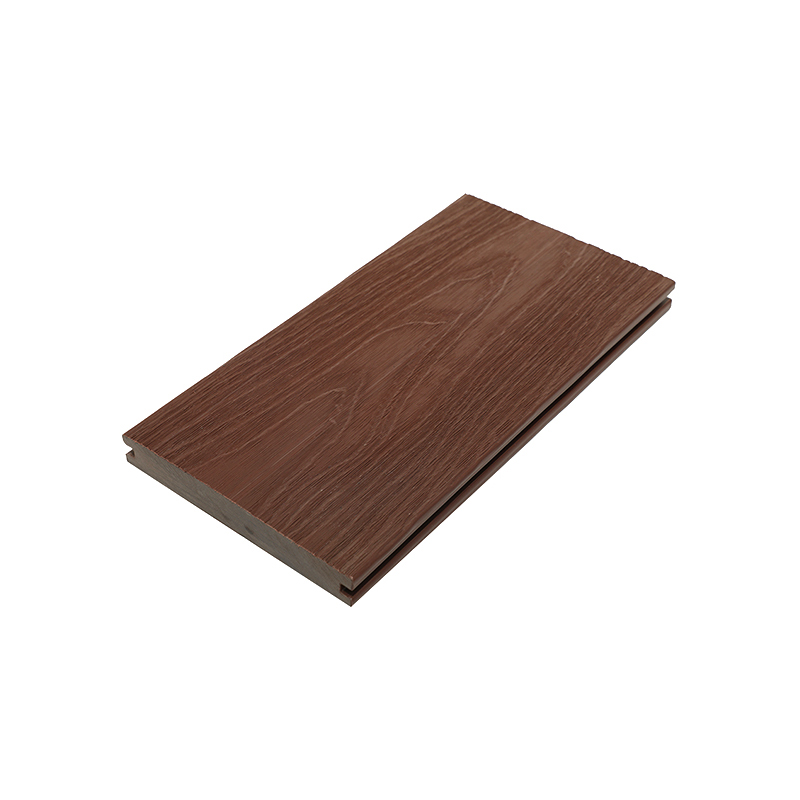
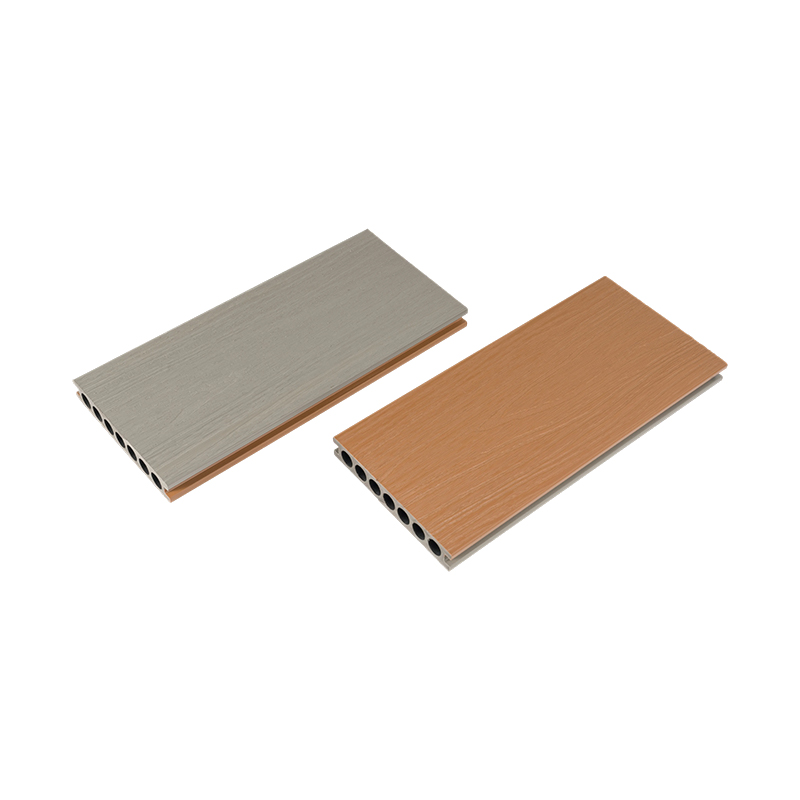
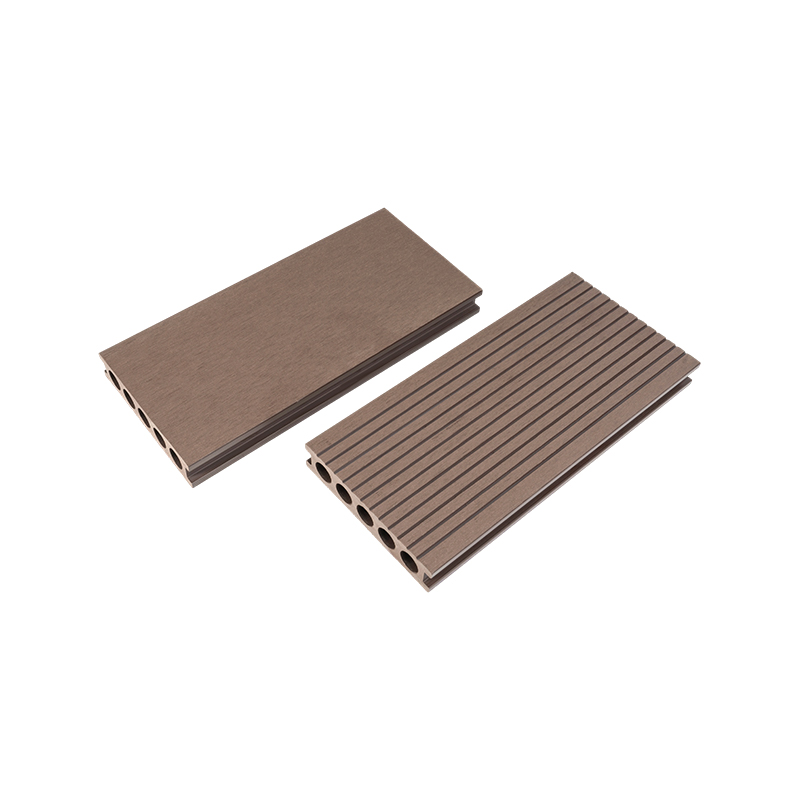
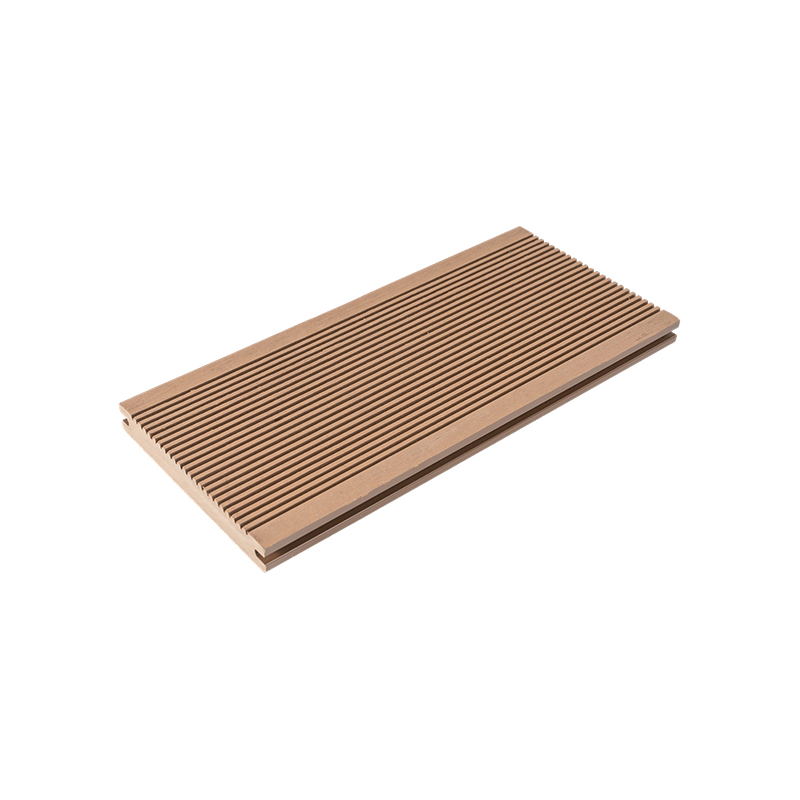
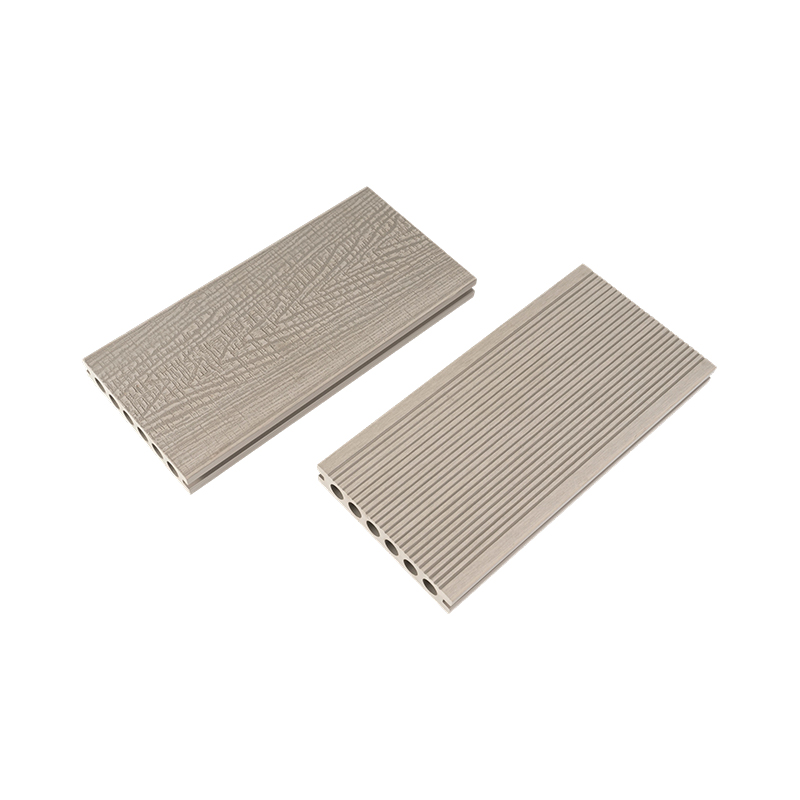
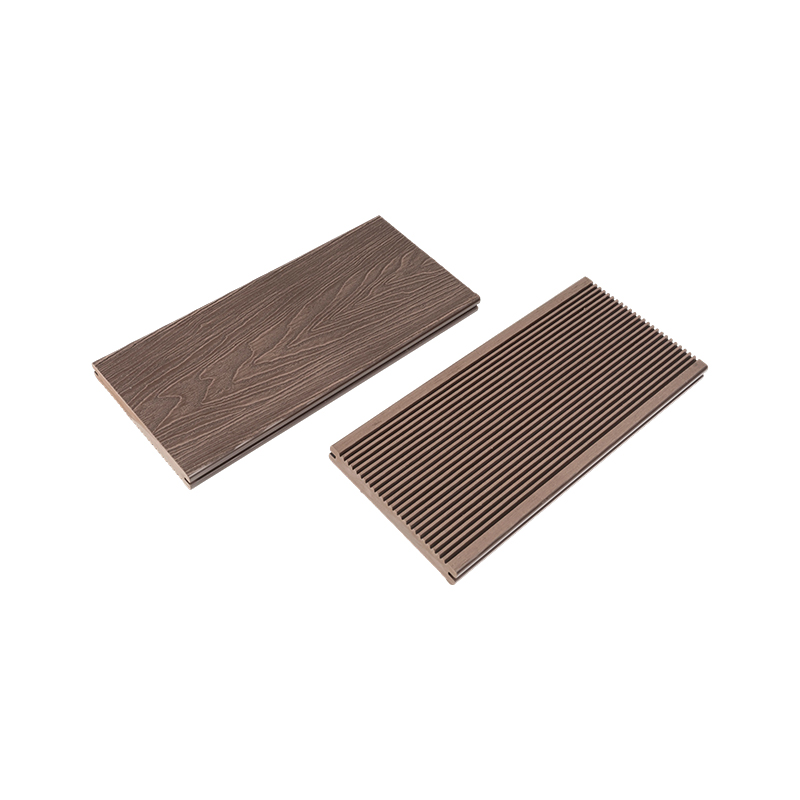
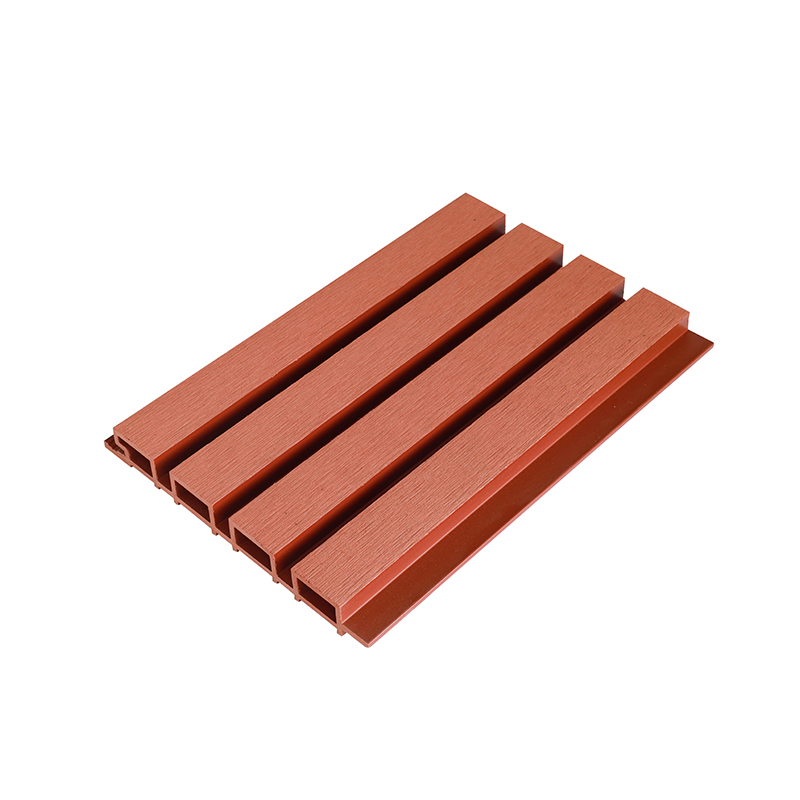
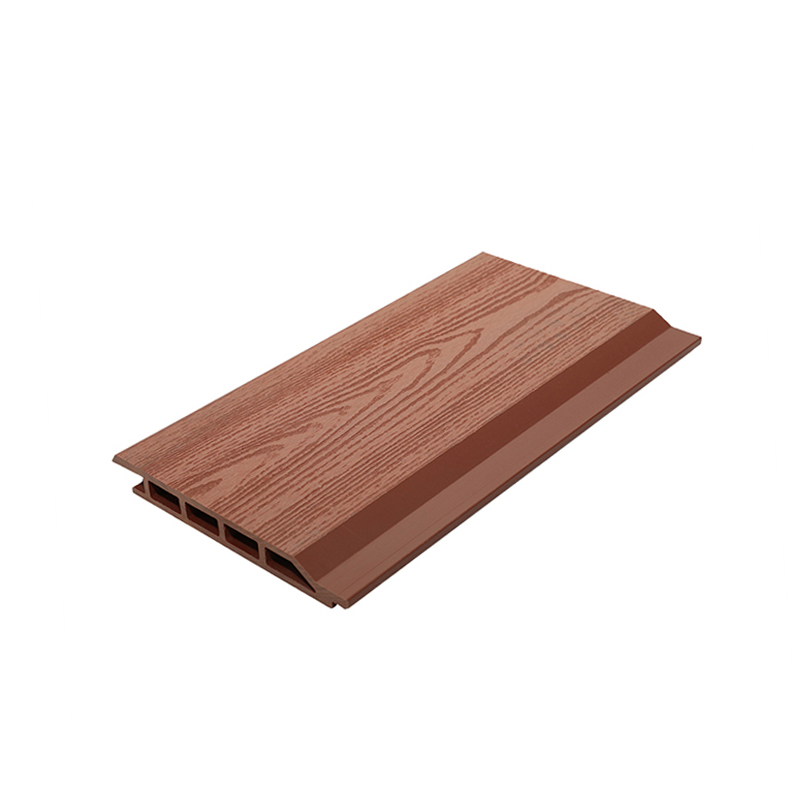
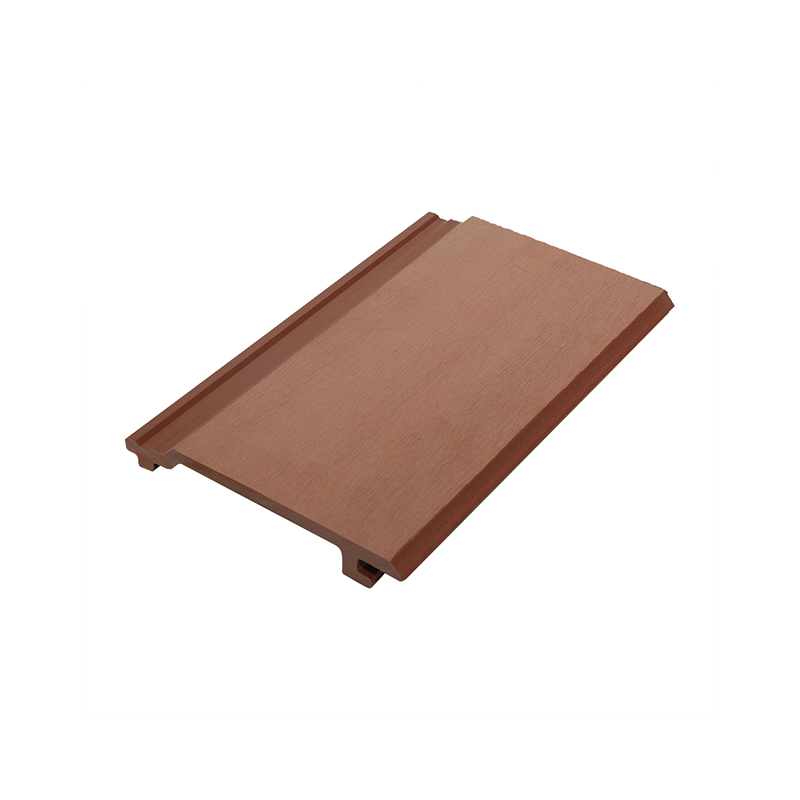
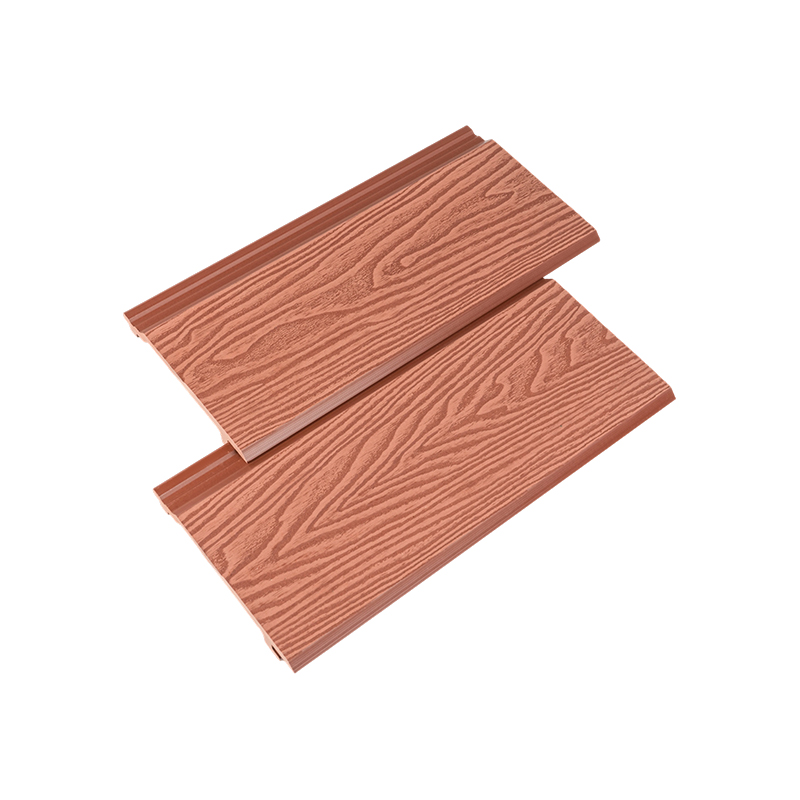
Co-extrusion decking is the highest-performance category of composite outdoor flooring available today, produced using advanced dual-layer extrusion technology that simultaneously bonds a dense protective polymer cap layer to all surfaces of a WPC (wood-plastic composite) core in a single continuous manufacturing process. The result is a board that combines the structural properties and natural character of WPC with a fully encapsulating polymer shell that delivers exceptional resistance to moisture, UV fading, surface staining, and physical abrasion — performance levels that standard uncapped WPC cannot achieve.
As the newest generation of composite decking technology, co-extrusion decking sets the benchmark for long-term outdoor flooring performance. It is the preferred specification for demanding residential applications, commercial venues, pool surrounds, coastal properties, and any environment where maximum durability and minimal maintenance over a 20-to-30-year service life are the primary requirements.
How Co-Extrusion Decking Is Made: The Technology Explained
The WPC Core: Important foundation
The inner core of a co-extruded board is a standard WPC blend: 50–70% reclaimed wood fibre combined with 30–50% recycled thermoplastic polymer — typically polyethylene (PE) or polypropylene (PP) — along with UV stabilisers, fungicide additives, colorants, and processing agents. This core provides the board's structural rigidity, load-bearing capacity, and the natural wood aesthetic that gives composite decking its visual character. The wood fibre content within the core is what gives co-extruded boards their warmth and authenticity compared to pure plastic alternatives.
The Polymer Cap Layer: The Critical Performance Differentiator
Simultaneously with core extrusion, a second material stream — a dense, high-performance polymer compound, typically high-density polyethylene (HDPE) or ASA (acrylonitrile styrene acrylate) — is fed through a second extrusion die. The two material streams merge at a precisely controlled interface point where the cap layer is permanently bonded to all four surfaces of the WPC core as a single integrated structure. This cap layer is typically 0.5 mm to 2 mm thick and is fully non-porous, creating a continuous polymer barrier between the wood fibre core and the outdoor environment. Because the cap is formed simultaneously with the core — not applied afterwards as a coating — the bond is structural and permanent, not susceptible to delamination over time.
Why Simultaneous Extrusion Matters
The defining technical advantage of co-extrusion over post-production surface coatings is the molecular bond formed between core and cap during the simultaneous extrusion process. When both materials are in a heated, semi-fluid state at the die interface, their molecular chains intermingle at the boundary — creating a bond that is stronger than any adhesive could produce and immune to the delamination, peeling, or cracking that surface-applied coatings can develop over years of thermal cycling and UV exposure. The cap is not a finish applied to the board: it is an integral structural component of the board itself.
Two-Colour Co-Extrusion: A Growing Design Trend
An increasingly popular innovation in co-extrusion technology is the two-colour (double-colour) board, where the cap layer is produced with a different colour on the top face versus the side faces or bottom face of the board. This means a single board delivers two distinct colour options — installers can orient the board either way to achieve their preferred colour, or use both orientations in the same installation for planned visual contrast. Two-colour co-extruded boards significantly reduce the number of individual SKUs customers need to stock, simplify inventory management, and expand colour-matching possibilities for design-led projects without requiring separate orders for different coloured boards.
Key Advantages of Co-Extrusion Decking
Maximum Moisture Resistance: Less Than 1% Water Absorption
The fully non-porous polymer cap encapsulates all board surfaces, eliminating the primary moisture ingress pathway that affects uncapped WPC. In standard WPC, moisture can slowly penetrate the exposed wood fibre at the board surface over time — causing minor swelling, creating conditions for surface biological growth, and gradually affecting the dimensional stability of boards in persistently wet environments. Co-extruded boards absorb less than 1% of their weight in water under extended immersion — compared to 5–15% for uncapped WPC and 15–30% for untreated softwood timber. This makes co-extrusion decking the definitive specification for pool surrounds, coastal environments, marine applications, and any location with persistent moisture exposure.
Superior Stain Resistance: Excellent Anti-Fouling Performance
The non-porous cap layer provides outstanding resistance to surface staining and fouling — one of the most practically valued performance properties of co-extruded decking in real-world use. Staining agents cannot penetrate the cap surface; they remain on the surface where they can be wiped away rather than being absorbed into the board material. Independent testing confirms that quality co-extruded decking resists staining from:
- Coffee, red wine, fruit juice, and carbonated drinks
- Cooking oils, vinegar, sauces, and food residues
- Red ink, stamp-pad ink, and marker pen
- Lipstick, nail polish, and cosmetic products
- Black shoe polish and rubber marks
- Pool chemicals and cleaning agents at standard concentrations
Fresh spills typically wipe clean with a damp cloth. Dried or heat-set stains respond to mild detergent and a soft brush. This level of anti-fouling performance makes co-extruded decking the clear choice for restaurant terraces, hospitality venues, and high-use outdoor dining areas.
Best-in-Class UV Fade Resistance: 20–25 Year Colour Stability
UV radiation is the primary long-term degradation mechanism for any polymer-containing outdoor material. In co-extruded decking, the cap layer is specifically engineered with concentrated UV stabiliser packages — including HALS (Hindered Amine Light Stabiliser) technology — that absorb and dissipate UV energy before it can reach and degrade the wood fibre core beneath. The cap itself is the UV shield. Premium co-extruded decking maintains colour stability for 20 to 25 years, with leading manufacturers backing this with explicit written fade warranties covering the same period. This is the highest UV performance available in the composite decking category.
Enhanced Surface Scratch and Abrasion Resistance
The polymer cap layer is significantly harder and more abrasion-resistant than the exposed WPC surface of uncapped boards. In environments with heavy foot traffic, furniture movement, or the dragging of equipment, the cap layer absorbs surface abrasion that would otherwise wear the board texture and surface finish on uncapped products. This is particularly valuable in commercial settings — restaurant terraces with chair and table leg movement, hotel pool areas with high foot traffic, and commercial plazas subject to continuous use.
Longest Service Life and Warranty: 20–30 Years
The combination of superior moisture resistance, UV protection, and surface durability provided by the co-extrusion cap layer translates directly into the longest service life available in composite decking. Quality co-extruded decking has a realistic service life of 25 to 30 years and is typically backed by manufacturer warranties of 20 to 25 years — the strongest warranty coverage in the outdoor decking category. For property owners and commercial operators calculating total cost of ownership, this extended service life combined with minimal maintenance expenditure delivers the lowest overall cost per year of any decking material currently available.
Splinter-Free, Safe Surface for All Applications
The polymer cap completely encapsulates the wood fibre core, meaning no wood fibre can reach the surface of the board at any point during its service life. Co-extruded decking is entirely splinter-free from installation through to end of life — providing safe, comfortable bare-foot surfaces for pool areas, children's play spaces, and any outdoor environment where surface safety is a priority. The grooved surface profiles of co-extruded boards achieve R11 or higher slip resistance under DIN 51130, providing reliable wet traction in pool and wet-weather conditions.
Two-Colour Option: Design Flexibility and Inventory Efficiency
Two-colour co-extruded decking boards offer both design and logistical advantages. A single board product delivering two usable colour faces means:
- More design options from fewer SKUs — installers and distributors achieve more colour-matching possibilities without increasing inventory complexity
- Reduced warehouse space requirements — stocking one board that functions as two colours reduces the volume of inventory needed to serve a range of customer colour preferences
- Creative installation possibilities — planned use of both colour orientations within a single deck installation allows border effects, zone differentiation, and decorative patterns that would require separate board orders with single-colour products
- Cost efficiency for customers — the ability to achieve colour variation and matching from a single board purchase reduces the total procurement cost for projects requiring multiple colour tones
Co-Extrusion vs Standard WPC vs 3D Embossed: The Full Comparison
Performance comparison across the three main composite decking types, showing where co-extrusion technology delivers measurable advantages
| Criterion |
Standard WPC |
3D Embossed WPC |
Co-Extruded WPC |
| Cap layer construction |
None |
None |
Full 4-surface polymer cap |
| Water absorption |
3–8% |
3–8% |
<1% |
| Stain resistance |
Good |
Good |
Excellent (non-porous cap) |
| UV fade resistance |
Moderate |
Good |
Best (dedicated UV cap) |
| Surface abrasion resistance |
Moderate |
Good |
Excellent |
| Anti-fouling performance |
Moderate |
Moderate |
Excellent |
| Wet slip resistance |
R10–R11 |
R11+ |
R11+ |
| Typical warranty |
10–15 years |
15–20 years |
20–25 years |
| Realistic service life |
15–20 years |
18–25 years |
25–30 years |
| Two-colour option |
No |
No |
Yes (available) |
| Relative material cost |
Lower |
Medium |
Higher upfront; lower lifetime cost |
Where Co-Extrusion Decking Performs Best
Co-extrusion decking's performance advantages are most pronounced in applications where standard WPC would be significantly challenged by environmental conditions or use intensity:
- Swimming pool surrounds: Less than 1% water absorption, R11+ wet slip resistance, chemical resistance to pool treatment agents, and a splinter-free surface make co-extruded decking the definitive pool deck material. Light-coloured boards are recommended for barefoot comfort in hot climates.
- Coastal and marine environments: The sealed cap layer resists salt air deposition, persistent humidity, and the biological growth that thrives in coastal conditions — where uncapped WPC surfaces can develop surface mould and moisture-related swelling within a few seasons.
- High-UV and subtropical climates: The dedicated UV stabiliser package in the cap layer provides the best-in-category fade resistance for installations receiving high annual UV loading — the condition under which standard WPC products show the most significant colour degradation over time.
- Commercial hospitality and restaurant terraces: Heavy foot traffic, food and beverage spills, furniture movement, and the cleaning chemicals used in commercial settings all demand the superior stain resistance, abrasion resistance, and cleanability that the cap layer provides.
- Ports, waterfront boardwalks, and marinas: Continuous moisture exposure, salt water spray, and heavy-use traffic are precisely the conditions for which the co-extrusion cap was engineered.
- Premium residential gardens and rooftop terraces: For homeowners making a long-term investment in outdoor living space and seeking the lowest possible lifetime maintenance cost, co-extruded decking is the most cost-effective choice when assessed over a 20–25 year horizon.
Installation Requirements for Co-Extrusion Decking
Co-extrusion decking installs using the same hidden clip system and subframe principles as all composite decking. The following installation requirements are critical to achieving the product's full service life:
Subframe Specification
Aluminium joists are the strongly recommended subframe material for co-extruded decking installations. Aluminium does not corrode, warp, or degrade at ground contact — making it the only subframe material that matches co-extrusion decking's 25–30 year service life potential. Joists should be set at 300–400 mm centres for hollow-core boards and up to 400 mm for solid-core boards, with adequate ventilation gaps to allow airflow beneath the deck surface.
Mandatory Expansion Gaps
A 5 mm end gap must be maintained at every board terminus to accommodate longitudinal thermal expansion. The 5–8 mm lateral gap between boards is automatically maintained by the hidden clip system. Boards installed without end gaps will buckle during warm weather — a common installation error that is entirely preventable by following the manufacturer's specified gap requirements.
Cut-End Sealing: Mandatory for Cap Integrity
Every board end cut on site must be sealed with the manufacturer-approved end-grain sealant immediately after cutting. The polymer cap encapsulates all factory-finished surfaces but is severed at any on-site cut, exposing the wood fibre core at the cut face. Sealing this face is the only way to maintain cap integrity at cut ends and prevent moisture from entering the board core — the primary moisture vulnerability in an otherwise fully sealed product. This step is mandatory for warranty compliance.
System Compatibility
Source all system components — boards, clips, posts, cap rails, and finishing trims — from the same manufacturer. Co-extruded board profiles are engineered to specific post channel dimensions and clip engagement geometries. Mixing components from different systems risks loose fit, alignment problems, voided warranties, and compromised structural performance at fixing points.
Maintenance: What Co-Extrusion Decking Actually Requires
No painting, oiling, staining, sealing, or protective treatment is required at any point during the product's service life. The polymer cap provides ongoing protection without any supplementary treatment. The complete maintenance routine is:
- Regular sweeping: Remove leaf litter, soil, and organic debris promptly. Organic matter left on board surfaces provides a growth medium for surface algae and mould in wet conditions, even on capped boards.
- Periodic washing: Wash the deck surface with warm water and mild household detergent using a soft brush or low-pressure hose, once or twice per year. This removes accumulated surface contamination before it can build up and dull the cap layer's appearance.
- Stain treatment as needed: Fresh spills wipe clean with a damp cloth. For dried or stubborn marks, apply mild detergent and work with a soft brush along the board length. Never use bleach, solvents, or metal scrubbers — these damage the cap layer surface and void the warranty.
Total annual maintenance time for a typical residential deck is under two hours per year. Over a 25-year service life on a 30 m² installation, the maintenance cost saving versus an equivalent natural timber deck is estimated at $3,000–$7,500 in treatment products alone — before including labour or professional treatment costs.
Frequently Asked Questions About Co-Extrusion Decking
What makes co-extrusion decking better than standard WPC?
The polymer cap layer formed during co-extrusion is the defining difference. It creates a continuous non-porous barrier on all board surfaces that standard WPC lacks entirely. This cap delivers dramatically superior moisture resistance (less than 1% water absorption versus 3–8% for uncapped WPC), far better stain resistance, a more concentrated UV stabiliser package for long-term colour retention, and greater surface abrasion resistance. The practical result is a significantly longer service life and lower lifetime cost despite the higher initial material price.
Can the cap layer peel or delaminate over time?
No — this is not possible with genuine co-extrusion technology. The cap layer is not a coating applied to the finished board surface; it is formed simultaneously with the core during the extrusion process, when both materials are in a heated semi-fluid state. The molecular intermixing at the cap-core interface during this process creates a permanent structural bond that cannot delaminate or peel. Surface-applied coatings can fail in this way over time, but co-extruded caps cannot — the distinction between a co-extruded cap and an applied coating is fundamental and should be confirmed with the manufacturer before purchase.
Is co-extrusion decking worth the higher upfront cost?
For any installation expected to last 15+ years, yes — consistently. The higher initial material cost of co-extruded decking is offset by three factors: the elimination of annual maintenance expenditure that timber and lower-grade composites incur; the avoidance of partial or full replacement costs that uncapped WPC may require after 12–15 years in demanding environments; and the longer rated service life of 25–30 years versus 15–20 years for standard WPC. When assessed over a 20-year horizon, co-extruded decking delivers the lowest total cost of ownership of any current outdoor decking material in most residential and commercial applications.
How does two-colour co-extrusion work in practice?
In a two-colour co-extruded board, the cap layer on the top face of the board is a different colour from the cap on the underside or side faces. When a board is turned over during installation, a different colour face is presented. This means a single board product delivers two usable colour options — installers choose the orientation that matches their required colour, or intentionally alternate orientations across a deck surface to create planned colour variation effects. For distributors and installers, stocking two-colour boards significantly reduces the number of product SKUs needed to offer a broad colour palette to customers.
Does co-extrusion decking still need expansion gaps?
Yes — thermal expansion is a property of the board material, not the surface finish. Co-extruded boards expand along their length as temperature rises, just as uncapped WPC boards do. A minimum 5 mm end gap at every board terminus is mandatory to prevent buckling in warm weather. This requirement applies regardless of product type or surface construction — always follow the manufacturer's specified gap requirements for the specific product being installed.
Is co-extrusion decking suitable for very hot climates?
Co-extruded decking with ASA cap compounds performs best in high-UV environments — ASA (acrylonitrile styrene acrylate) has inherently superior UV resistance compared to standard PE cap formulations. In very hot and sunny climates, light or medium-toned board colours are strongly recommended: dark boards can reach surface temperatures of 50–65°C in direct summer sun, while lighter boards remain significantly cooler under equivalent conditions. For pool surrounds and barefoot areas in hot climates, colour selection is as important as product specification.
Can co-extrusion decking be used for both interior and exterior applications?
Yes. Quality co-extruded decking meets the E0 formaldehyde emission standard and is produced without chemical adhesives, making it safe for indoor use. It is used for interior feature floors, commercial showrooms, gym surfaces, and indoor-to-outdoor transition areas where maintaining a consistent flooring material and aesthetic across both spaces is desirable. The cap layer's stain resistance is particularly valuable in interior applications subject to traffic and spills, such as commercial hospitality floors and residential mud rooms.
How to Identify and Specify Genuine Quality Co-Extrusion Decking
Not all products marketed as "co-extruded" or "capped" deliver equivalent performance. Use these criteria to identify genuinely high-quality co-extrusion decking:
- Confirm true co-extrusion — not a surface-applied coating. Ask the supplier to confirm that the cap layer is formed simultaneously with the core during the extrusion process. Surface-applied coatings marketed as "caps" do not provide the same performance or permanence. A genuine co-extruded cap is evident at the board's cut cross-section — you can see the distinct cap layer bonded to the core material.
- Require a written warranty of 20+ years covering fade, stain, and structure. A manufacturer genuinely confident in their co-extruded product will provide explicit written warranty coverage for colour stability, stain resistance, and structural integrity over this period. The absence of a written fade warranty is a reliable indicator of insufficient UV stabiliser specification.
- Request the water absorption test data. Quality co-extruded decking should achieve less than 1% water absorption under immersion testing. Ask the supplier to provide test data from an independent laboratory confirming this specification.
- Verify the slip resistance certification for wet-use areas. Confirm a minimum R11 rating under DIN 51130 for any pool, coastal, or wet-area application. Obtain the actual test certificate, not just a claim.
- Assess physical samples in your actual outdoor environment. View samples at your installation site in both direct sun and shade. The cap layer colour and surface finish appearance varies under different light conditions — outdoor assessment in your specific context is the only reliable basis for colour specification.
- Order all project materials from a single production batch with a 10% waste allowance. Cap layer colour can vary slightly between manufacturing batches. Ordering the complete project quantity together — plus a minimum 10% waste allowance — ensures consistent colour across the finished deck and provides matching spare boards for future maintenance needs.

 English
 Français
 Español
 Deutsch