English
 Français
 Español
 Deutsch
A deck sitting 30 in above grade is a comfortable set of stairs waiting to happen. A deck at 40 in is where most first attempts go wrong, usually because the builder measured to the framing instead of the finished surfa...
READ MORE

A deck sitting 30 in above grade is a comfortable set of stairs waiting to happen. A deck at 40 in is where most first attempts go wrong, usually because the builder measured to the framing instead of the finished surfa...
READ MOREIf you are building or repairing a porch, railing height is not just a style choice. It affects safety, inspection results, and how the porch feels in daily use. For most residential porches, the top of the guardrail sh...
READ MORETwo suppliers quote the same 420 square metre rooftop terrace. Both describe their boards as green composite decking, both offer a fifteen year warranty, and the two prices sit within four percent of one another. The de...
READ MOREA twelve foot front porch, a tape measure and three saved photos is the easy part. The hard part is choosing a railing that still looks straight after four humid summers, and that is where most front porch railing ideas...
READ MORE

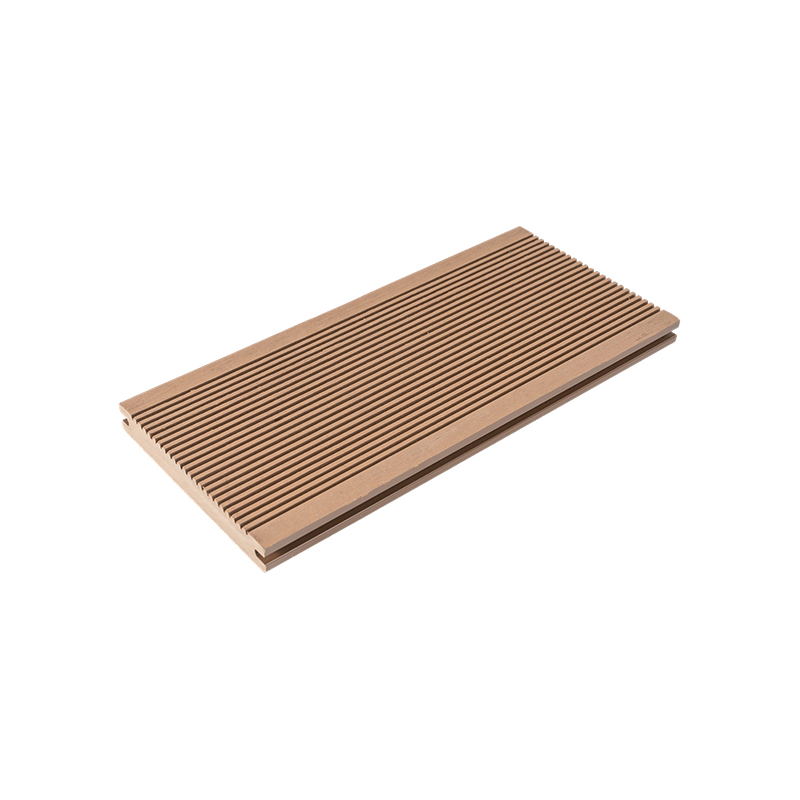
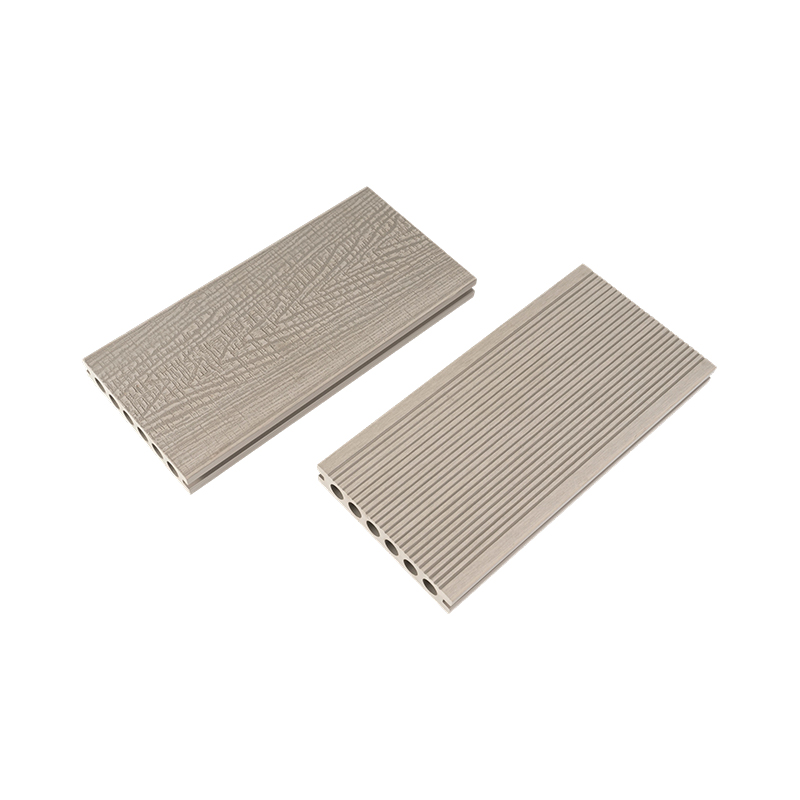
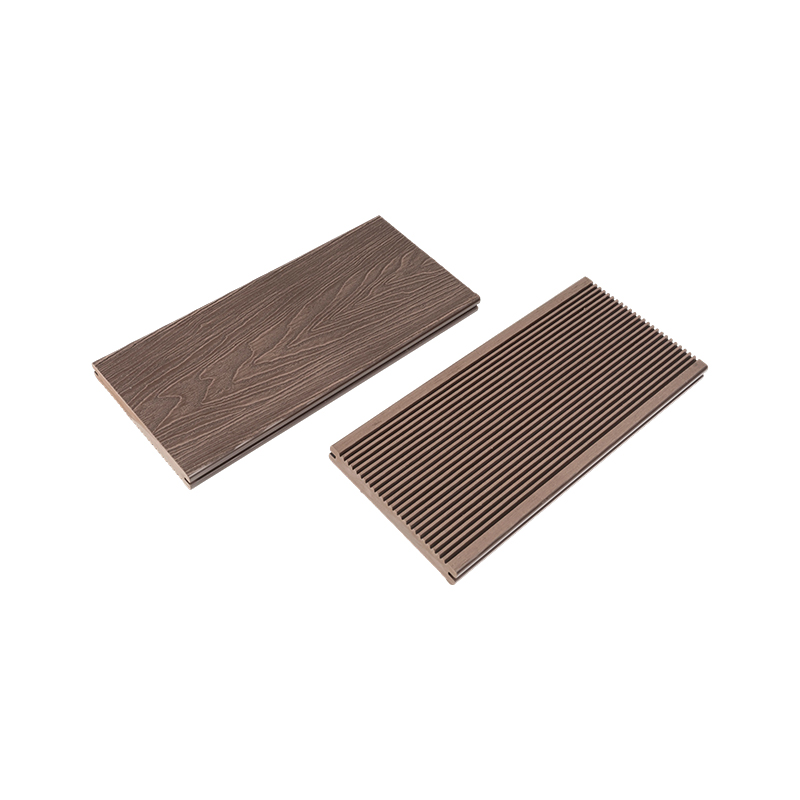
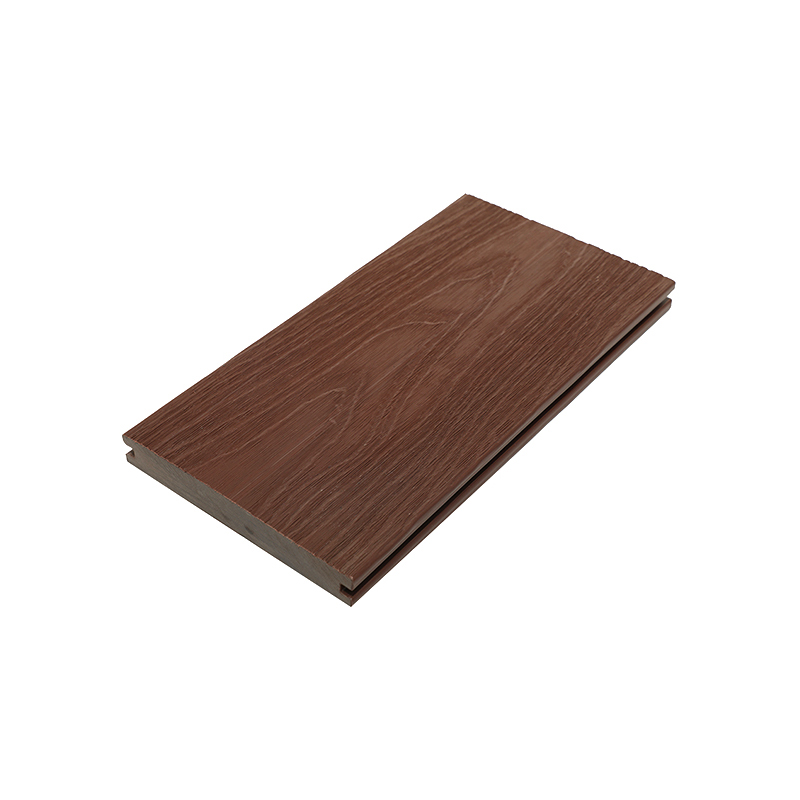
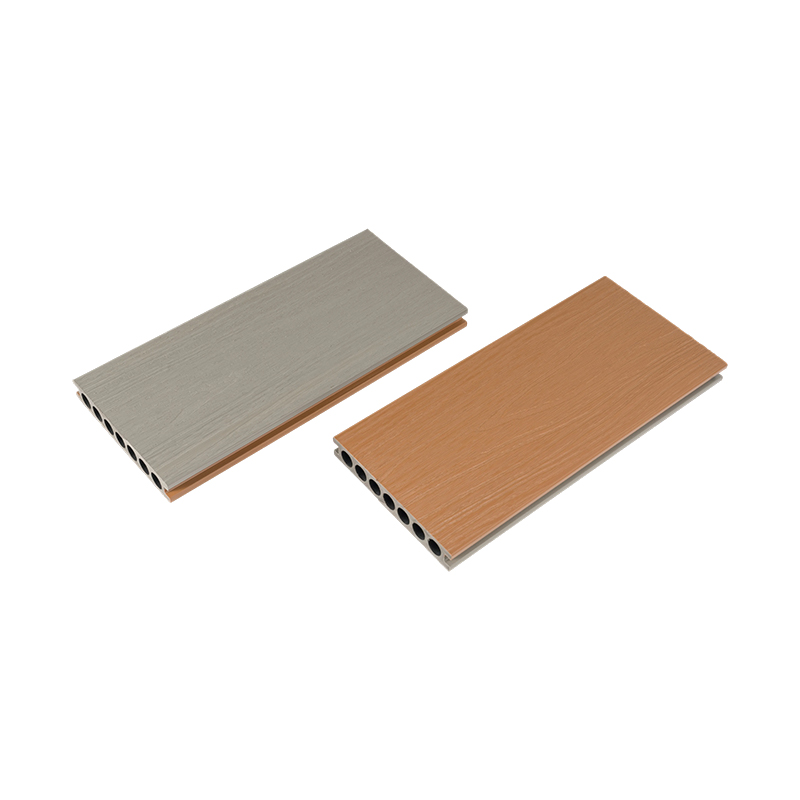
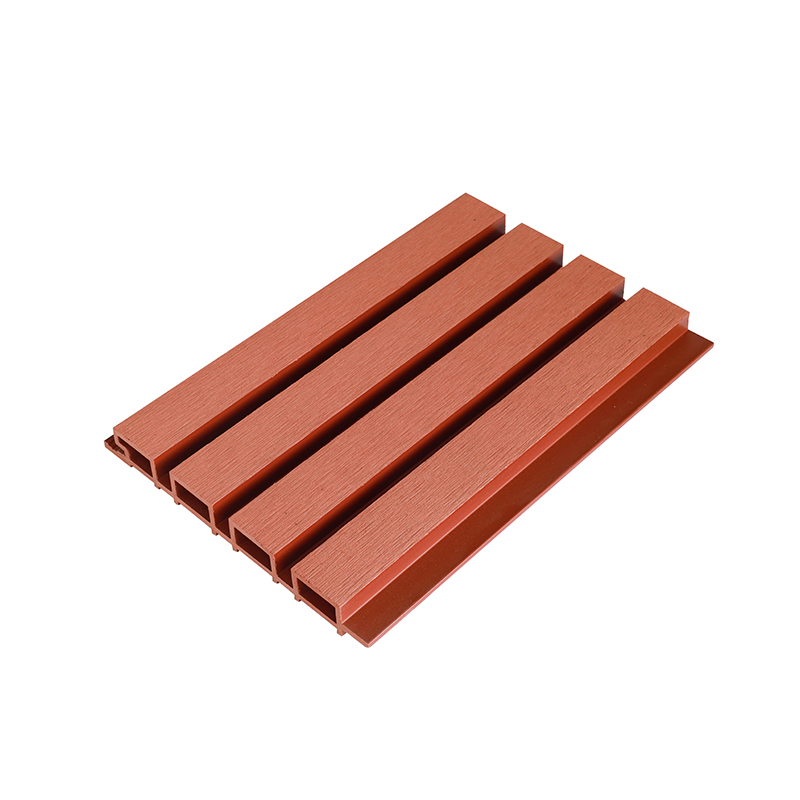
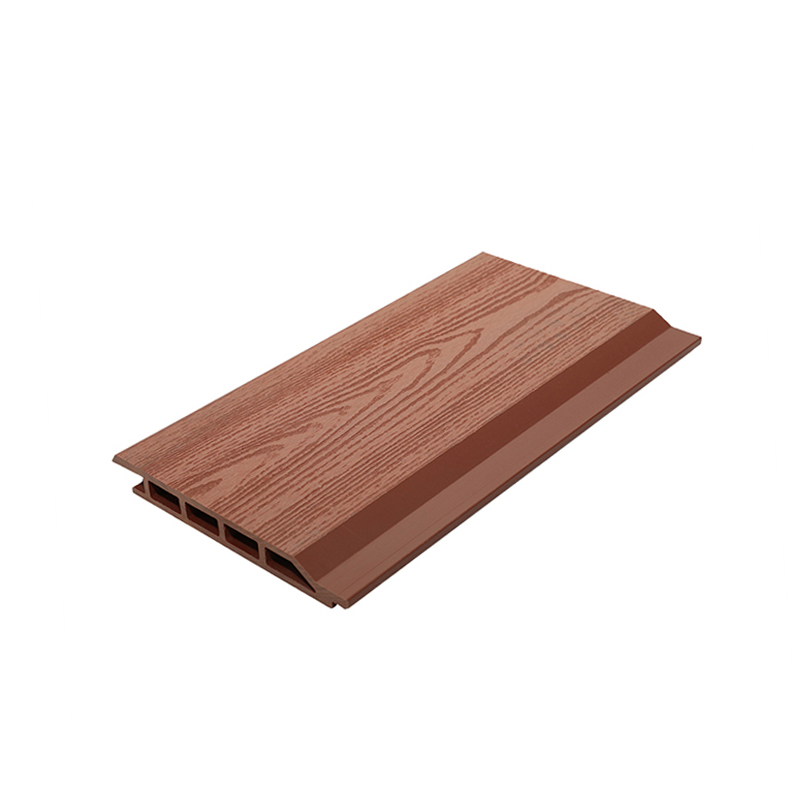
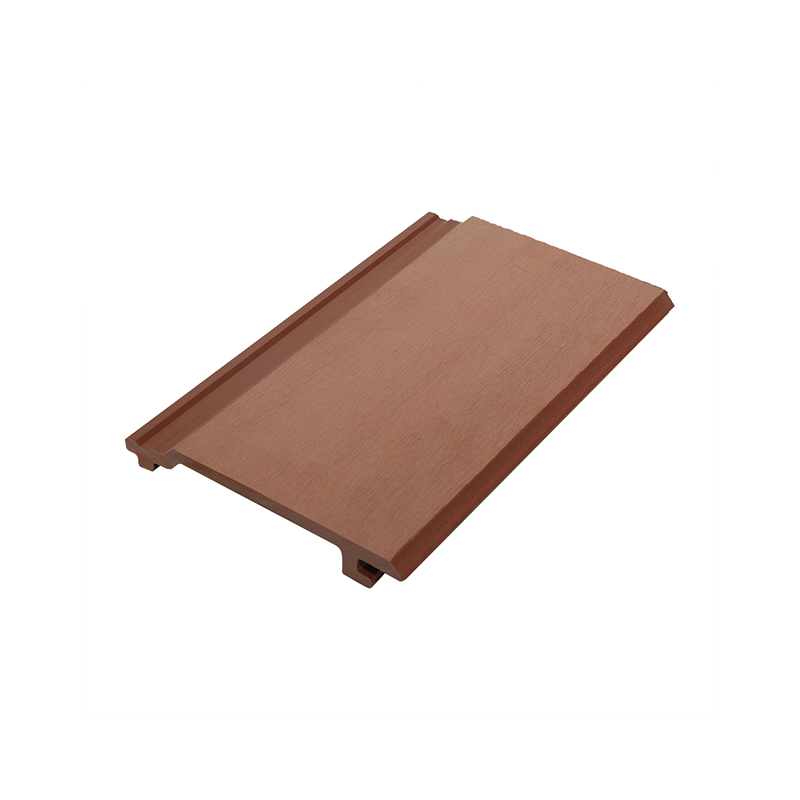
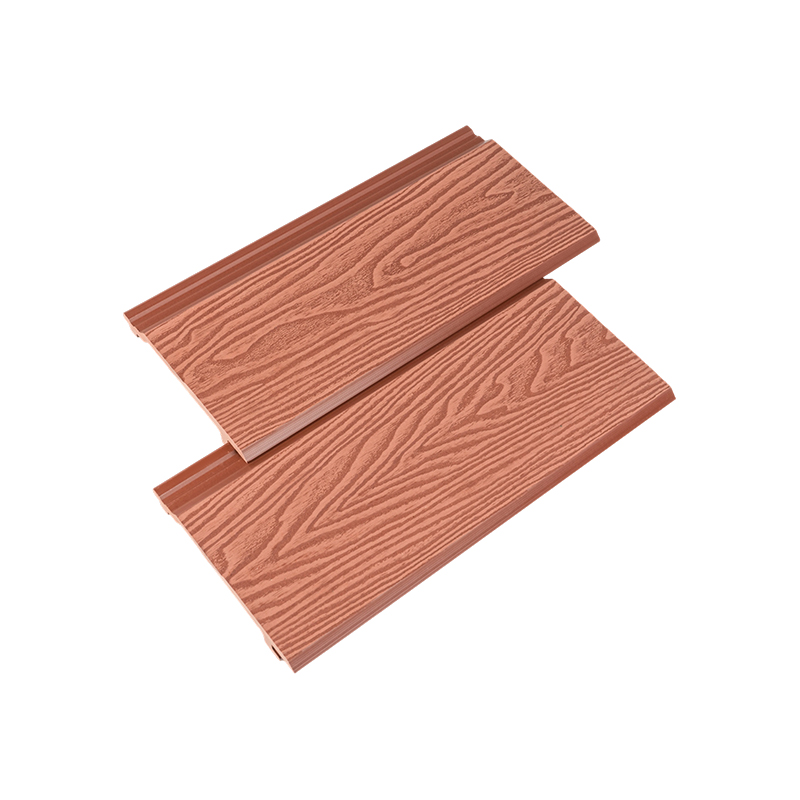
Composite fencing is a modern boundary and privacy fencing system manufactured from a blend of reclaimed wood fibre and recycled thermoplastic polymer — engineered to replicate the natural appearance of timber fencing while delivering dramatically superior durability, weather resistance, and minimal maintenance requirements. It is used across residential gardens, commercial properties, industrial sites, and public spaces as a long-term alternative to traditional softwood, hardwood, and vinyl fencing.
Unlike natural timber fencing — which requires regular painting, staining, or pressure treatment and is vulnerable to rot, warping, and insect attack — composite fencing is engineered from the outset to resist the biological and environmental forces that cause traditional fencing to deteriorate over time. A quality composite fence installed correctly requires nothing more than occasional washing to maintain its appearance and structural integrity for 20 to 30 years.
Composite fencing boards are manufactured from a precisely formulated blend of two recycled material streams. Wood fibre — typically 50–70% of the board by weight — is sourced from sawmill offcuts, wood manufacturing waste, and agricultural residues. This is combined with 30–50% recycled thermoplastic polymer, most commonly polyethylene (PE) or polypropylene (PP), along with UV stabilisers, colorants, fungicide additives, and processing lubricants. No chemical adhesives are used. Quality composite fencing products meet the E0 formaldehyde emission standard, making them environmentally safe across their full service life.
The blended material is heated and forced through a shaped extrusion die that defines the fence board's profile, width, and surface texture. The board is cooled under controlled conditions, cut to finished length, and surface-embossed with wood grain patterns during the same production run. Because colour pigment is distributed throughout the entire board during mixing, the colour is consistent from the surface to the core — minor surface marks do not reveal a differently coloured substrate, and all boards in a production batch match consistently.
Composite fencing is produced in two primary construction types:
Rot, warping, and insect attack are the three most common reasons timber fences fail prematurely. Composite fencing is engineered to eliminate all three. The thermoplastic polymer matrix surrounding the wood fibre prevents the continuous moisture pathway through wood cell walls that fungal decay requires. The composite material's response to moisture cycling is dramatically reduced compared to solid timber, preventing the warping and splitting that make timber fence boards visually and structurally problematic within a few seasons. And the plastic content of the composite provides no nutritional substrate for wood-boring insects.
Traditional softwood timber fencing requires repainting or restaining every 1 to 3 years on exposed garden panels to maintain weather protection and appearance. Over a 20-year fence lifespan, this represents a significant recurring expenditure of time and money. On a standard 20-metre residential fence run, the cumulative repainting and treatment cost over 20 years — including materials, preparation, and labour — is estimated at $1,500–$4,000 for a maintained timber fence. Composite fencing requires no treatment at any point; maintenance consists solely of occasional washing with water and mild detergent.
Composite fencing replicates the grain, warmth, and natural character of timber fencing across a wide range of wood-inspired tones — from light natural and honey shades through warm mid-tones to dark oak, charcoal, and near-black finishes. Unlike natural timber, the colour is consistent across all boards in a batch, making large uniform fence runs straightforward to achieve without the sorting and grading that natural timber requires. The surface grain retains its character throughout the product's service life without greying, cracking, or peeling.
Quality composite fencing carries realistic service lives of 20 to 30 years, backed by manufacturer warranties of 15 to 25 years depending on product tier. This compares favourably against treated softwood timber fencing, which typically requires board replacement within 10 to 15 years in most UK and European climates, and hardwood fencing at 15 to 25 years with consistent treatment. Over a 25-year horizon, a composite fence typically requires no board replacement, no structural repairs, and no treatment expenditure — making it the lower total-cost option in most residential comparisons despite a higher initial material cost.
Composite fencing is designed for permanent outdoor exposure. UV stabilisers resist the photodegradation that causes timber and lower-quality composites to grey and become brittle. The boards also resist persistent rain, freeze-thaw cycling, high humidity, and — in the case of co-extruded products — salt-air deposition in coastal environments. In coastal locations where untreated or undertreated softwood fencing shows visible deterioration within 2 to 3 years, quality composite fencing maintains its appearance and structural integrity without any additional protective measures.
Composite fencing is manufactured from recycled materials — diverting both industrial wood waste and post-consumer plastic from landfill streams while reducing demand for virgin timber. The long service life further reduces the product's lifetime environmental impact compared with timber fencing requiring replacement every 10 to 15 years. Quality composite fencing products contain no chemical adhesives, meet E0 formaldehyde emission standards, and are fully safe in soil-adjacent garden environments throughout their service life.
| Criterion | Composite Fencing | Softwood Timber | Hardwood Timber | Vinyl (uPVC) |
|---|---|---|---|---|
| Typical service life | 20–30 years | 10–15 years | 15–25 years | 20–30 years |
| Maintenance required | Wash only | Paint/stain every 1–3 yrs | Oil/treat every 2–4 yrs | Wash only |
| Rot resistance | Excellent | Poor | Moderate–good | Excellent |
| Insect resistance | Excellent | Poor | Moderate | Excellent |
| Natural timber appearance | Very good | Excellent | Excellent | Poor |
| Dimensional stability | Excellent | Poor (warps, splits) | Moderate | Moderate (thermal movement) |
| Initial material cost | Medium–high | Low | High | Medium |
| 20-year total cost | Lower overall | High (replacement + treatment) | Medium–high | Medium |
| Eco credentials | Good (recycled content) | Good (if certified) | Good (if certified) | Poor (virgin PVC) |
Composite fencing is available in several system configurations to suit different boundary, privacy, and aesthetic requirements:
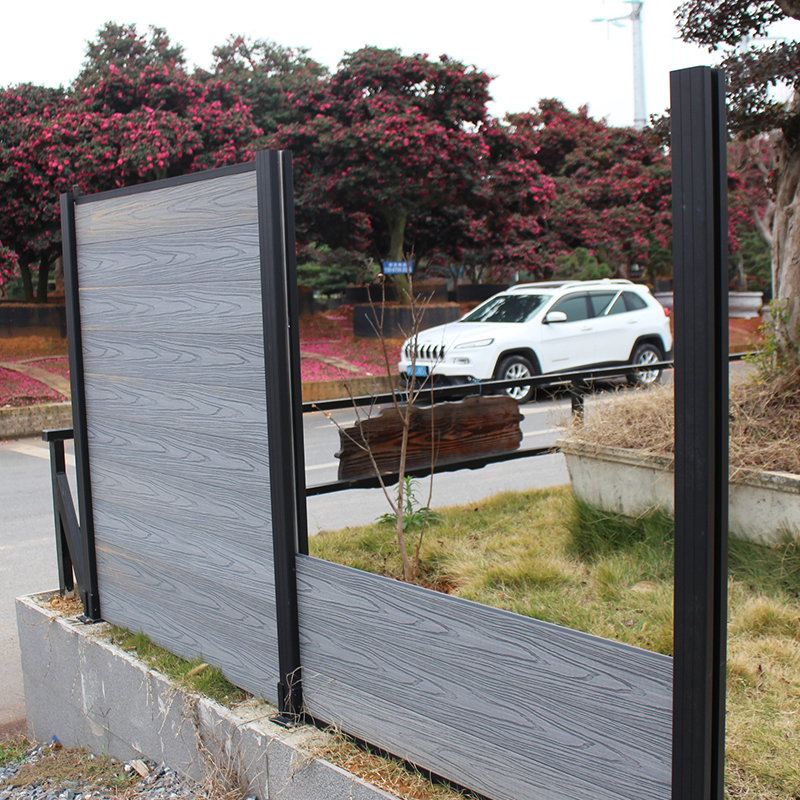
Individual composite boards slot horizontally or vertically into grooved aluminium or composite posts. This system offers the greatest design flexibility — board height, spacing, and density can be adjusted panel by panel, and individual boards can be replaced without dismantling the entire fence run. Board-on-post is the most popular residential composite fencing configuration, offering clean contemporary aesthetics with hidden fixings and a smooth, fastener-free board face.
Pre-assembled composite panels in standard widths (typically 1.8 m or 6 ft) slot between or fix to posts. Panel systems are faster to install than board-on-post configurations and are a practical choice for long straight fence runs where design variation is not required. Standard panel widths may limit flexibility on irregular boundary lines or sloped ground.
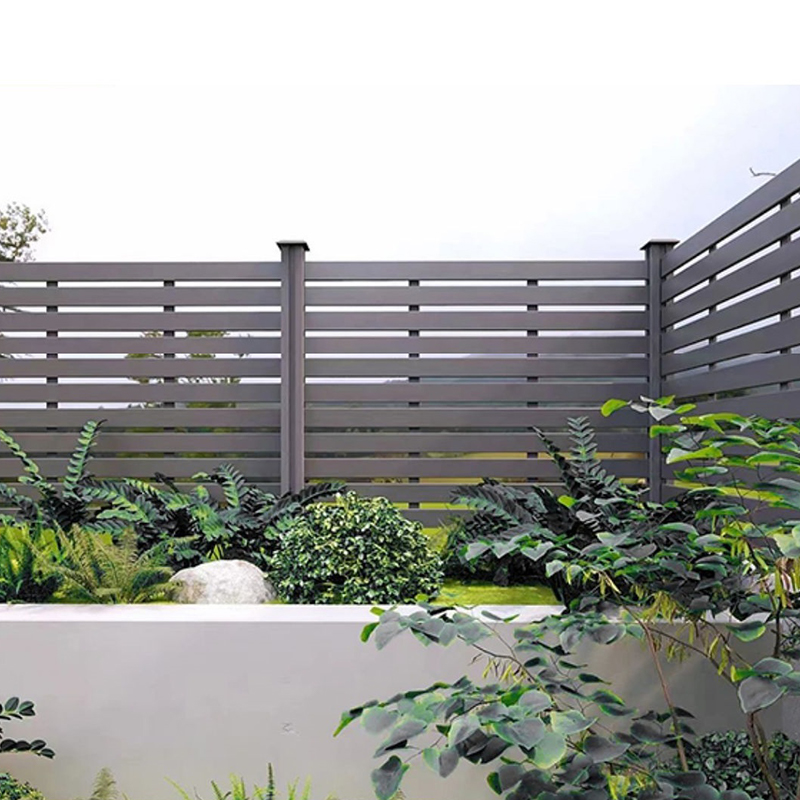
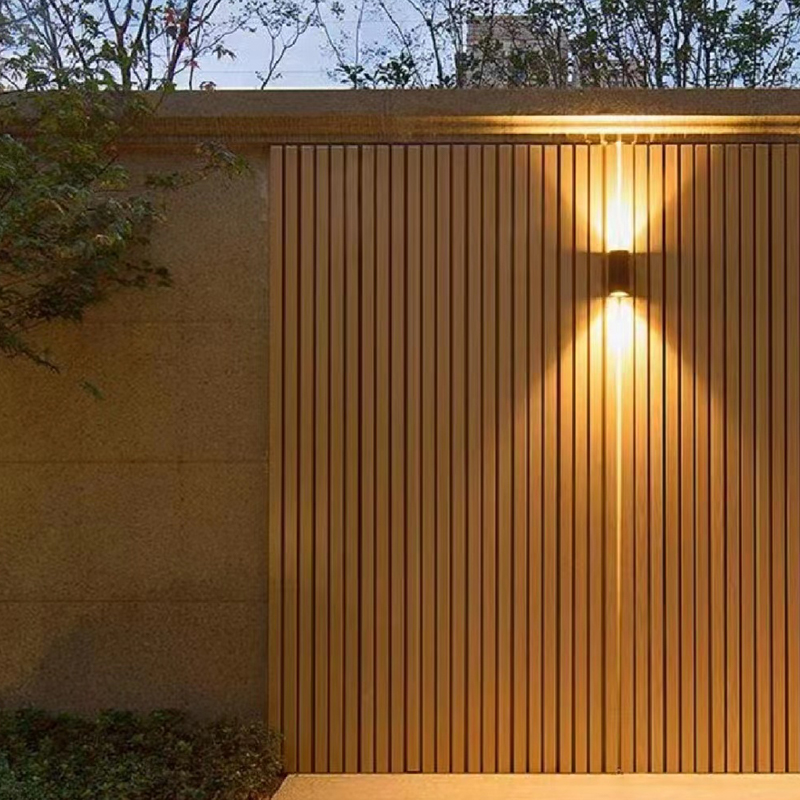
Angled louvre boards or spaced horizontal slats create privacy screens that allow partial airflow and light transmission while blocking direct sightlines. These configurations are widely used for garden screening, pool surrounds, commercial entrance features, and architectural privacy walls where solid fencing would create an undesirable barrier effect or planning objection.
Composite picket fencing replicates the classic garden picket aesthetic with shaped board tops — pointed, rounded, or dog-ear profiles — spaced to allow light and airflow while defining boundary lines. Composite picket fencing maintains the traditional character of painted timber picket fencing without the intensive maintenance that painted softwood picket requires in exposed garden conditions.
The post specification is the most structurally critical decision in composite fence installation. The composite boards themselves are the visible element, but the posts determine whether the fence remains plumb, structurally sound, and fully functional for its full service life. A quality composite board run on inadequate posts will lean, rack, and fail long before the boards themselves deteriorate.
The standard guidance for fence post foundation depth is one-third of the total post length in the ground. For a 1.8 m (6 ft) finished fence height, a 2.7 m post is required, with 900 mm set in concrete below ground. For exposed sites, coastal locations, or fence heights above 1.8 m, increase foundation depth or use post spike systems rated for the intended wind load. Post spacing on composite board-on-post systems should not exceed 1.8 m between post centres — wider spans increase mid-span board deflection under wind load beyond acceptable limits for most system specifications.
Composite boards expand along their length as temperature rises. A 5–8 mm expansion gap must be maintained at each board terminus — in the slot or channel where the board end seats into the post. Boards installed without this gap will buckle and bow in warm weather as they expand against the post walls, causing permanent deformation and potential post damage. Most composite fencing post systems provide a pre-set slot depth that naturally accommodates this gap when boards are correctly positioned during installation.
Every composite board end cut on site — to fit irregular boundary lengths or accommodate sloped ground — must be sealed immediately with manufacturer-approved end-grain sealant. Cutting exposes raw wood fibre at the cut face. Sealing is mandatory to prevent moisture ingress at board ends, protect warranty compliance, and maintain long-term board integrity at cut termini.
The lowest composite board in any fence run should maintain a minimum 50 mm clearance above finished ground level. Direct contact between composite boards and soil, mulch, or standing water creates conditions for biological growth against the board surface and compromises long-term drainage around post foundations. On sloped sites, step fence panels rather than raking boards to ground level wherever possible.
Source boards, posts, base rails, and all fixing accessories from the same manufacturer system. Board dimensions — width, depth, and groove engagement — are designed to match the post slot specifications within a specific system. Mixing boards and posts from different manufacturers typically results in poor board retention, excessive rattle in wind, and compromised structural performance, as well as voiding the product warranties of both components.
| Application | Typical Height | Recommended System | Primary Requirement |
|---|---|---|---|
| Residential garden boundary | 1.5–1.8 m | Board-on-post or panel | Privacy, aesthetics, low maintenance |
| Garden screening / pool surround | 1.2–2.0 m | Louvre or slatted screen | Privacy with airflow, moisture resistance |
| Front garden / driveway edge | 0.6–1.2 m | Picket or open-board system | Kerb appeal, boundary definition |
| Commercial property boundary | 1.8–2.4 m | Board-on-steel-post | Durability, security, low management cost |
| Coastal or exposed site | 1.5–2.0 m | Co-extruded boards on aluminium posts | Salt-air and moisture resistance |
| Public / landscape feature | Variable | Co-extruded or premium WPC | Long warranty, minimal intervention |
Quality composite fencing has a realistic service life of 20 to 30 years, with manufacturer warranties of 15 to 25 years depending on product tier. The boards themselves are the most durable element of the system — posts and fixings typically determine the overall fence lifespan. Using aluminium posts eliminates the post rot that causes most timber-framed fence failures. The main variables affecting board lifespan are product quality (capped vs uncapped construction), UV exposure, installation correctness, and whether cut ends are properly sealed.
Initial material costs for composite fencing are typically 30–70% higher than pressure-treated softwood timber fencing for a comparable panel height and run length. However, when assessed over 20 years — including timber replacement cycles, treatment costs, and labour — composite fencing typically delivers a lower total cost of ownership. On a 20-metre residential fence run, the 20-year total cost of a maintained softwood timber fence (including two replacement cycles and treatment) is estimated at $2,800–$6,200, compared to $2,100–$4,200 for composite fencing with no treatment expenditure.
All outdoor materials experience some colour change from UV exposure over time. Budget uncapped composite fencing can show noticeable fading within 2 to 4 years on south-facing elevations. Premium co-extruded composite fencing with concentrated UV stabilisers in the cap layer maintains colour stability for 15 to 25 years, backed by explicit written fade warranties. An initial weathering phase of 6–12 months after installation — during which surface pigments stabilise — is normal for all composite products. After this period, colour should remain essentially stable for the warranty duration in a quality product.
Yes, with appropriate technique. The two standard approaches are stepped installation — where fence panels are installed in level steps that follow the slope in increments — and raked installation, where the top of each panel follows the slope angle with angled cut boards. Stepped installation is generally preferred for board-on-post composite systems, as it maintains level board lines within each panel and avoids the need to cut boards at angles that would require additional end sealing. All post foundations must be plumb regardless of slope, and ground clearance maintained beneath the lowest board in each panel.
For competent DIY installers with experience in post setting and basic woodworking, composite fencing installation on a straightforward level boundary is achievable. The board-on-post system is systematic — posts are set in concrete, boards slide into post channels, and end caps and trims are fitted to finish. The most common DIY errors are inadequate post foundation depth, omitted expansion gaps at board ends, and unsealed cut faces. For long fence runs, sloped boundaries, or commercial projects, professional installation ensures structural and warranty compliance throughout.
Planning permission requirements for residential garden fencing vary by jurisdiction and site. In the UK, garden fences up to 2 metres high at the rear of a property and up to 1 metre at the front generally fall within permitted development rights without requiring planning permission — but this does not apply to listed buildings, conservation area properties, or sites with specific planning conditions. Always check with the relevant local planning authority before installing any fence over 1 metre on a front boundary. Composite fencing is subject to the same planning requirements as any other fencing material.
Wash composite fence boards with warm water and mild household detergent using a soft brush, working along the board length. Annual washing removes surface soiling and organic deposits before they accumulate. For surface algae or mould on shaded panels, a dilute white vinegar solution or manufacturer-approved composite cleaner is effective. A pressure washer can be used below 1,500 PSI (100 bar), always directing water along rather than across the board grain. Never use bleach, solvents, or metal abrasive scourers — these permanently damage the board surface and void the product warranty.
For coastal and salt-air environments, specify co-extruded composite boards on aluminium posts. The non-porous polymer cap on co-extruded boards prevents salt-air deposition from penetrating the board surface, and their water absorption of less than 1% prevents the moisture-driven swelling and surface biological growth that affects uncapped WPC in persistently wet coastal conditions. Aluminium posts eliminate the corrosion risk that affects steel fixings and the rapid decay at grade level that affects any timber posts in coastal environments.