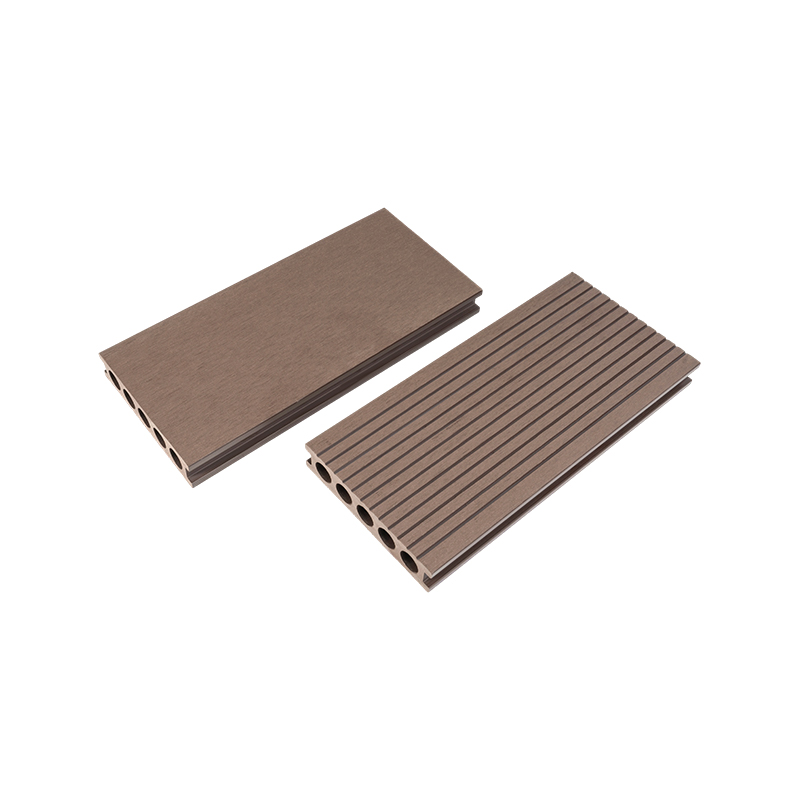
Composite decking clips are hidden fasteners designed to secure composite or WPC (Wood Plastic Composite) deck boards to the subframe without any visible screws or fixings on the walking surface. Each clip slots into the grooved side channel of a deck board and fastens to the joist below, while simultaneously providing a channel for the adjacent board to lock into. This creates a continuous, screw-free surface with consistent spacing between every board.
The clip's geometry serves two functions at once: structural fastening and controlled expansion management. By holding boards firmly at their edges rather than their face, clips allow each board to expand and contract laterally with temperature changes — typically 3–5 mm per 2 m length over a 40°C seasonal range — without buckling, lifting, or cracking.
Step-by-Step Installation Sequence
- Position the first board against the perimeter fascia and face-fix its outer edge to the joist with screws.
- Insert a clip into the groove on the exposed edge of the first board, pressing it flush against the joist surface.
- Drive a screw through the clip's fixing tab and into the joist to lock the clip in place.
- Slide the second board's groove over the protruding tongue of the same clip until it seats firmly.
- Repeat across the full deck width, maintaining consistent clip spacing of 400–500 mm along each joist line.
Plastic Clips vs. Stainless Steel Clips: Core Differences
The two primary categories of composite decking clips — polymer plastic and stainless steel — serve the same fastening function but differ significantly in strength, weight, cost, and ideal application context. Understanding these differences is essential before specifying clips for any project.
Plastic (Polymer Composite) Clips
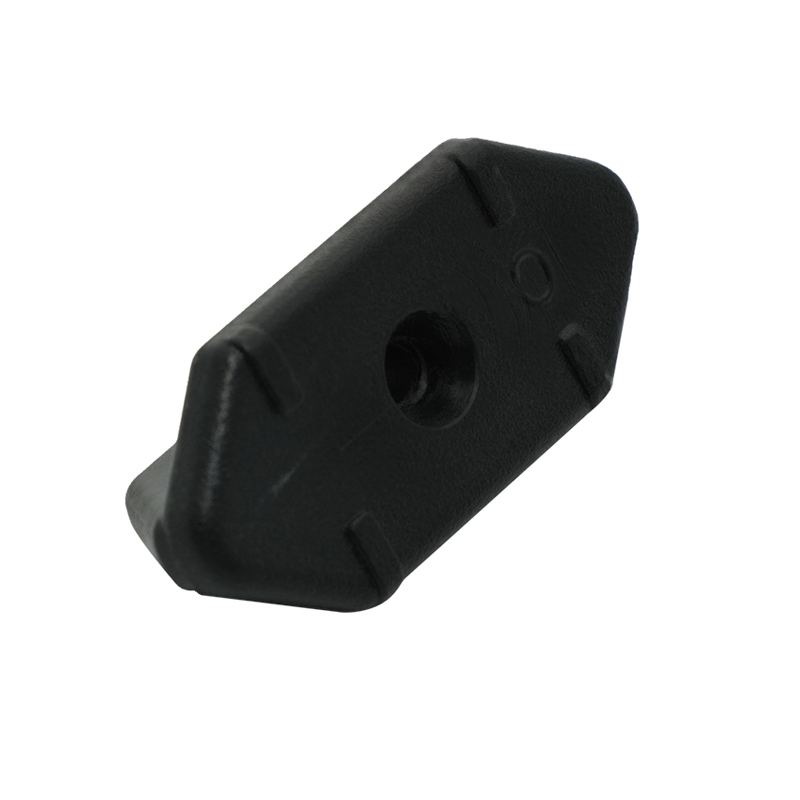
Plastic clips are injection-moulded from engineered polymer composites, typically nylon or polypropylene reinforced with glass fiber. They are lightweight, chemically inert, and entirely corrosion-proof, making them well-suited to humid, wet, or chemically active environments such as poolside decks and coastal gardens. Their lower production cost makes them the standard choice for residential projects where load demands are moderate.
Stainless Steel Clips
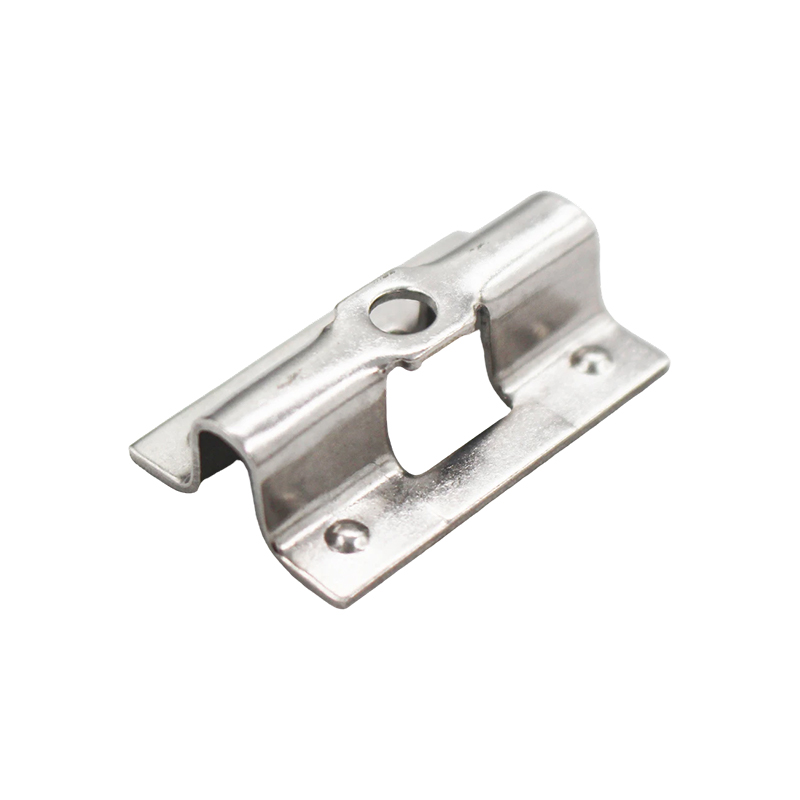
Stainless steel clips, typically manufactured from Grade 304 or Grade 316 stainless steel, offer substantially higher shear strength and long-term dimensional stability compared to plastic alternatives. Their snap-lock design creates a mechanically positive engagement with the board groove that resists vertical uplift — a critical property for elevated decks, commercial terraces, and installations subject to wind loading or heavy foot traffic. Grade 316 is specified for marine and poolside environments due to its superior chloride resistance.
Side-by-side comparison of plastic and stainless steel composite decking clips
| Property |
Plastic Clips |
Stainless Steel Clips |
| Material |
Nylon / glass-filled polypropylene |
Grade 304 or 316 stainless steel |
| Weight per 100 clips |
~200–400 g |
~800–1,200 g |
| Corrosion resistance |
Excellent (fully inert) |
Excellent (316 grade for marine) |
| Load-bearing capacity |
Moderate |
High |
| Relative cost |
Low |
Medium–High |
| Best application |
Residential, budget-conscious projects |
Commercial, elevated, high-traffic decks |
| UV stability |
Good (UV-stabilised grades available) |
Unaffected |
Key Advantages of Hidden Clip Fastening Over Face Screwing
Face screwing — driving screws directly through the top surface of each board — was the standard composite deck installation method for many years. Hidden clips have largely replaced this approach in quality installations for several well-documented reasons.
Clean, Uninterrupted Surface Appearance
Clip-fastened decks present a completely screw-free walking surface. This not only delivers a more premium aesthetic but also eliminates the surface discoloration that typically develops around screw heads as iron tannins leach from the surrounding composite material over time. In design-led residential and commercial projects, the visual difference between a clipped deck and a face-screwed deck is immediately apparent.
Reduced Risk of Board Cracking and Surface Damage
Every screw penetration in a face-screwed deck creates a stress concentration point. As boards expand and contract seasonally, these stress points can lead to micro-cracking that progressively widens, particularly in capped composite products where the co-extruded outer layer has different thermal properties to the core. Hidden clips entirely eliminate penetration-related cracking by fastening from the board's side groove rather than its face.
Consistent Board Spacing and Drainage
Standard composite decking clips are sized to automatically set a 3–6 mm gap between adjacent boards. This gap is maintained consistently across the entire deck without manual measurement, ensuring uniform drainage and ventilation beneath the surface. On a face-screwed deck, board spacing is set by eye and frequently varies, resulting in uneven water runoff patterns and areas of standing water.
Simplified Board Replacement
When a single board on a clipped deck needs replacement — due to impact damage, staining, or discoloration — it can be removed by releasing the clips from one edge without disturbing adjacent boards. On a face-screwed deck, board removal frequently damages the surrounding boards and requires repainting or patching of screw holes in any boards that are retained.
How to Calculate the Number of Clips Required
Accurate clip quantity estimation prevents project delays and unnecessary material waste. The calculation is straightforward once the key variables are established.
Clips Per Board Run
For each joist that a board crosses, one clip is required at that joist position. With a standard joist spacing of 400 mm centre-to-centre, a 4 m long board run will require approximately 10 clips per board side (one at each joist). Since each clip serves two adjacent boards simultaneously, the total clip count equals the number of joist positions per run, not twice that figure.
Overall Deck Estimate
A useful rule of thumb for standard residential installations is 20–25 clips per square meter of deck area at 400 mm joist spacing. For diagonal installations (boards laid at 45°), joist spacing should be reduced to 300 mm, increasing the clip requirement to approximately 28–35 clips per square meter. Always add a 10% contingency to the calculated quantity to cover broken clips, offcuts at perimeter boards, and future replacement stock.
Estimated clip quantities per square meter at different joist spacings and installation angles
| Joist Spacing |
Standard (90°) Layout |
Diagonal (45°) Layout |
| 300 mm |
~28–32 clips/m² |
~35–40 clips/m² |
| 400 mm |
~20–25 clips/m² |
~28–35 clips/m² |
| 500 mm |
~16–20 clips/m² |
~22–28 clips/m² |
Choosing the Right Clip for Your Project: A Decision Framework
The right clip type is determined by four project-specific factors. Evaluating each one systematically will lead to a clear specification decision.
- Budget: If the project has a tight material budget, polymer plastic clips deliver reliable fastening performance at significantly lower cost per unit. For large residential decks of 50 m² or more, the cost difference between plastic and stainless steel clips can be substantial.
- Load and traffic level: For commercial venues, rooftop terraces, hospitality spaces, or any deck expected to carry heavy furniture, equipment, or dense foot traffic, stainless steel clips are the appropriate specification. Their higher shear strength prevents clip deformation under sustained load.
- Environment: Both plastic and stainless steel clips are corrosion-resistant, but in marine environments with airborne salt spray, Grade 316 stainless steel is the preferred choice. Standard Grade 304 stainless may show surface oxidation within three to five years in direct coastal exposure.
- Board groove compatibility: Always verify that the clip profile matches the groove dimensions of the specific deck board being used. Clip width, depth, and tongue height must correspond to the board manufacturer's groove specification. Using mismatched clips is a leading cause of board movement and clip failure in the field.
Common Installation Mistakes and How to Avoid Them
Even experienced installers encounter recurring problems with composite decking clips. Being aware of these issues in advance can prevent costly rework.
Over-tightening the Fixing Screw
Driving the clip screw too deeply deforms the clip's fixing tab, pulling the clip downward and causing the board groove to ride up out of the clip tongue. The result is a board that sits visibly higher on one edge. Screw depth should be set so the clip sits flush with the joist face — not recessed below it. Using a screw gun with an adjustable depth stop is strongly recommended.
Insufficient Clip Quantity at Board Ends
Board ends are the most vulnerable point for vertical movement. At least one clip should be placed within 50 mm of each board end, in addition to the regular spacing along the run. Omitting end clips leads to board-end lift — a condition where the board corners rise over time, creating both a trip hazard and an unsightly appearance.
Using Clips Incompatible with the Board Profile
Generic or substitute clips that are slightly wider or narrower than the board groove will either be too loose to hold the board firmly or too tight to allow for thermal expansion. Both conditions cause long-term problems. Always use clips that are explicitly matched to the board manufacturer's groove specification or approved as compatible alternatives.
Skipping the Starter Row Face Fix
The first board in a deck run has only one grooved edge engaged by clips — its outer edge is held only by the perimeter fascia. Without face-fixing this edge to the joist, the first board can pull away from the fascia as the rest of the deck exerts lateral pressure during thermal expansion. The outer edge of the starter board should always be face-screwed at every joist position before clipping proceeds.
Frequently Asked Questions About Composite Decking Clips
Can I use composite decking clips with solid (non-grooved) boards?
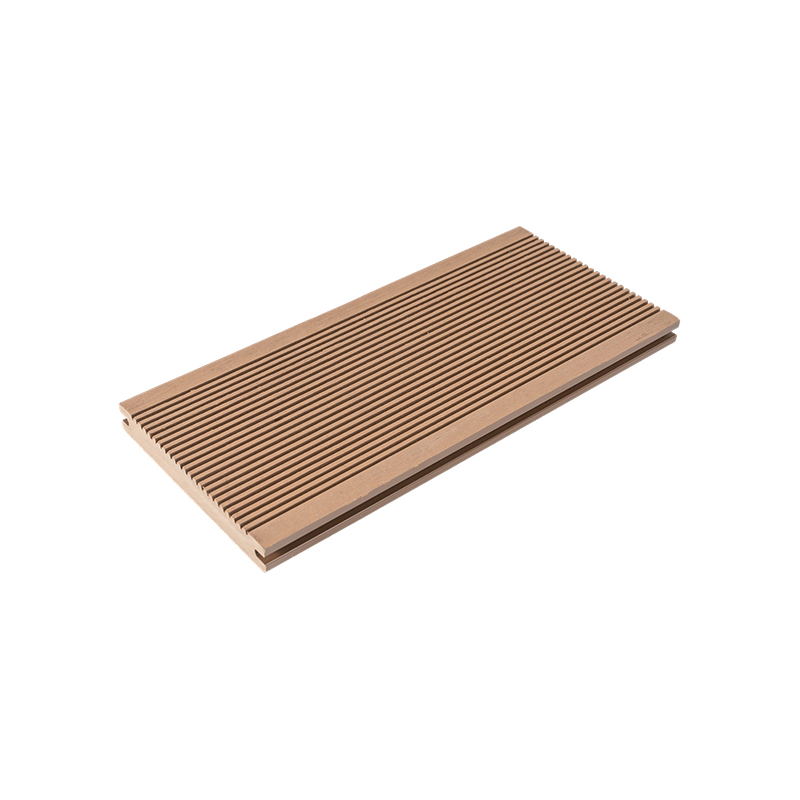
No. Standard hidden clips require a side groove channel to engage with. Solid boards are designed for face screwing only. Some manufacturers offer a specialist T-clip that can be used with solid boards by sitting between adjacent boards and screwing directly to the joist, but these are less common and provide a different spacing geometry than standard groove clips.
Do plastic clips degrade in UV exposure over time?
Because clips sit in the shadow gap between boards, they receive very limited direct UV exposure in service. Standard polymer clips perform well in this sheltered position for 10–15 years or more without degradation. UV-stabilised grades are available for applications where clips may be directly exposed to sunlight, such as wide-spaced board layouts.
Can I remove and reuse clips if I need to relay the deck?
Plastic clips can generally be reused if they are removed carefully without damage. Stainless steel snap-lock clips are more durable and can typically withstand multiple removal and reinstallation cycles. In practice, clips are low-cost enough that replacing clips on relay is recommended to ensure consistent holding performance with new boards.
What screw should I use to fix clips to the joist?
For timber joists, a stainless steel self-tapping decking screw of 4.0–4.5 mm diameter and 30–40 mm length is the standard specification. For aluminium or steel joists, use self-drilling stainless steel screws with a thread pitch suited to metal substrates. Always match screw material to joist material to prevent galvanic corrosion at the fixing point.
How much gap do composite decking clips create between boards?
Most standard clips are designed to produce a 3–6 mm gap between adjacent boards. This gap width is determined by the clip's body thickness and cannot be adjusted once a clip type is selected. For decks over drains or areas requiring rapid water clearance, wider-gap clips (6–8 mm) are available as a specialist product.

 English
 Français
 Español
 Deutsch