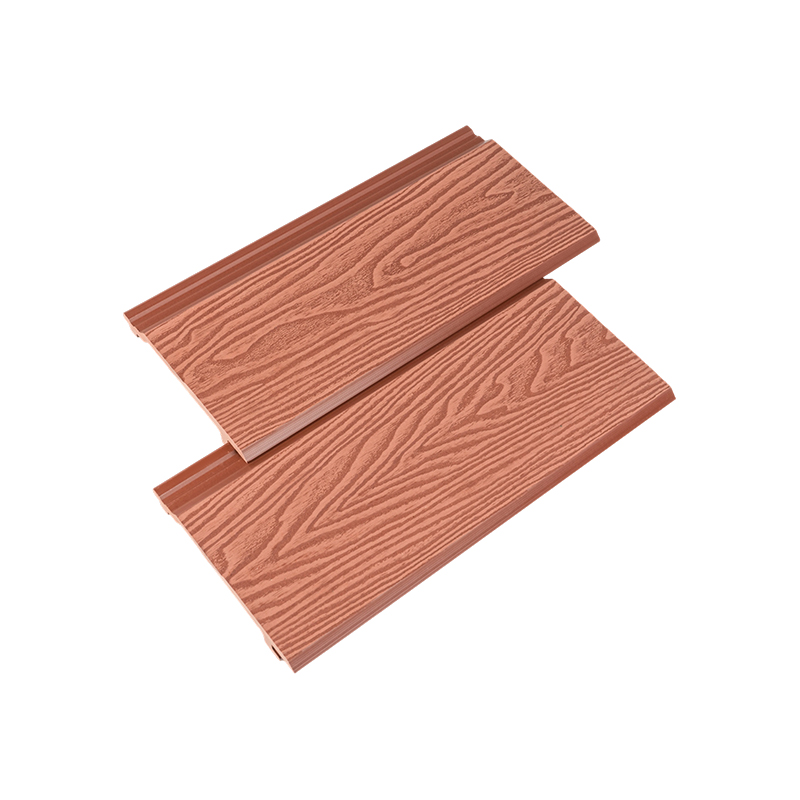
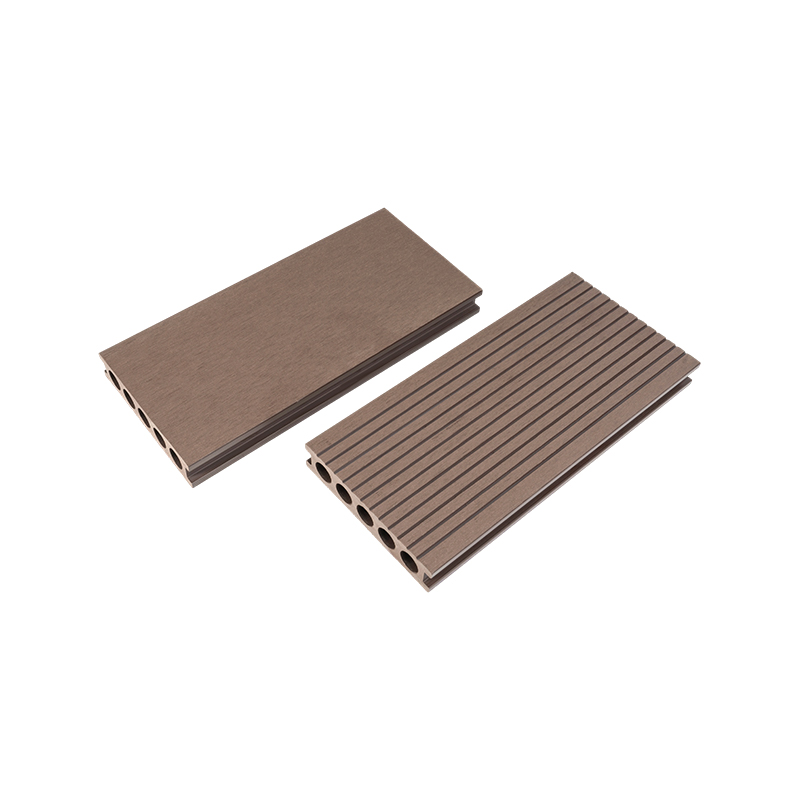
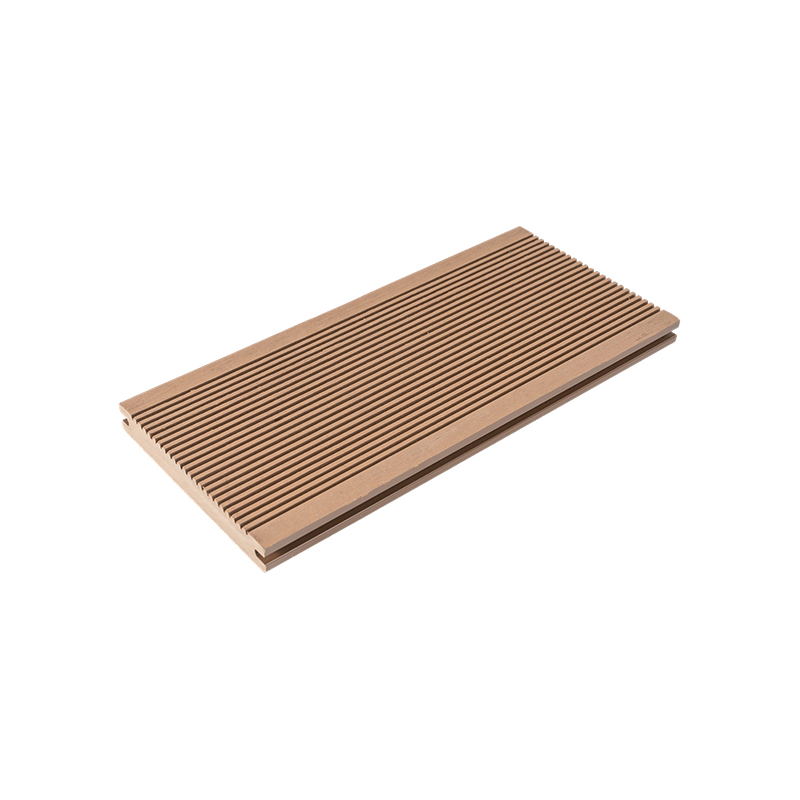
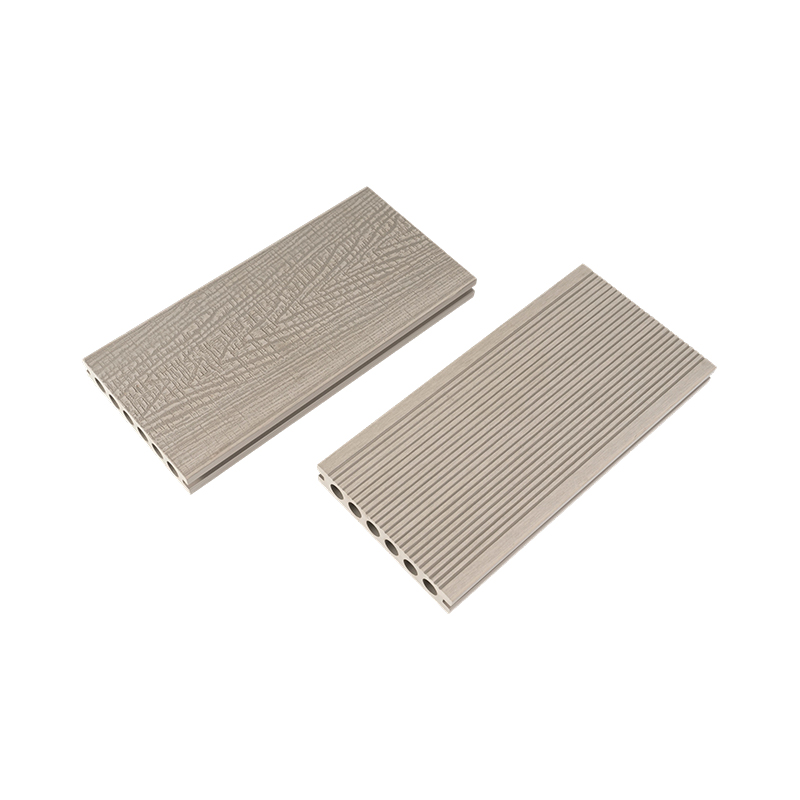
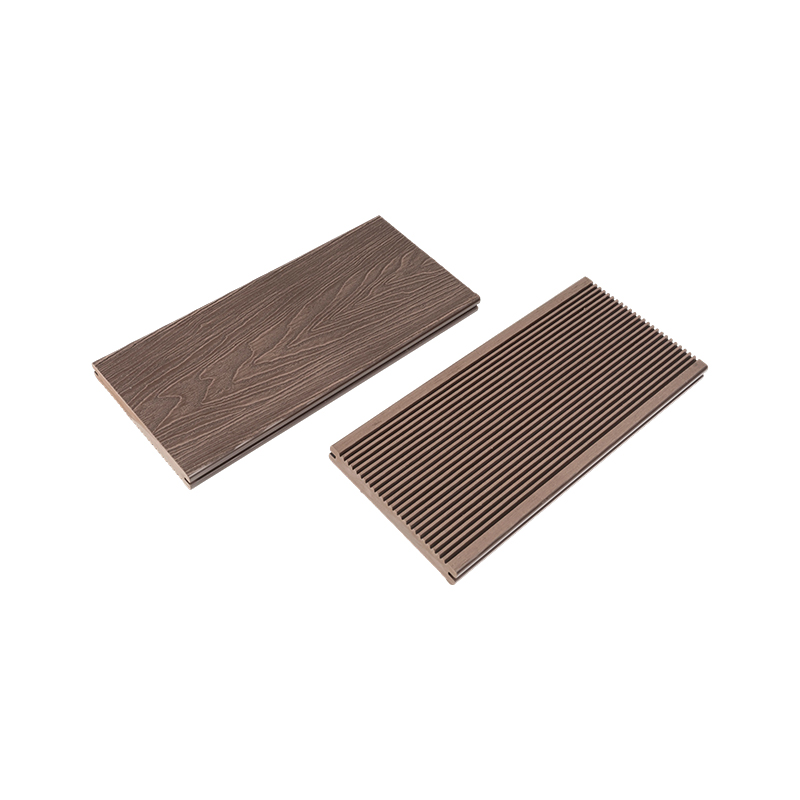
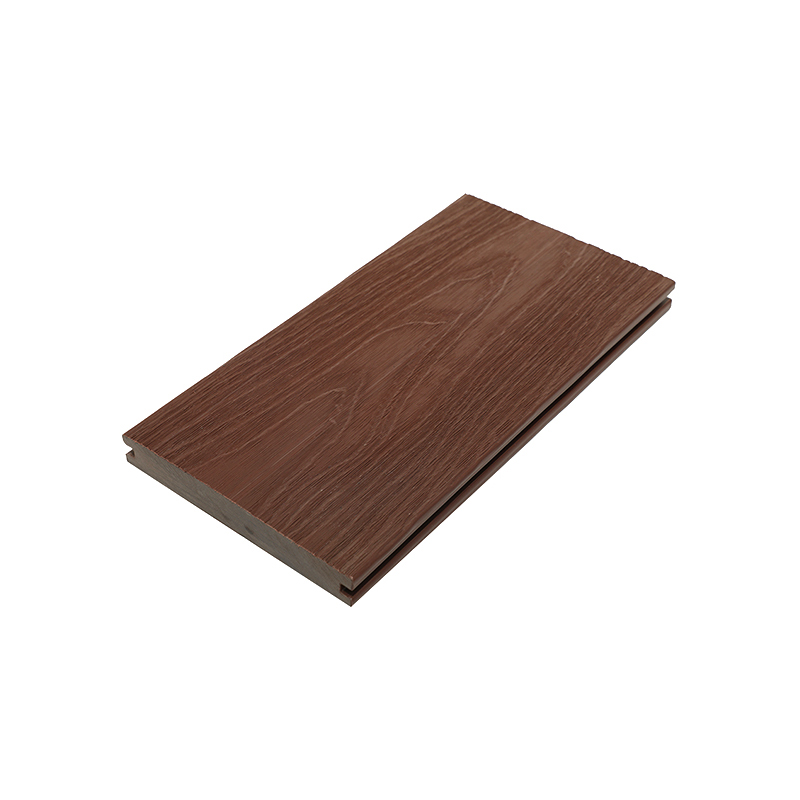
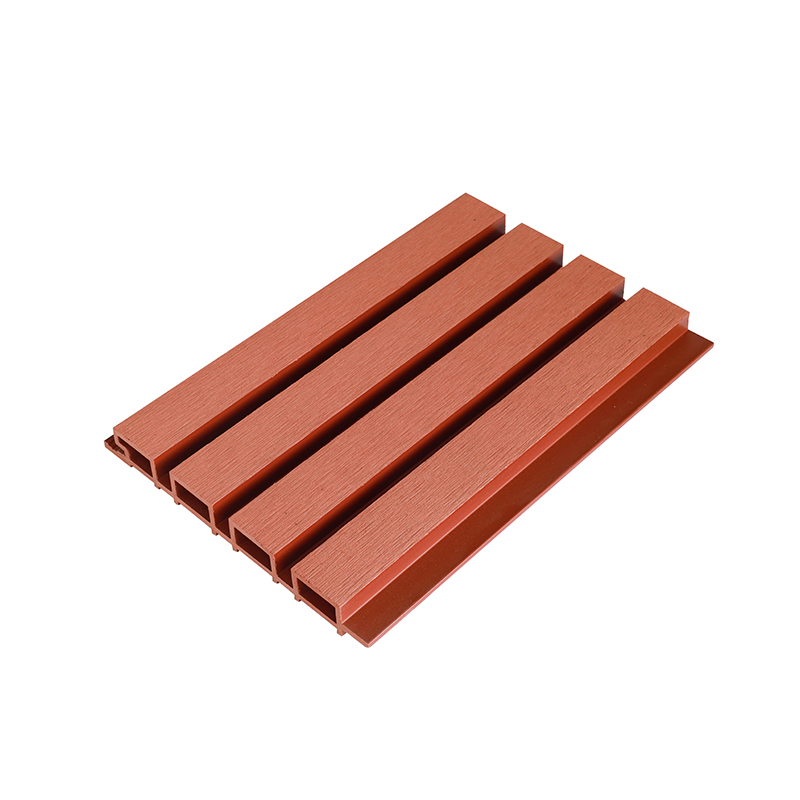
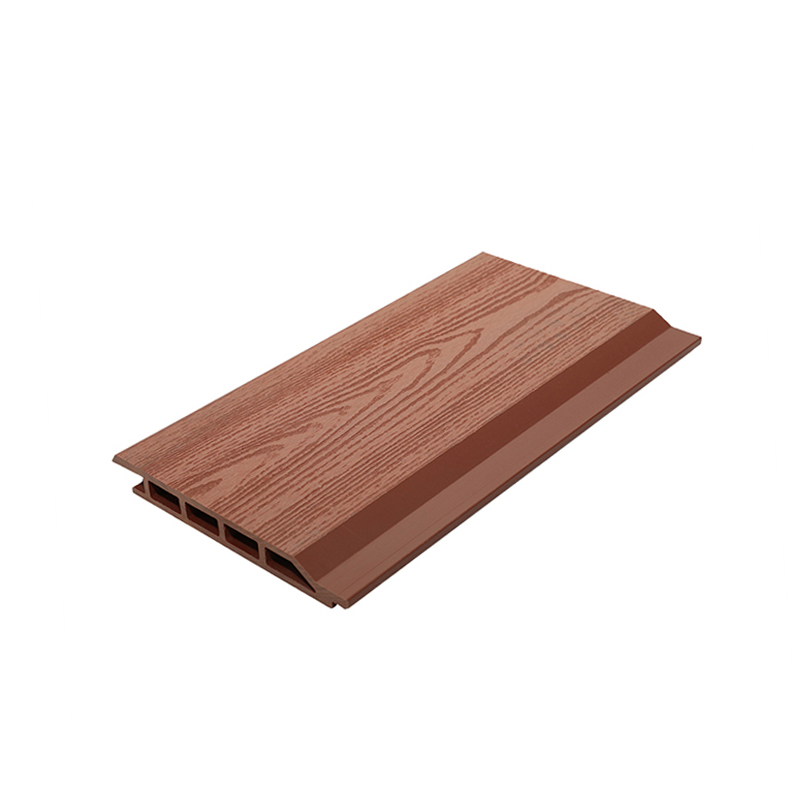
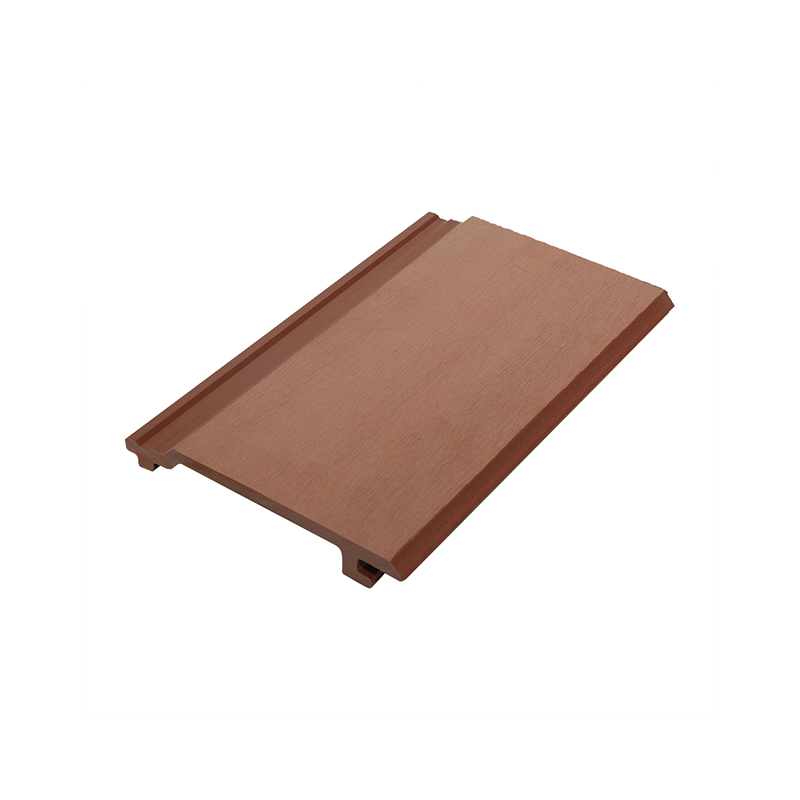
3D embossed cladding is an advanced type of wood-plastic composite (WPC) wall cladding that features a deeply contoured, three-dimensional wood grain texture formed directly into the board surface during the extrusion manufacturing process. Compared with standard WPC wall cladding, 3D embossed cladding achieves a significantly more natural visual appearance and a more realistic timber grain texture — one that produces genuine light-and-shadow variation across the board surface that changes with viewing angle throughout the day, closely replicating the dynamic visual quality of real sawn timber.
3D embossed cladding sits between standard WPC and premium co-extruded cladding in the composite wall cladding range. It delivers a meaningful aesthetic upgrade over classic WPC — the deeper grain is visibly more convincing as timber at normal viewing distances — while retaining all the durability, weather resistance, and zero-maintenance benefits that make composite materials a compelling alternative to natural timber wall finishes. It requires no additional treatment before, during, or after installation, and the grain texture is produced entirely during the extrusion process without any supplementary post-production process.
How 3D Embossed Cladding Is Made: The Technology Behind the Texture
WPC Core Material
Like all WPC cladding, 3D embossed boards begin with a precisely formulated blend of 50–70% reclaimed wood fibre and 30–50% recycled thermoplastic polymer — typically polyethylene (PE) or polypropylene (PP) — combined with UV stabilisers, colorants, fungicide additives, and processing agents. No chemical adhesives are used, and quality products meet the E0 formaldehyde emission standard, making them safe for both interior and exterior use. Colour pigment is distributed throughout the entire board material during mixing, so the colour is consistent from the surface to the core — minor surface marks do not expose a differently coloured substrate beneath.
The 3D Embossing Stage: What Makes the Difference
After the composite material is extruded through the shaped die to form the board profile, the board surface passes through a precision-engineered embossing roller while the material is still in a semi-plastic, workable state. This is where 3D embossed cladding diverges fundamentally from standard WPC cladding. Standard embossing presses a relatively shallow surface pattern into the board — adequate to add basic grain character but producing a surface that reads as artificial at close inspection range because all surface points occupy approximately the same plane. The 3D embossing roller presses a significantly deeper, more complex grain structure with raised grain peaks, recessed grain valleys, and lateral wood pore detail that create the multi-plane texture characteristic of genuine sawn timber. No additional post-production surface treatment or coating is required — the texture is complete as formed during extrusion.
Why Grain Depth Creates Visual Realism
Natural timber looks convincing at viewing distance partly because its surface grain has genuine physical depth — light strikes raised grain peaks at a different angle than it falls into recessed grain channels, creating continuous micro-shadow variation across the surface. A shallow embossed surface produces relatively uniform light reflection because all surface points are close to the same plane. The pronounced relief of 3D embossing creates the same dynamic shadow variation as real timber, with the surface character visibly changing as the viewer's position and the light angle shift throughout the day. This is why 3D embossed cladding reads as more natural than standard WPC at the viewing distances people typically experience from inside a building looking out, from a garden or street, or when standing adjacent to the wall.
Key Advantages of 3D Embossed Cladding
More Natural Appearance Than Standard WPC Cladding
The primary advantage of 3D embossed cladding over classic WPC is its significantly more realistic timber aesthetic. The deeper grain relief, lateral wood pore detail, and dynamic light interaction produced by the 3D embossing process create a wall surface that is visibly more convincing as timber from any normal viewing distance — whether from across a garden, from inside a room looking at an interior feature wall, or from the street looking at a building façade. For projects where visual quality and timber realism are design priorities, 3D embossed cladding delivers a perceptibly premium result over standard WPC without the cost of co-extruded products.
Deeper Grain That Lasts: Long-Term Texture Durability
Because the 3D grain is pressed significantly deeper into the board surface than standard embossing, it retains its texture character far longer under weathering and physical contact. Standard shallow embossing can gradually smooth and flatten on high-contact wall areas over several years, producing a more artificial appearance as the board ages. The greater depth of 3D embossed grain means the texture remains visually present and characterful well into the product's service life — quality 3D embossed cladding carries warranties of 15 to 20 years and realistic service lives of 18 to 25 years under normal conditions. The deeper grain is genuinely more durable as a texture, not just more visually realistic when new.
No Additional Treatment Required Before, During, or After Installation
3D embossed cladding requires no additional surface treatment of any kind. The grain texture is formed during manufacturing as an integral part of the extrusion process — there is no separate coating, sealing, or finishing step required to produce or activate the texture. UV stabilisers built into the board material provide ongoing weather protection without any supplementary treatment. Unlike natural timber cladding — which requires repainting or restaining every 2 to 4 years on exterior elevations — 3D embossed WPC cladding maintenance consists solely of periodic washing with water and mild detergent.
All the Core WPC Performance Properties
As a WPC-based product, 3D embossed cladding inherits the complete suite of composite performance advantages over natural timber: resistance to rot, mildew, cracking, warping, splitting, and insect attack; dimensional stability under moisture cycling; colour consistency across all boards in a production batch; and safe E0-certified interior use. These properties are inherent to the material from day one — they do not depend on maintenance schedules to sustain, unlike natural timber where they depend entirely on the consistency of treatment application.
Appropriate for Both Interior and Exterior Applications
The E0 emission rating and no-adhesive production make 3D embossed cladding fully safe for interior use, while its UV stabilisers and moisture-resistant composition make it appropriate for exterior wall applications in a wide range of climates. The same board product can be specified across interior feature walls, exterior building façades, balcony surrounds, garden landscape walls, and covered outdoor structures — providing design continuity and procurement simplicity across a building's indoor and outdoor surfaces.
Environmentally Responsible Manufacturing
3D embossed cladding is manufactured from recycled materials — 50–70% reclaimed wood fibre and 30–50% recycled plastic — without chemical adhesives and to E0 formaldehyde emission standards. The 3D texture is produced during extrusion without any additional chemical process, keeping the manufacturing environmental profile clean. The long service life of 18 to 25 years further reduces the lifetime material throughput and waste generation compared to natural timber cladding requiring replacement every 10 to 15 years without consistent treatment.
3D Embossed Cladding vs Standard WPC vs Co-Extruded: A Clear Comparison
Performance and aesthetic comparison across the three main composite wall cladding types
| Criterion |
Standard WPC Cladding |
3D Embossed Cladding |
Co-Extruded Cladding |
| Surface grain depth |
Shallow |
Deep 3D relief |
Variable (cap finish) |
| Timber visual realism |
Moderate |
High |
High (with 3D cap option) |
| Texture durability (wear) |
Moderate (shallow grain wears) |
Good (deeper grain lasts) |
Excellent |
| Moisture resistance |
Good |
Good |
Excellent (non-porous cap) |
| UV fade resistance |
Moderate |
Good |
Best (dedicated UV cap) |
| Stain resistance |
Good |
Good |
Excellent (non-porous cap) |
| Additional treatment needed |
None |
None |
None |
| Typical warranty |
10–15 years |
15–20 years |
20–25 years |
| Realistic service life |
15–20 years |
18–25 years |
25–30 years |
| Relative material cost |
Lower |
Medium |
Higher |
Where 3D Embossed Cladding Is Used: Interior and Exterior Applications
3D embossed cladding's elevated visual quality makes it the preferred choice wherever occupants or visitors experience the wall surface at close range:
Exterior Applications
- Premium residential façades: Homeowners seeking a natural timber exterior appearance without the maintenance demands of real wood find 3D embossed cladding the closest composite alternative to genuine timber at a price point between standard WPC and co-extruded products
- Garden buildings and outbuildings: The realistic grain texture of 3D embossed cladding on summerhouses, garden offices, and storage buildings creates a premium aesthetic that standard WPC cannot match at similar cost
- Balcony screens and privacy surrounds: 3D embossed boards on aluminium or steel batten frames deliver both visual quality and weather resistance for elevated outdoor screening applications
- Commercial building façades: Retail units, hospitality venues, and office buildings use 3D embossed cladding to achieve a high-quality timber-aesthetic exterior without the management cost of natural timber maintenance programmes
- Garden landscape walls and feature structures: Freestanding garden walls, raised planter surrounds, and pergola columns clad in 3D embossed WPC create a unified, realistic timber landscape aesthetic that weathers well without treatment
Interior Applications
- Residential feature walls: Living rooms, bedrooms, hallways, and home offices benefit from the natural warmth and depth of 3D embossed grain at closer viewing range than exterior applications — where the superior realism of the deep grain is most apparent
- Hotel and resort interiors: Lobbies, corridors, restaurant feature walls, and spa environments where a premium natural aesthetic is a design requirement use 3D embossed cladding for its realistic appearance and minimal ongoing maintenance
- Commercial reception and showroom walls: High-quality interior feature walls for commercial premises that require a premium first impression without refinishing requirements over the building's lifespan
- Indoor-outdoor transition spaces: Covered terraces, verandas, and indoor-outdoor living areas where the same cladding material is specified continuously across interior and exterior wall surfaces, with 3D embossed grain providing visual quality in both contexts
Installation: Key Requirements for 3D Embossed Cladding
3D embossed cladding installs using the same methods as standard WPC cladding — the 3D surface texture does not affect the board's installation dimensions or fixing method. The following requirements apply regardless of orientation or application:
Subframe and Ventilated Cavity
For exterior applications, boards are fixed to a batten frame mounted to the wall structure, creating a ventilated cavity of at least 25 mm behind the cladding. This cavity allows moisture vapour from the wall substrate to escape and prevents condensation accumulation behind the boards. Aluminium battens are preferred for coastal and high-moisture environments; pressure-treated timber battens at minimum 25 mm × 50 mm are appropriate for sheltered applications. For interior use, boards can be fixed directly to a flat, dry wall substrate or to a batten frame where levelling is required.
Expansion Gaps
A 5–8 mm gap must be maintained at all board termini — where boards meet corner trims, window reveals, door surrounds, and other fixed elements — to accommodate longitudinal thermal expansion. Boards installed without adequate end gaps will buckle against fixed elements in warm weather, potentially causing permanent deformation. The lateral gap between adjacent boards is maintained by the clip fixing system during installation.
Sealing Cut Ends
Every board end cut on site must be sealed immediately with manufacturer-approved end-grain sealant. The through-colour pigment in 3D embossed boards is consistent to the core, but cutting exposes raw wood fibre at the cut face. Sealing this face is mandatory to prevent moisture ingress at board ends — the only remaining moisture vulnerability once the embossed board surface is properly maintained.
Grain Direction and Board Orientation
Install 3D embossed boards with the grain lines running horizontally for horizontal cladding installations, or vertically for vertical installations. For exterior applications, orient boards so that water drains along rather than across the grain channels — this maximises weather-shedding performance and prevents water from pooling against raised grain elements. The deeper grain of 3D embossed boards makes this consideration more relevant than for shallow-embossed standard WPC, where the grain relief is less significant to drainage behaviour.
Maintenance: What 3D Embossed Cladding Actually Requires
No painting, oiling, staining, or protective treatment is ever required. The complete maintenance routine for 3D embossed cladding is:
- Regular sweeping or brushing: Remove loose debris, dust, and organic material — particularly from the deeper grain channels where matter can accumulate more readily than on shallow-embossed surfaces
- Periodic washing: Wash along the board length with warm water and mild household detergent using a soft brush or low-pressure hose, once or twice per year. Working along the grain channels (not across them) dislodges debris more effectively without risk of surface damage
- Mould or algae treatment (if needed): On shaded or north-facing walls where organic growth can develop, a dilute white vinegar solution or manufacturer-approved composite cleaner removes surface biological growth effectively without damaging the board surface
- Stain removal: For surface marks, apply mild detergent with a soft brush along the grain direction. Never use bleach, solvents, or metal abrasive pads — these permanently damage the surface and void the warranty
The annual maintenance time for a typical residential cladding installation is under two hours, compared to the full-day or multi-day repainting requirement of an equivalent natural timber façade every 2 to 4 years.
Frequently Asked Questions About 3D Embossed Cladding
What makes 3D embossed cladding look more natural than standard WPC?
The difference is grain depth and its effect on light interaction. Standard WPC embossing creates a surface pattern where all points occupy approximately the same plane — producing relatively uniform light reflection regardless of viewing angle. 3D embossing creates a surface with genuine height variation between raised grain peaks and recessed channels, plus lateral wood pore detail. As light angle changes throughout the day, the raised and recessed grain elements cast and receive shadow in continuously shifting patterns — the same dynamic quality that makes real timber look three-dimensional and alive rather than flat and printed. This effect is most apparent on wall surfaces, where the viewer is looking at the board face-on rather than downward as with decking.
Does 3D embossed cladding need any special treatment or preparation before installation?
No special pre-installation treatment is required for the boards themselves. The 3D texture is completely formed during manufacturing — there is no activation process, no primer application, and no post-production finishing step needed. The boards are installation-ready as supplied. The only required installation-stage step beyond the standard cladding installation process is sealing all cut board ends with manufacturer-approved end-grain sealant, which applies to all composite cladding regardless of surface type.
Does the deep grain wear down over time on wall applications?
Wall cladding typically experiences significantly less physical contact abrasion than decking underfoot. For most wall applications, texture wear is not a practical concern — the grain retains its depth and character throughout the product's service life without the foot traffic abrasion that affects decking boards. In high-contact interior locations — such as corridor walls or areas subject to frequent physical contact — the deeper grain of 3D embossed boards provides substantially greater wear resistance than standard shallow-embossed WPC before the surface appears worn.
How does 3D embossed cladding differ from co-extruded cladding?
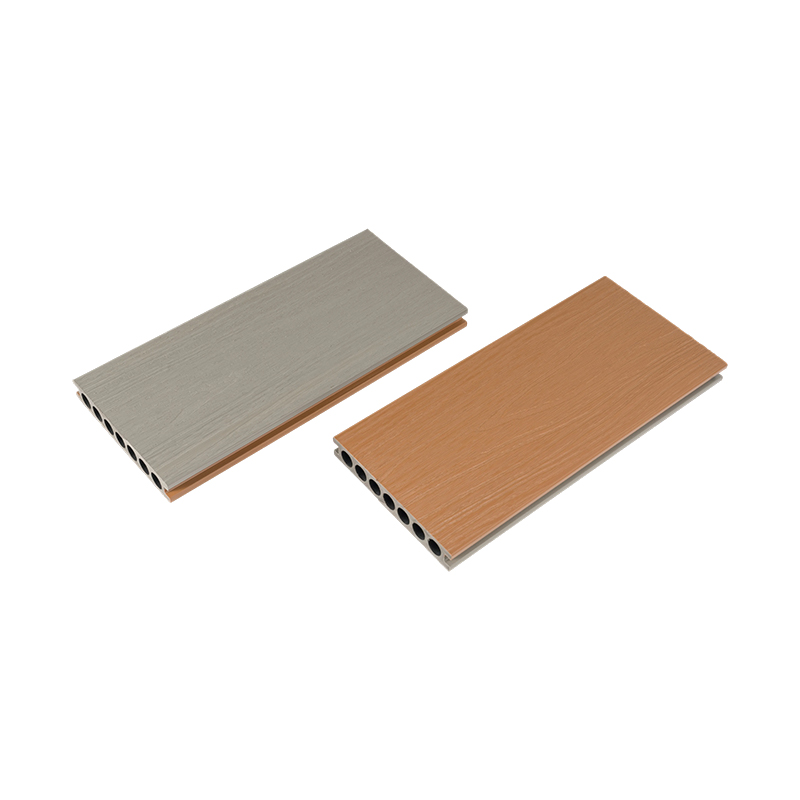
3D embossed cladding is standard WPC with a significantly deeper, more realistic grain texture formed during extrusion. Co-extruded cladding adds a polymer cap layer bonded to all surfaces of the WPC core — providing a non-porous barrier that dramatically improves moisture resistance (less than 1% water absorption versus 3–8% for uncapped WPC), UV fade resistance, and stain resistance. Both products offer superior visual quality over standard WPC, but through different mechanisms: 3D embossed primarily improves appearance; co-extrusion primarily improves long-term weather performance. For the most demanding exterior applications, co-extruded cladding with a 3D grain cap finish provides both benefits simultaneously — the deepest available grain combined with the highest performance protection.
Can 3D embossed cladding be used in bathrooms and humid interiors?
Yes. WPC-based 3D embossed cladding resists moisture far better than natural timber or painted plasterboard in humid interior environments. It will not swell, warp, or support mould growth within the board material in bathroom or kitchen conditions. The deeper grain channels of 3D embossed boards do accumulate surface moisture and cleaning products more readily than flat surfaces — ensure the surface is wiped down and dried periodically in persistently humid conditions to prevent surface biological growth in the channels. For direct water spray zones inside shower enclosures, verify wet-area suitability with the specific product's manufacturer.
Will 3D embossed cladding fade on a south-facing exterior wall?
All outdoor materials experience some colour change from UV exposure over time. 3D embossed WPC cladding incorporates UV stabilisers throughout the board material that resist progressive UV fade significantly better than untreated timber. Quality 3D embossed cladding maintains stable colour for 10 to 15 years on typical exposures, with manufacturers typically warranting colour performance over this period. An initial weathering phase of 6–12 months after installation — during which surface pigments settle to their stable outdoor tone — is normal for all composite materials. After this initial period, colour should remain essentially stable for the warranty duration in a quality product.
Can 3D embossed cladding be installed by a DIY installer?
For competent DIY installers with experience in timber or composite cladding, straightforward residential applications are achievable. The clip fixing system is systematic, and the boards are workable with standard woodworking tools. The most common DIY installation errors — insufficient expansion gaps, unsealed cut ends, and inadequate batten frame ventilation — are all preventable by following the manufacturer's installation guidance carefully. For multi-storey buildings, complex façade geometries, or installations where product warranty compliance is critical, professional installation is recommended to ensure all system requirements are correctly followed.
Choosing 3D Embossed Cladding: What to Look for Before You Buy
- Evaluate grain depth from physical samples, not photographs. The defining quality of 3D embossed cladding — grain depth — is nearly impossible to assess from screen images. Request physical board samples and examine them in natural outdoor light at different angles, observing how the grain shadow shifts as viewing angle changes. This is the only reliable method for evaluating 3D grain quality before committing to a product.
- Request a written warranty covering fade and structural performance. Quality 3D embossed cladding from a credible manufacturer will carry a written warranty of 15 to 20 years covering both colour stability and structural integrity. Products without a written fade warranty have insufficient UV stabiliser specification for long-term colour retention on exterior elevations.
- Confirm E0 emission certification for interior applications. If specifying 3D embossed cladding for interior use — particularly in bedrooms, children's rooms, or healthcare environments — confirm the product's E0 formaldehyde emission certification from the manufacturer's data sheet before specification.
- Specify aluminium battens for exterior and high-moisture environments. Timber battens are susceptible to rot — using composite cladding on deteriorating timber battens creates a maintenance vulnerability at the subframe level that undermines the cladding's performance. Aluminium battens match composite cladding's service life in demanding environments.
- View board samples fixed to your actual wall surface before finalising colour. Colour and grain appearance change significantly with wall orientation, viewing distance, and ambient light conditions. Fix samples to your wall and assess them at different times of day and in different weather before committing to a colour specification.
- Order the full project quantity from a single production batch with a 10% waste allowance. Colour can vary slightly between manufacturing batches within the same product range. Ordering all material together — with a minimum 10% waste allowance for cuts, detailing, and future repairs — guarantees colour consistency across the finished wall and provides matching spare boards for future maintenance needs.

 English
 Français
 Español
 Deutsch