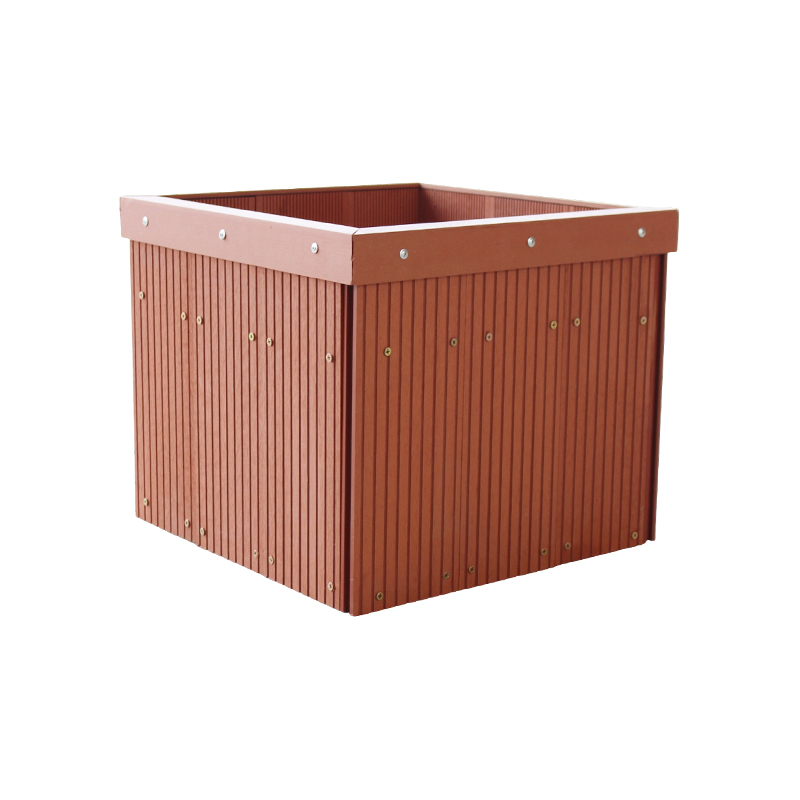
A WPC garden planter is a contained growing vessel that sits above ground, allowing plants, flowers, herbs, vegetables, or shrubs to be cultivated in any outdoor location regardless of the existing ground conditions beneath. On paved patios, concrete balconies, rooftop terraces, commercial forecourts, and timber decking surfaces — where in-ground planting is impossible — planters are the primary means of bringing planted life into a space. The planter box is not merely a functional container; it is a visible design element in the garden at all times, whether or not it is in full flower, and its material quality and appearance directly shape the character of the space it inhabits.
Material choice determines almost everything about a planter's long-term performance: how long it survives in permanent soil and moisture contact, how it ages visually, whether it can withstand frost cycles, how much it weighs, and whether it needs ongoing maintenance to stay structurally sound and presentable. The most common point of failure for outdoor garden planters is rot and structural collapse at the soil contact line — a failure mechanism that affects timber almost exclusively, and that explains why WPC (wood-plastic composite) constructed from the same material as high-quality outdoor decking boards has become the preferred choice for planters where longevity and appearance quality are both priorities.
How WPC Garden Planters Are Constructed from Decking Boards
Starting Material: WPC Decking Board
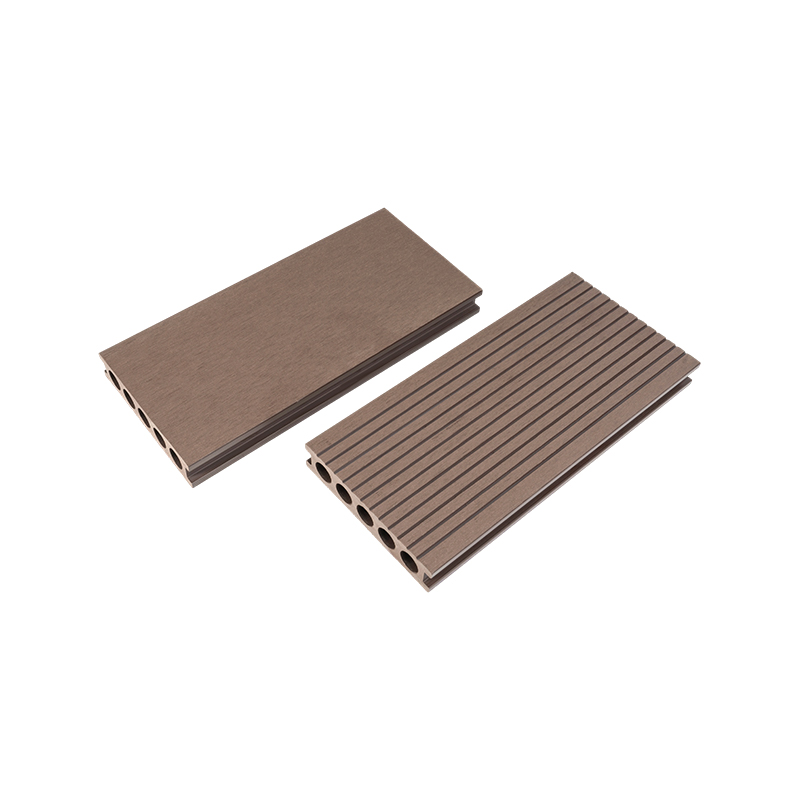
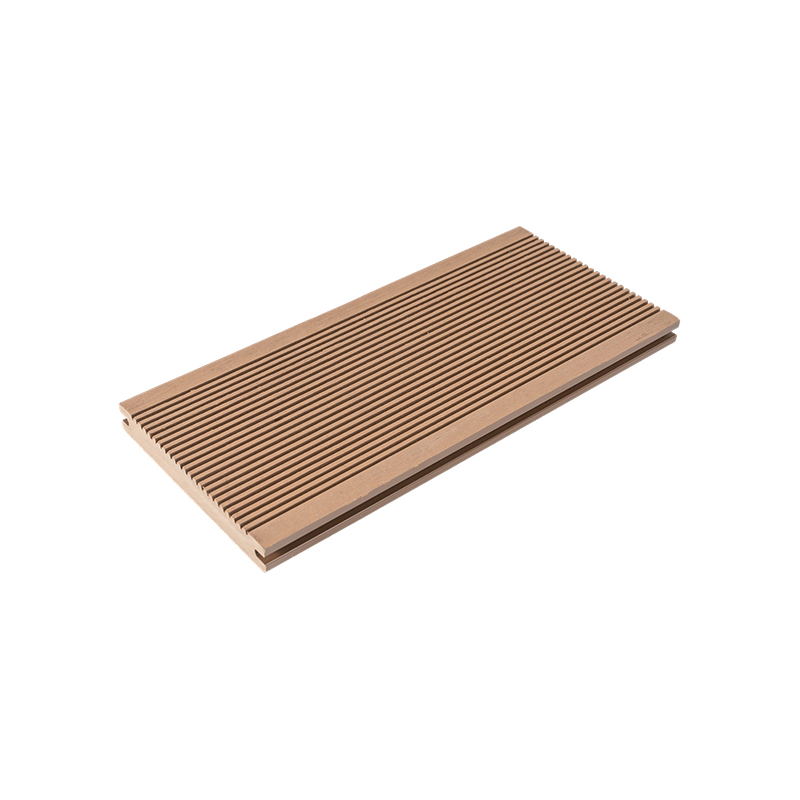
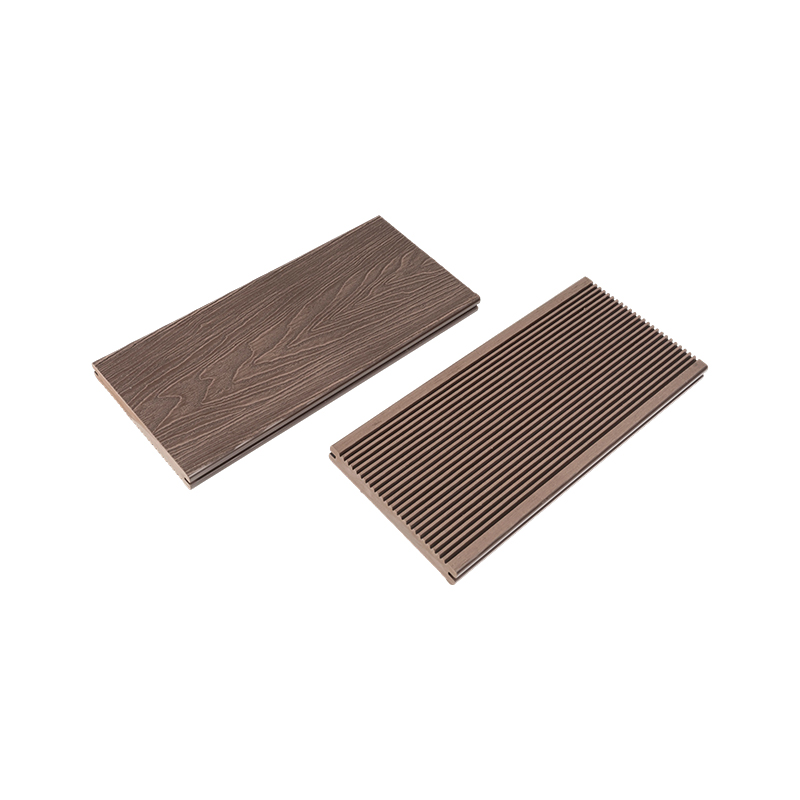
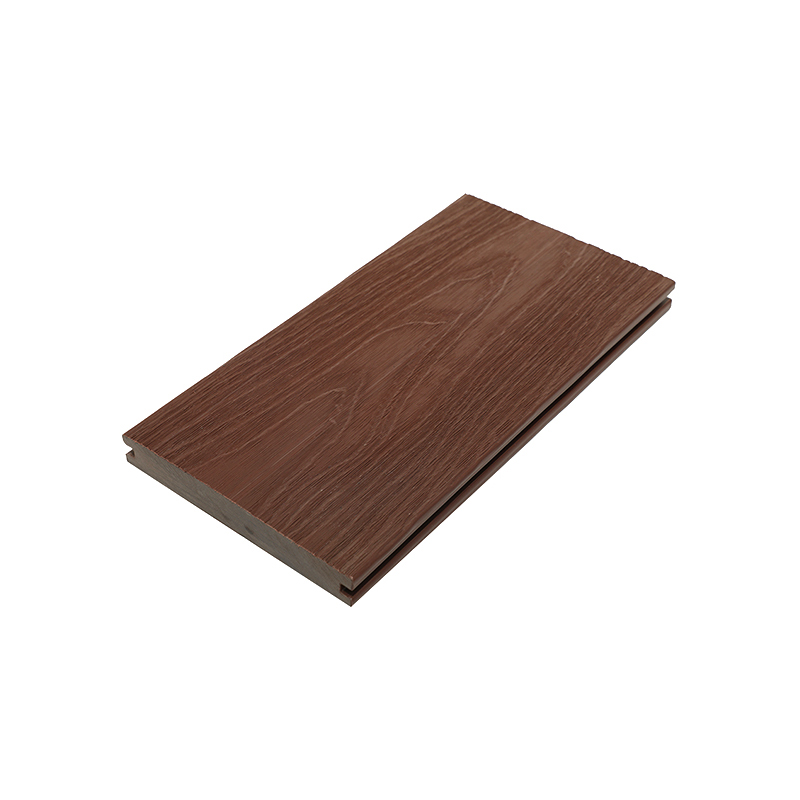
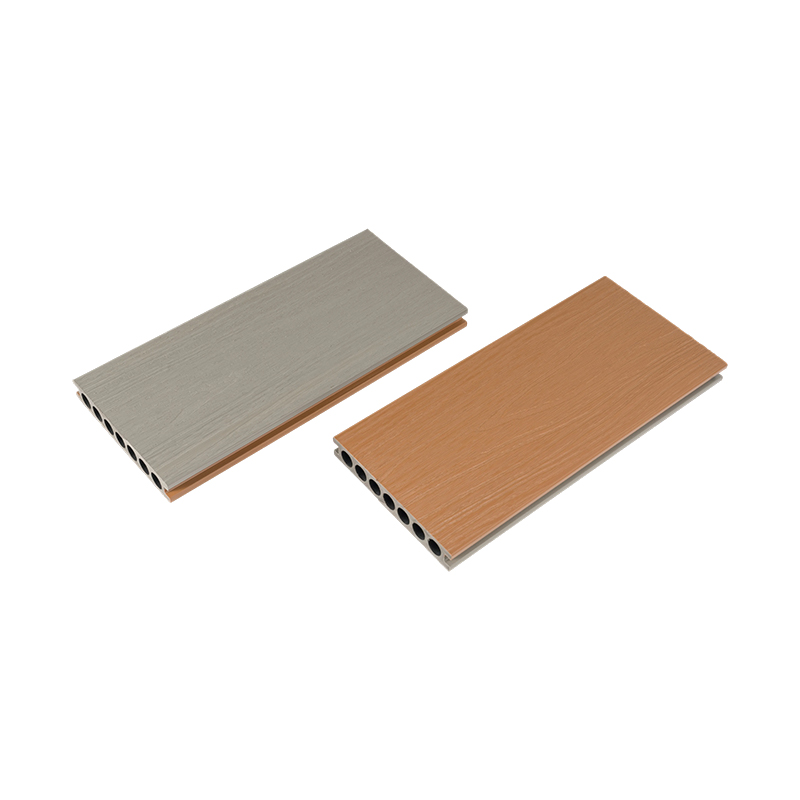
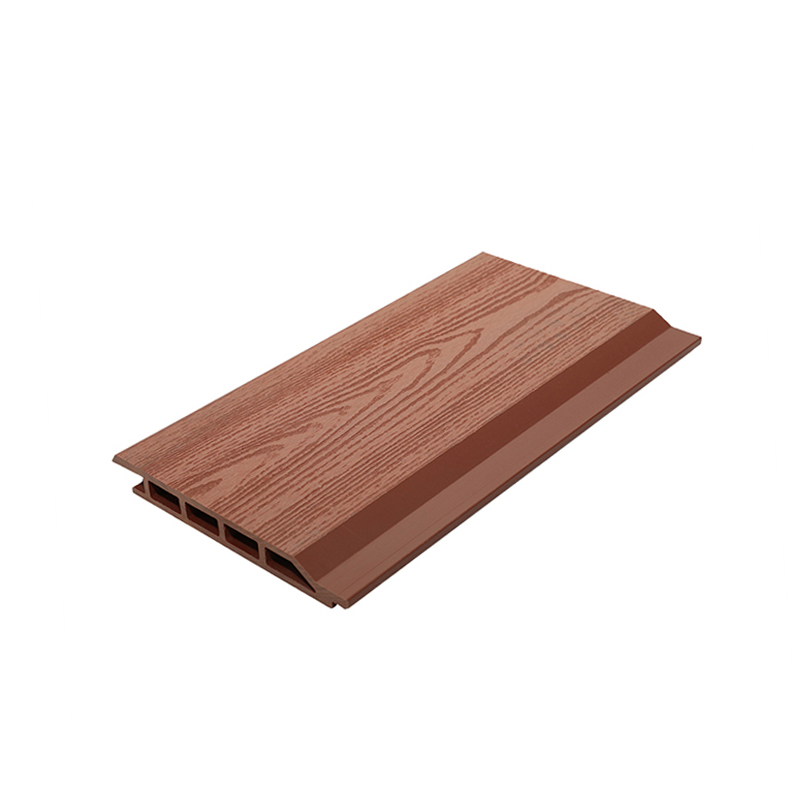
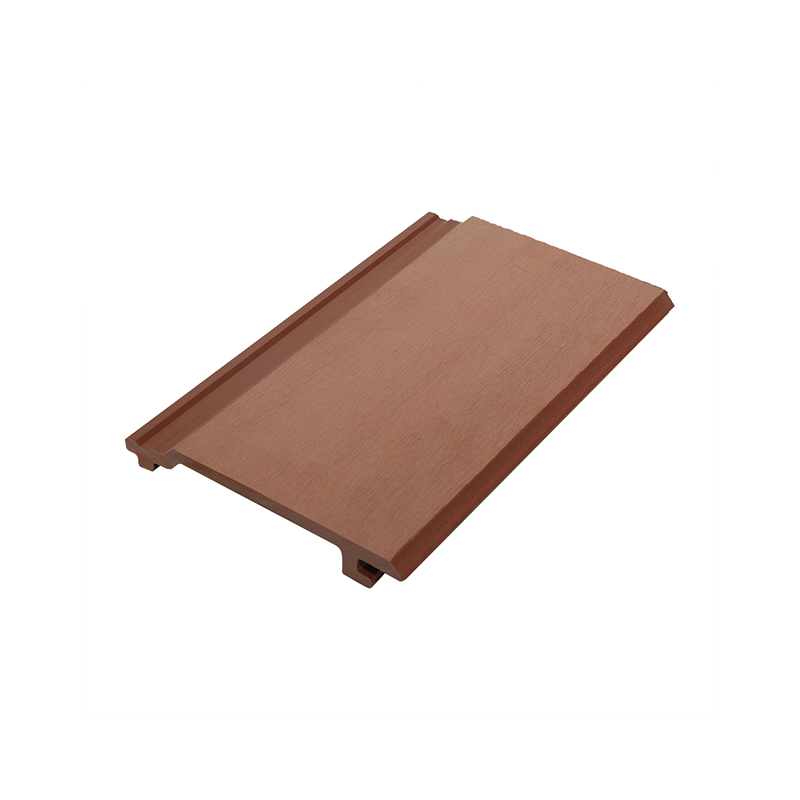
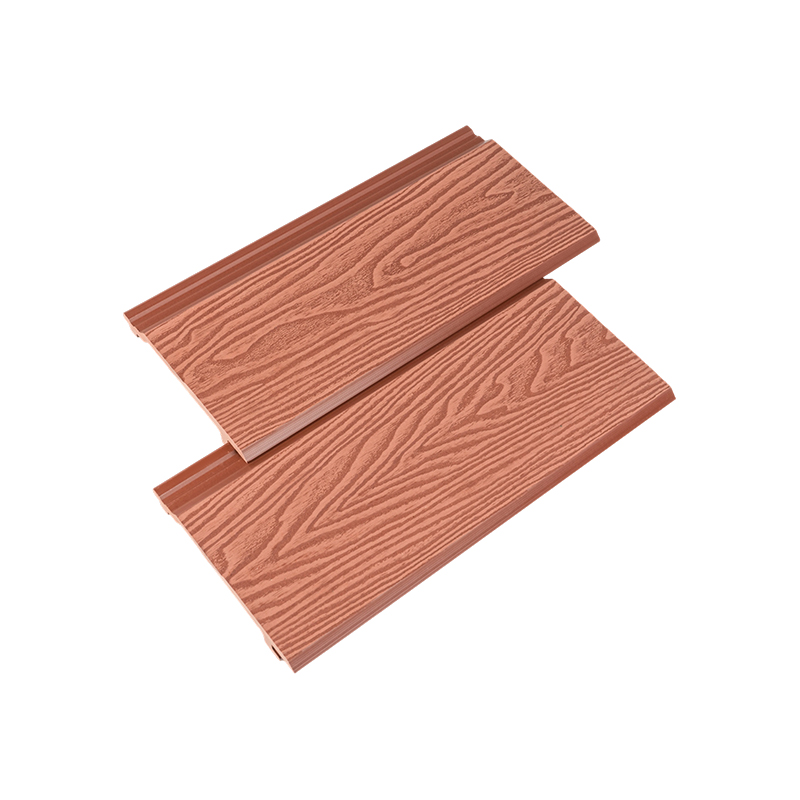
WPC garden planters are built from the same material used in high-performance outdoor decking installations: wood-plastic composite board comprising 50–70% reclaimed wood fibre blended with 30–50% recycled thermoplastic polymer, extruded without chemical adhesives into board profiles with consistent through-colour and embossed wood grain surface texture. Using decking board as the planter wall material means the planter inherits all the performance properties of the decking system — waterproof, rot-proof, UV-stabilised, and splinter-free — applied to the specific structural and aesthetic demands of a planting container.
Cutting and Shaping to Design Requirements
WPC boards are cut to the panel dimensions required by the planter design using standard fine-tooth circular saw or mitre saw equipment. Because WPC boards can be cut, mitre-jointed, and assembled in the same way as timber, planters can be produced in virtually any plan geometry — rectangular, square, L-shaped, corner-form, hexagonal, or bespoke profile — to suit the specific design intent. Every cut edge must be sealed with manufacturer-approved end-grain sealant immediately after cutting to close the exposed wood fibre at the cut face against moisture entry, particularly at base and lower wall edges that will be in direct contact with damp soil inside the planter.
Splicing, Assembly, and Internal Bracing
Cut panels are assembled using internal aluminium corner extrusions or stainless steel bracket systems that provide rigidity at joints and resist the lateral soil pressure that acts outward on the planter walls when the container is filled with compost. For planters longer than 800 mm or taller than 400 mm, additional internal cross-bracing is built in to prevent wall panels from bowing outward under fill pressure. All fixings must be stainless steel — galvanised or standard steel screws corrode in the persistent moisture environment of a planted container, causing structural failure and surface staining.
Surface Polishing and Final Finishing
After structural assembly, WPC planter external faces are polished and finished to produce a smooth, consistent surface appearance across all visible panels. This surface treatment removes any manufacturing handling marks, cut edge roughness, or assembly contact marks — producing the clean, refined finish expected of a premium planter rather than a utilitarian timber box. No painting, staining, or external sealant application is required: the WPC material's through-colour and surface integrity are complete from manufacture. Size and colour are customisable to project requirements, allowing planters to be specified as integrated design elements within a broader outdoor material scheme.
The Core Performance Advantages of WPC Garden Planters
Waterproof at the Soil Contact Line — Where Timber Planters Fail
The soil contact line is the most demanding location in any planter: the inner wall face is in continuous contact with damp compost, irrigation water, and fertiliser solution, creating persistent moisture conditions that timber cannot withstand indefinitely. Even pressure-treated hardwood planter walls typically begin to soften and decay structurally at this line within 3 to 5 years, as moisture penetrates the timber end grain and creates the conditions for fungal decay. WPC is waterproof throughout its full cross-section — the polymer matrix prevents moisture penetration regardless of the duration of contact — and does not support the biological decay processes that destroy timber in the same conditions. A WPC planter wall remains structurally sound at the soil contact line throughout its full service life.
Natural Wood Grain Texture: Better Aesthetics That Last
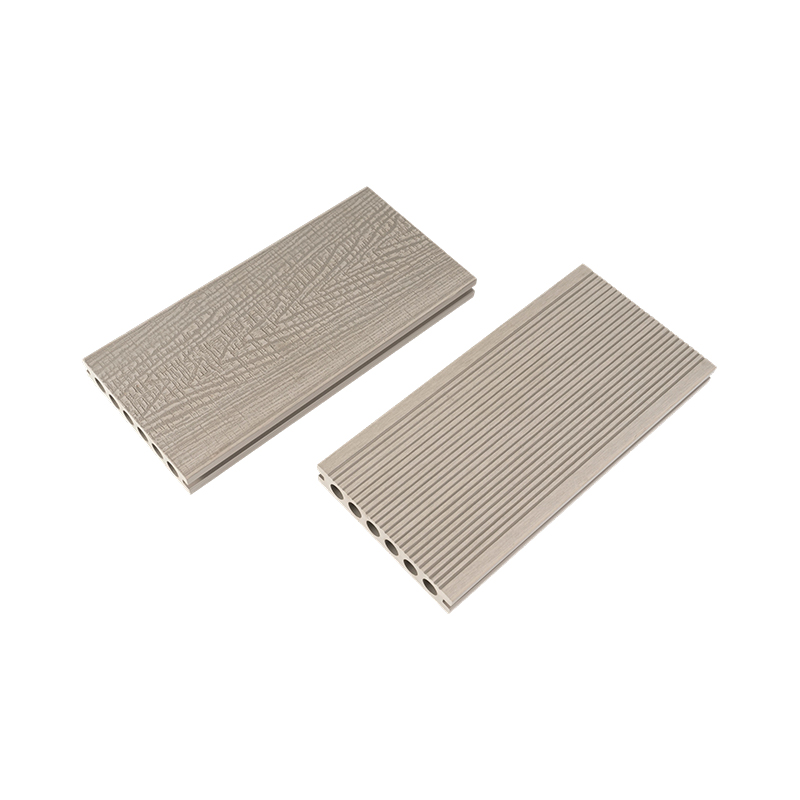
WPC planters carry the embossed wood grain character of the decking boards from which they are built — providing a warm, organic aesthetic quality that plastic, concrete, and metal planters cannot replicate. The wood grain texture gives the planter a refined, handcrafted appearance that complements planted material and suits the aesthetics of contemporary residential gardens, hotel outdoor spaces, and commercial landscape settings. Unlike natural timber planters that grey and lose surface character within one to two seasons without oiling, WPC maintains its wood grain texture and original colour for 10 to 15 years or more with properly specified UV stabilisers — remaining consistently presentable without any surface treatment.
Weather and Corrosion Resistance Across All Climates
WPC planters are resistant to the full range of outdoor weather conditions: rain, UV radiation, freeze-thaw cycling, coastal salt air, and high humidity. Unlike terracotta and ceramic planters, which absorb water into their porous walls and crack when that water freezes, WPC does not absorb water through its wall material — making WPC planters completely frost-proof and suitable for year-round outdoor placement in all climates without seasonal protection. The aluminium corner fixings and stainless steel screws used in quality WPC planter construction share the same corrosion-resistant properties, ensuring the complete assembly — not just the board surface — remains intact throughout its service life.
Service Life of 15 to 25 Years: The Lifecycle Cost Advantage
The service life advantage of WPC over timber translates directly into a lifecycle cost advantage. A WPC planter lasting 20 years replaces three to four equivalent timber planter cycles over the same period — each cycle involving the cost of new materials, the effort of dismantling a decayed structure, disposal of rotted timber, and the disruption of replanting. Over a 20-year garden, a WPC planter that costs 40–60% more initially than a comparable timber planter typically delivers a lower total cost of ownership when lifecycle replacements are included in the comparison.
Fully Customisable: Size, Colour, and Configuration to Order
Because WPC planters are assembled from cut board sections rather than cast or moulded in factory-fixed forms, they are uniquely flexible in terms of customisation. Any combination of length, width, and height can be produced to project requirements. Colour selection from the available WPC board colour range — typically spanning light natural oak tones, medium walnut and teak tones, grey, and deep charcoal finishes — allows planters to be specified in exact coordination with existing decking, garden furniture, or outdoor cladding material for a fully unified design scheme.
Garden Planter Material Comparison
Comparison of WPC, natural timber, terracotta, concrete/GRC, metal, and plastic planters across key performance and design criteria for outdoor garden use
| Criterion |
WPC |
Natural Timber |
Terracotta |
Concrete / GRC |
Corten Steel |
Plastic / Resin |
| Soil-contact rot resistance |
Excellent |
Poor (3–8 yrs) |
Excellent |
Excellent |
Good |
Excellent |
| Frost resistance |
Excellent |
Moderate |
Poor (cracks) |
Good–excellent |
Good |
Good |
| Wood grain appearance |
Very good |
Excellent (when new) |
None |
None |
None |
None |
| Maintenance required |
Wash only |
Oil / treat every 1–2 yrs |
Wash only |
Wash only |
None (patina) |
Wash only |
| Weight (portability) |
Light–medium |
Medium–heavy |
Heavy (fragile) |
Very heavy |
Heavy |
Very light |
| Custom size / colour |
Fully customisable |
Good |
Limited |
Good (bespoke cast) |
Good |
Moderate |
| Typical service life |
15–25 years |
3–8 yrs (soil contact) |
5–15 yrs (frost risk) |
20–40 yrs |
20–30 yrs |
8–15 yrs (UV fading) |
| Suitability for balcony / terrace |
Excellent |
Good |
Poor (weight + frost) |
Poor (weight) |
Moderate (weight) |
Good |
WPC Garden Planter Styles: Forms and Configurations
Standard Rectangular Planter Boxes
Rectangular WPC planters are the most widely specified form, available in lengths from 400 mm to 2,400 mm and heights from 250 mm to 900 mm. They suit garden border definition, patio edge planting, pathway framing, and entrance approaches equally well. A run of matching rectangular WPC planters along the edge of a paved terrace — filled with lavender, ornamental grasses, or box topiary — creates a considered planting boundary that defines the space and provides seasonal interest. Matching the WPC planter board colour to an existing WPC deck or garden furniture specification creates a fully unified outdoor material language across the garden setting.
Tall Raised Planters for Ergonomic Growing
Raised WPC planters at heights of 600–900 mm bring the planting surface to a comfortable working level, eliminating the bending required at ground-level planters. This height range is particularly valuable for vegetable and herb growing, where regular sowing, tending, and harvesting tasks are performed frequently — and for users with limited mobility for whom ground-level planting is physically challenging. A 1,200 mm × 600 mm raised bed at 800 mm height provides approximately 500 litres of growing volume — sufficient for a productive season of vegetables, herbs, or cut flowers — at a comfortable standing work height.
Corner and L-Shaped Planters for Space Definition
Corner WPC planters fit into 90° plan junctions — where two terrace edges meet, at the corner of a paved courtyard, or where a decking area meets a building wall — using space that rectangular planters cannot occupy effectively. L-shaped configurations create a planted boundary on two sides of a seating or dining area, providing enclosure and visual softening to an outdoor social space without constructing a permanent wall. These configurations are particularly valuable on compact urban terraces and courtyard gardens where every square metre of outdoor space must serve multiple design purposes simultaneously.
Tall Tower Planters as Vertical Accents
Tower WPC planters with heights of 800–1,200 mm and compact plan footprints are used as vertical design elements in outdoor spaces where horizontal planting area is limited. They create strong vertical punctuation on terrace edges and entrance approaches, suit tall architectural plants such as standard bay trees, columnar conifers, and ornamental grasses, and provide significant soil volume within a small footprint — making them practical for balcony growing where floor area loading constraints must be respected while maximising planting depth.
Bespoke and Architectural Planter Forms
Because WPC planter walls are assembled from cut board sections, any plan geometry is achievable: hexagonal, stepped, angled, curved (using kerfed board sections), or compound profile forms that standard rectangular planters cannot produce. For hotel garden features, commercial entrance statements, and high-specification residential landscape projects where the planter itself is a designed architectural element rather than a functional container, bespoke WPC planter forms provide design freedom that cast terracotta or moulded plastic cannot match at equivalent cost.
Setting Up a WPC Garden Planter for Best Plant Performance
Drainage: The Foundation of Healthy Container Planting
Adequate drainage is the single most important factor in container plant health — without it, roots suffocate in waterlogged soil regardless of how well the plants are otherwise cared for. Confirm that the WPC planter base has drainage holes of at least 12–20 mm diameter at approximately 150–200 mm centres across the full base area before filling. Before adding compost, place a 60–80 mm drainage layer of coarse horticultural grit or washed gravel across the base above the drainage holes — this prevents the holes from becoming blocked by fine compost particles and maintains free water movement through the soil column.
Interior Liner: Optional but Recommended
A breathable geotextile liner placed inside the planter walls before filling keeps fine compost particles from washing through any gaps in the board joints, makes the planter easier to empty and replant in subsequent seasons, and keeps the internal WPC wall surfaces cleaner over time. Geotextile liner is not required for structural protection — WPC does not need to be protected from soil contact — but it is a practical management convenience that most experienced container gardeners use as standard practice. Never use impermeable plastic sheet as a liner; it blocks the drainage the planter is designed to provide.
Compost Selection by Plant Type
The compost type should match the growing requirements of the intended plant:
- Multipurpose peat-free compost: Suitable for annual bedding plants, summer displays, herbs, and most general-purpose container growing
- Loam-based compost (John Innes No. 2 or 3): For permanent structural planting — shrubs, small trees, topiary, standard bay — where the heavier substrate provides root anchorage and longer-term nutrient availability
- Ericaceous (acid) compost: For acid-loving plants including blueberries, rhododendrons, camellias, and azaleas — these plants will not thrive in standard compost regardless of fertiliser application
- Vegetable and fruit compost: Enriched formulations for productive kitchen garden planting in raised bed WPC planters, providing higher nutrient levels to support heavy-cropping plants through the growing season
Positioning for Plant and Aesthetic Success
Place planters in positions that match the light requirements of the intended plants: full-sun positions (6+ hours direct sun) for Mediterranean herbs, lavender, geraniums, and most vegetables; partial shade (3–6 hours sun) for ferns, hostas, and begonias; shade positions for shade-tolerant foliage plants and impatiens. Beyond plant requirements, consider the planter's visual role in the garden: symmetrical pairs at entrances create formality; a flowing sequence along a border creates movement; single statement planters at path junctions create destination moments. The WPC planter's consistent wood grain finish and clean geometric form makes it as effective as a design element as it is as a growing container.
Maintenance: Keeping WPC Planters Looking Their Best
WPC garden planters require no painting, oiling, staining, or protective treatment at any point in their service life. The complete annual maintenance routine:
- External surface washing: Wipe down all external WPC faces with warm water and mild detergent using a soft cloth or sponge, working along the board grain. Rinse thoroughly. Two or three times per year is sufficient for most garden locations — more frequently near food growing areas or where bird activity is high.
- Algae and mould removal: In shaded positions, green algae or surface mould can develop on external WPC faces over winter and in persistently damp conditions. Apply a dilute solution of white vinegar (1 part vinegar to 4 parts water), leave for 10 minutes, scrub gently along the grain with a soft-bristle brush, and rinse thoroughly. Purpose-formulated composite surface cleaners are equally effective.
- Drainage check: At each planting and replanting cycle, confirm that base drainage holes remain clear and unblocked. A cane or dowel rod inserted through each hole removes any accumulated root or compost blockage that has developed over the growing season.
- Fixing inspection: Check all external stainless steel screws and corner bracket fixings annually for tightness. Retighten any that have slackened under thermal cycling. This simple check maintains the structural rigidity of the planter and extends its service life without any specialist tools or materials.
Frequently Asked Questions About WPC Garden Planters
Will WPC planter walls rot from the inside where they touch the soil?
No — this is the fundamental advantage of WPC over timber in planter applications. WPC is waterproof throughout its full cross-section, not just at its surface. Moisture from damp soil cannot penetrate the WPC wall material, so the biological decay processes that destroy timber at the soil contact line simply cannot establish in WPC. The wall material remains structurally sound and dimensionally stable in permanent soil contact throughout the planter's 15-to-25-year service life — an outcome that is impossible to achieve with natural timber regardless of the treatment or species used.
Can WPC planters be left outside year-round in cold climates?
Yes — WPC planters can be left outdoors in all seasons in all climates, including those with sustained sub-zero winter temperatures and regular freeze-thaw cycling. Because WPC does not absorb water through its wall material, there is no water within the wall to freeze and expand — the freeze-thaw cracking mechanism that destroys terracotta and many ceramic planters in cold climates does not apply to WPC. The planted contents of the planter must be managed for the frost hardiness of the specific plant species independently, but the planter itself requires no winter protection.
How do I prevent WPC planter boards from bowing outward when filled?
The lateral pressure of a fully filled planter — particularly one filled with heavy loam-based compost and watered — can cause thin wall panels to bow outward at the planter's mid-height if the structure is not adequately braced. For planters longer than 800 mm, ensure the construction includes internal cross-bracing at mid-span, and that corner bracket fixings are of sufficient gauge for the wall height. For planters taller than 500 mm or longer than 1,000 mm, additional horizontal external banding or heavier-gauge corner profiles are recommended to maintain panel alignment under fill load. These structural provisions should be confirmed with the manufacturer or fabricator for large planter specifications.
What is the maximum safe weight I can put in a WPC planter on a balcony?
The maximum safe total weight — planter structure, drainage layer, compost, plants, and water — is determined by the structural load rating of the balcony floor, not by the planter itself. Most residential balconies are rated at 150–200 kg/m² imposed load. A fully filled 1,000 mm × 400 mm × 500 mm WPC raised planter can weigh 90–130 kg when saturated — occupying approximately 0.4 m² of floor area. Always calculate total filled weight against the floor's structural rating before installation, and consult a structural engineer if load limits are not clearly established for the specific balcony structure.
Can WPC planters be painted to change their colour?
WPC can be painted, but adhesion to the polymer-rich composite surface requires proper surface preparation: mechanical sanding to create a bonding key, followed by a primer formulated for plastic or composite substrates before applying the topcoat. Standard emulsion paint applied directly to an unprepared WPC surface will peel within a year under outdoor UV and moisture exposure. In practice, since WPC planters are available in a range of colours from manufacture, specifying the correct colour at the point of order is significantly more practical than post-manufacture painting — and produces a far more durable finish.
How do I match a new WPC planter to an existing WPC deck or garden furniture?
Request physical board samples from the WPC planter manufacturer in the colours closest to your existing installation, and compare them against the existing WPC surface in natural outdoor light — not in artificial lighting or on screen. WPC board colour can vary between manufacturers and even between production batches from the same manufacturer. If your existing decking or furniture was ordered from the same supplier, request material from the same board specification — noting that colour consistency between batches cannot be guaranteed, and that aged WPC surfaces may have developed UV-related colour changes that new material will not initially match.
Specifying WPC Garden Planters: A Practical Checklist
- Specify planter internal dimensions to match root depth requirements. Annual summer bedding needs 200–300 mm internal depth; perennial shrubs and structural planting need 400–600 mm; productive vegetable growing needs a minimum of 400 mm and ideally 600 mm. Choose the planter height for its growing function first, then assess whether the visual scale suits the garden setting.
- Confirm all fixings are stainless steel throughout. For a planter in permanent soil and moisture contact, stainless steel fixings are non-negotiable. Galvanised or zinc-plated screws corrode in these conditions, causing structural failure and surface rust staining. Do not accept a planter assembled with non-stainless fixings regardless of the WPC board quality.
- Verify drainage hole provision before filling. Confirm base drainage holes of at least 12 mm diameter at 150–200 mm centres are present before filling the planter. A planter without adequate drainage is a plant-killing water trap regardless of how well everything else is specified.
- Calculate total filled weight for balcony and terrace applications. Estimate planter weight + drainage layer weight + compost volume weight (saturated multipurpose compost weighs approximately 0.5–0.6 kg per litre) + plant weight. Confirm this total is within the floor's structural load rating before placing the planter.
- Request physical colour samples and assess outdoors in natural light. Assess WPC board colour samples against existing garden materials — paving, decking, furniture, fencing — in natural daylight before placing an order. The correct colour assessment cannot be made reliably from screen images or under artificial interior lighting.
- Order all planters for a scheme from a single production batch. Colour can vary between WPC production batches even within the same product range. Ordering all planters for the complete scheme simultaneously from a single production batch guarantees colour consistency across every planter in the installation — a critical requirement for the unified design coherence that makes WPC planting schemes visually successful.

 English
 Français
 Español
 Deutsch