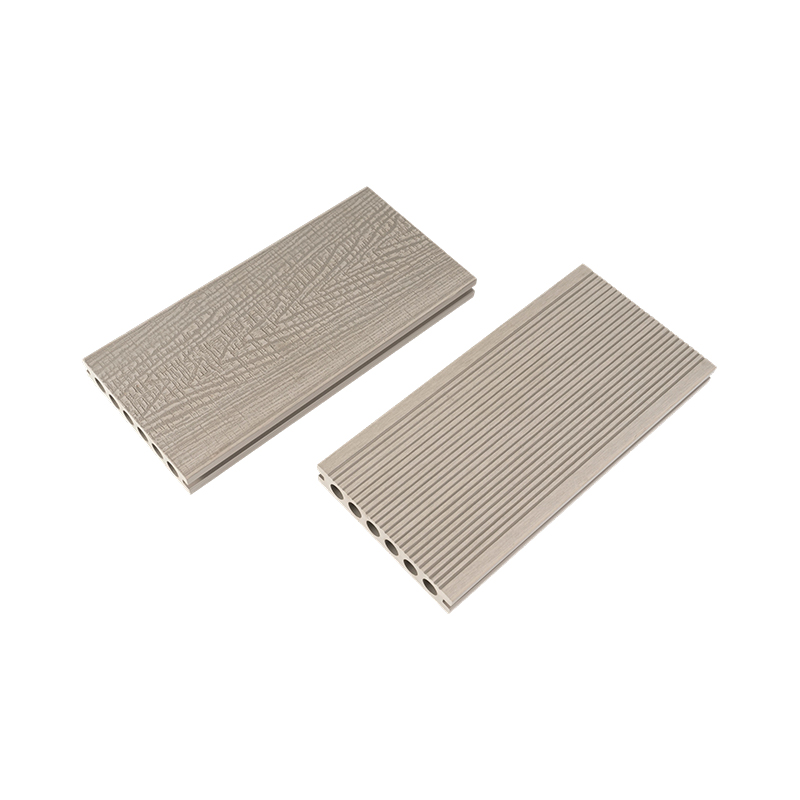
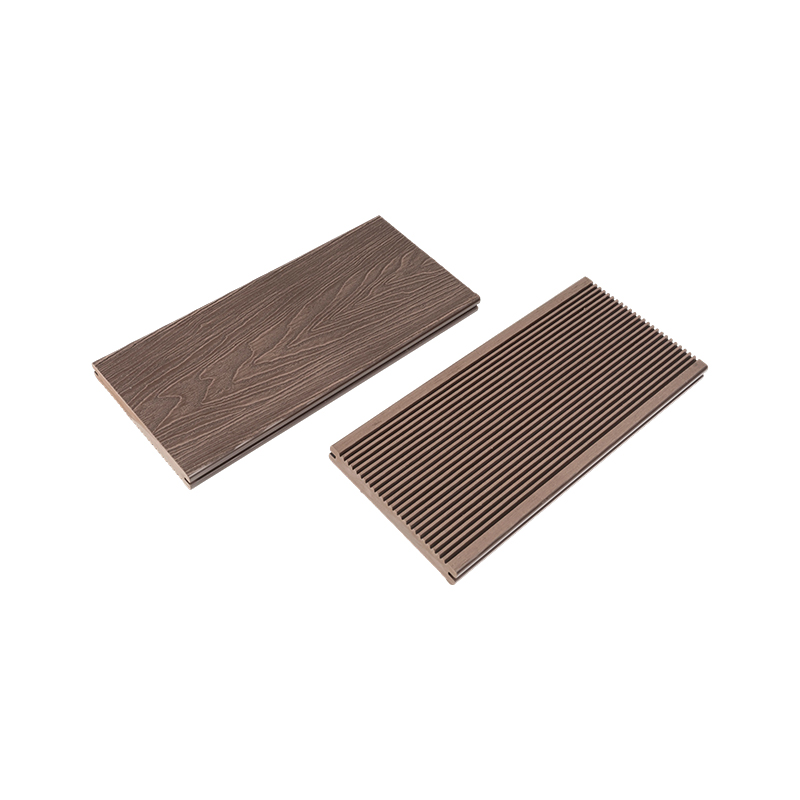
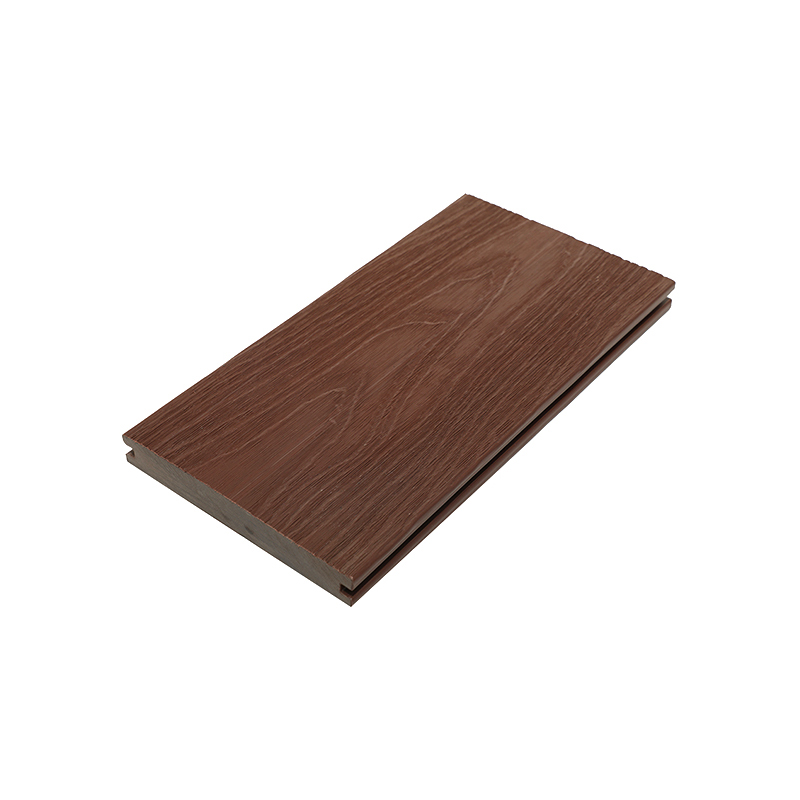
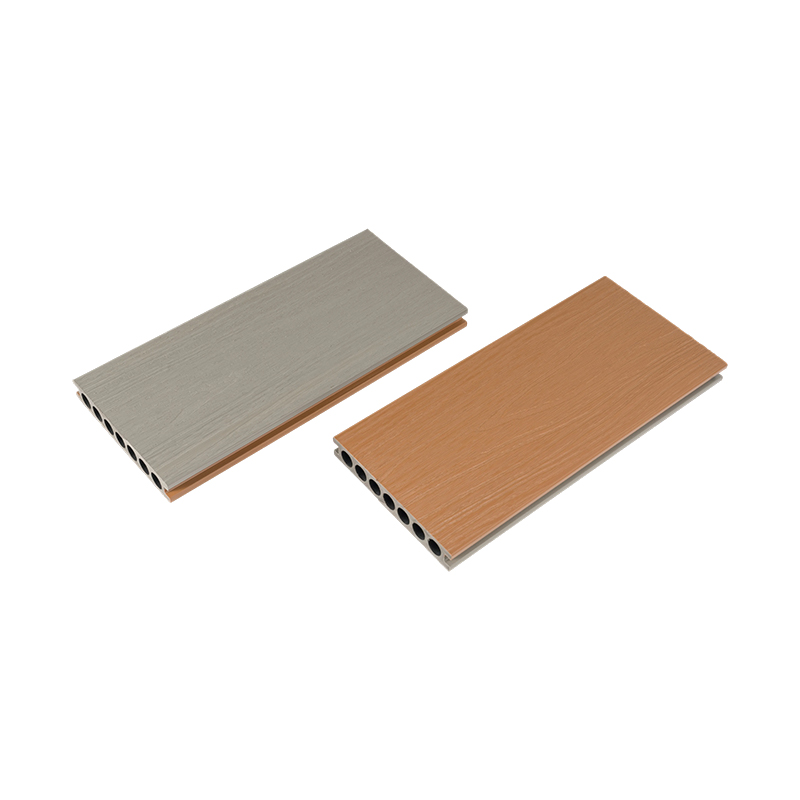
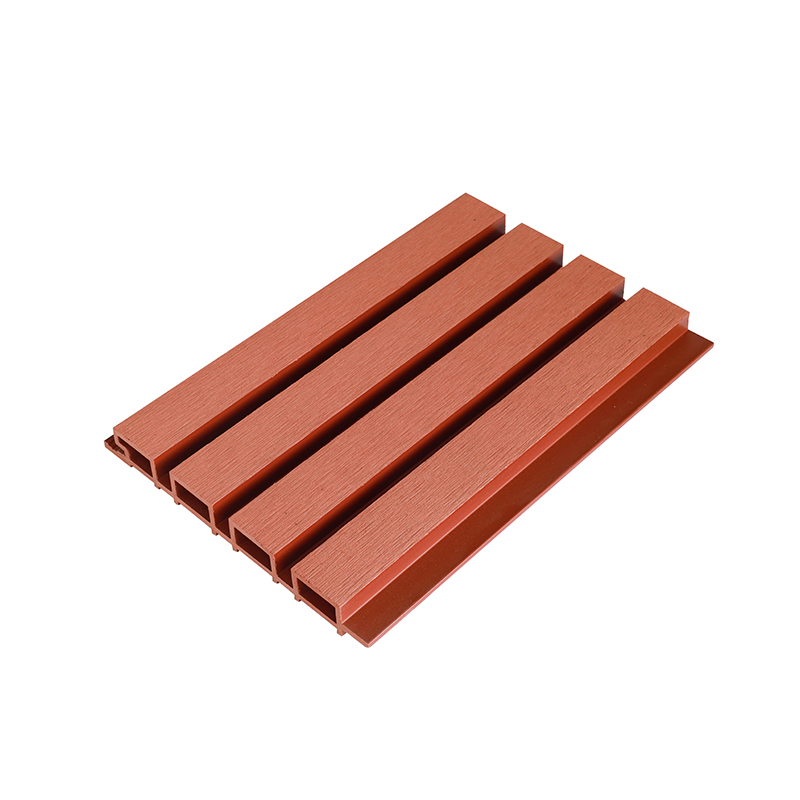
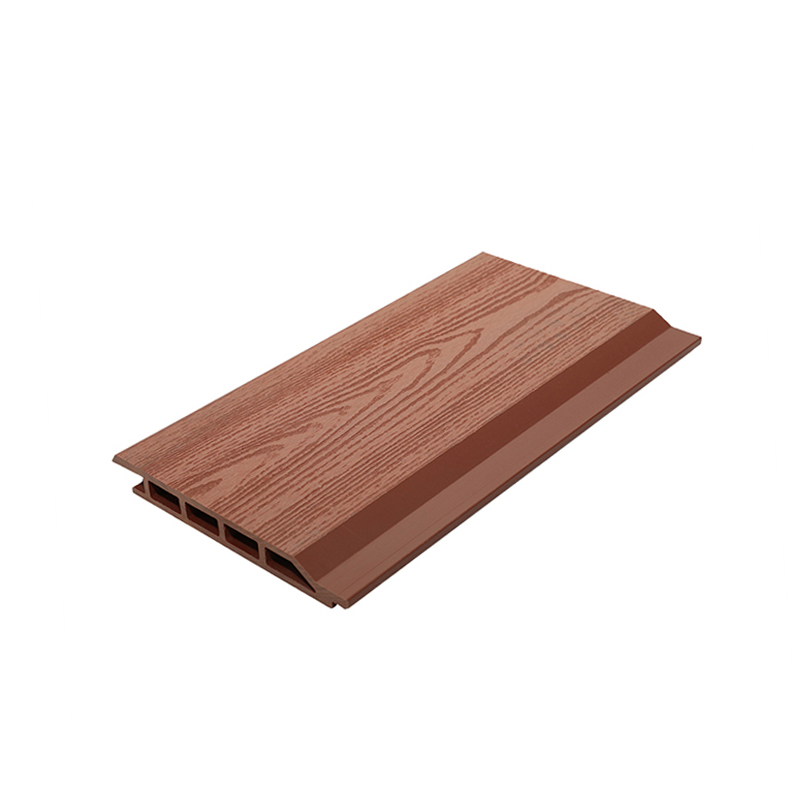
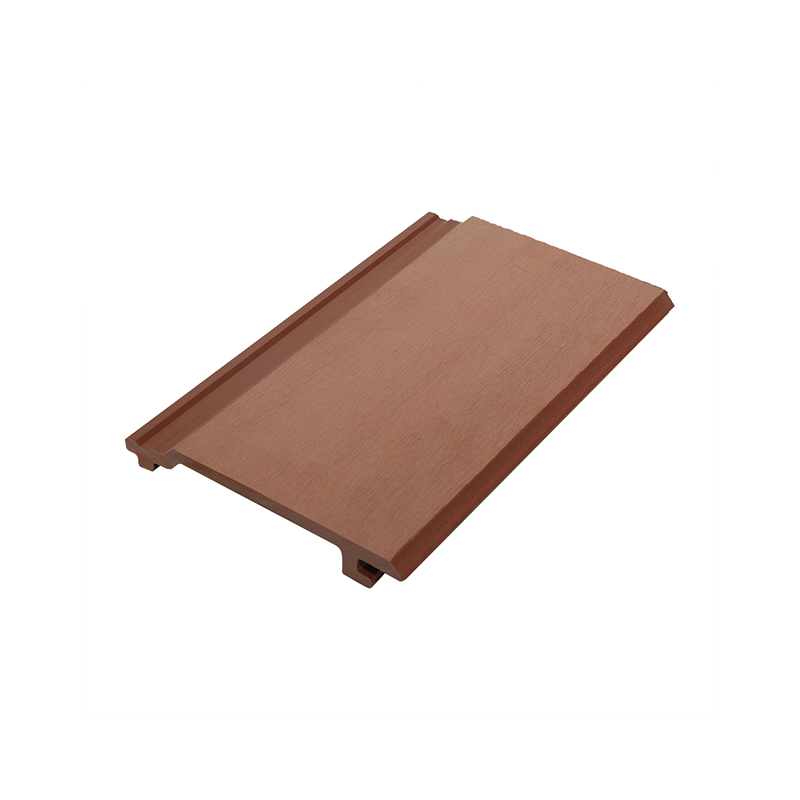
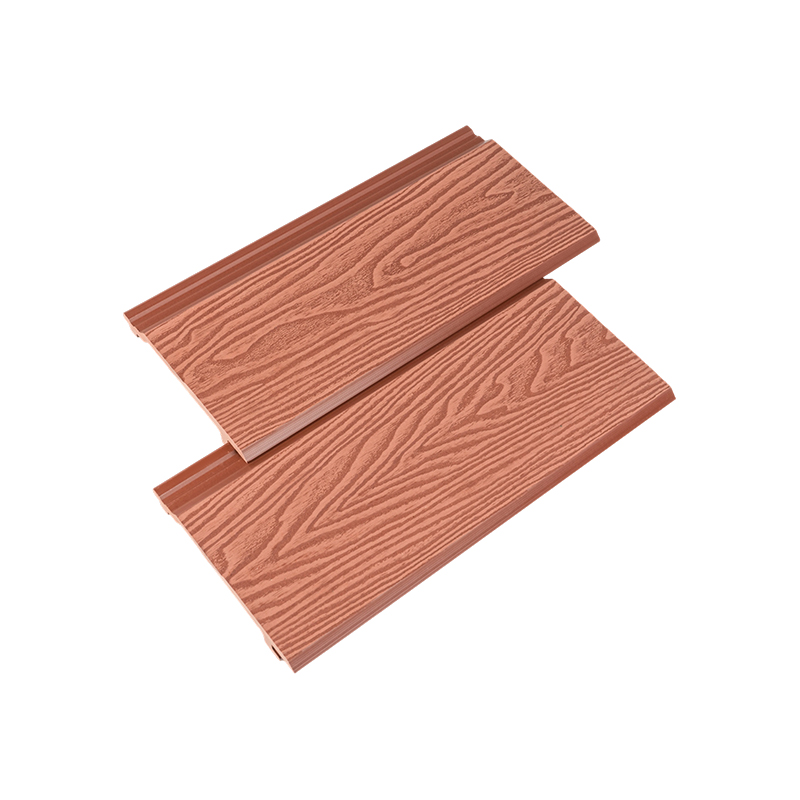
WPC fencing — Wood-Plastic Composite fencing — is a boundary and privacy fencing system manufactured entirely from a blend of reclaimed wood fibre and recycled thermoplastic polymer. The combination of these two material streams produces fence boards that deliver the warmth and natural grain appearance of real timber while inheriting the weather resistance, dimensional stability, and freedom from rot and insect attack that polymer materials provide. It is used across residential gardens, commercial properties, public spaces, and landscape projects as a long-lasting alternative to traditional softwood, hardwood, and vinyl fencing.
Unlike conventional timber fencing — which requires regular painting, staining, or pressure treatment and remains vulnerable to fungal decay, warping, and insect attack throughout its service life — WPC fencing is engineered to resist all three failure modes from the outset. The material does not rot, does not warp under normal moisture cycling, and provides no nutritional substrate for wood-boring insects. Installation is straightforward, and once in place a quality WPC fence requires nothing more than periodic washing to maintain its appearance and structural integrity for 15 to 25 years or more.
How WPC Fencing Is Made: Material and Manufacturing
Raw Material Composition
Every WPC fence board begins as a precisely formulated blend of two recycled material streams. Wood fibre — typically comprising 50–70% of the board by weight — is sourced from sawmill offcuts, wood manufacturing residues, and agricultural by-products such as rice husk and bamboo fibre. This is combined with 30–50% recycled thermoplastic polymer, most commonly polyethylene (PE) or polypropylene (PP), along with UV stabilisers, inorganic colorants, fungicide additives, and processing lubricants. No chemical adhesives are used in the manufacturing process. Quality WPC fencing products meet the E0 formaldehyde emission standard (less than 0.5 mg/L), making them safe for use in gardens and outdoor living spaces without off-gassing or soil contamination concerns.
Extrusion Process
The blended material is heated and forced under pressure through a shaped extrusion die that defines the fence board's profile, width, depth, and surface texture. The extruded board is cooled under controlled conditions and cut to finished length. Surface wood grain patterns are embossed into the board during the same production run, pressing a natural timber grain texture into the surface while the material remains in a semi-plastic state. Because colour pigment is incorporated throughout the entire board material during the initial mixing stage, the colour is consistent from the board surface to its core — minor surface marks do not expose a differently coloured substrate, and all boards within a production batch share the same colour profile.
Board Profiles: Solid and Hollow Core
WPC fence boards are produced in two core constructions:
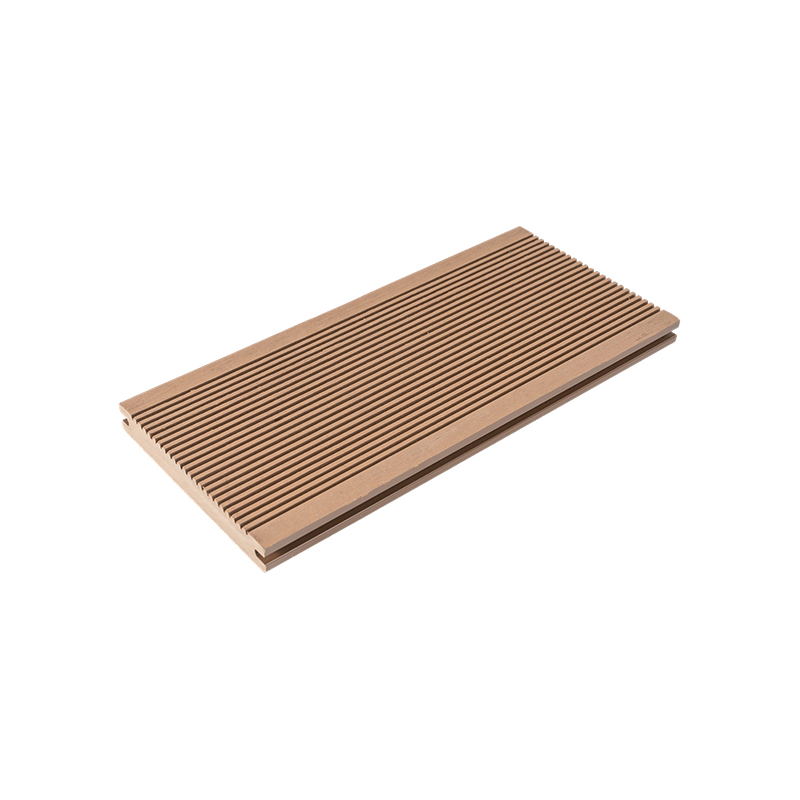
- Solid-core boards: Greater weight and rigidity per board, with the full composite material cross-section providing strength throughout. Preferred for applications requiring maximum panel rigidity and acoustic density — solid boards attenuate sound and resist wind deflection more effectively than hollow alternatives at the same board width.
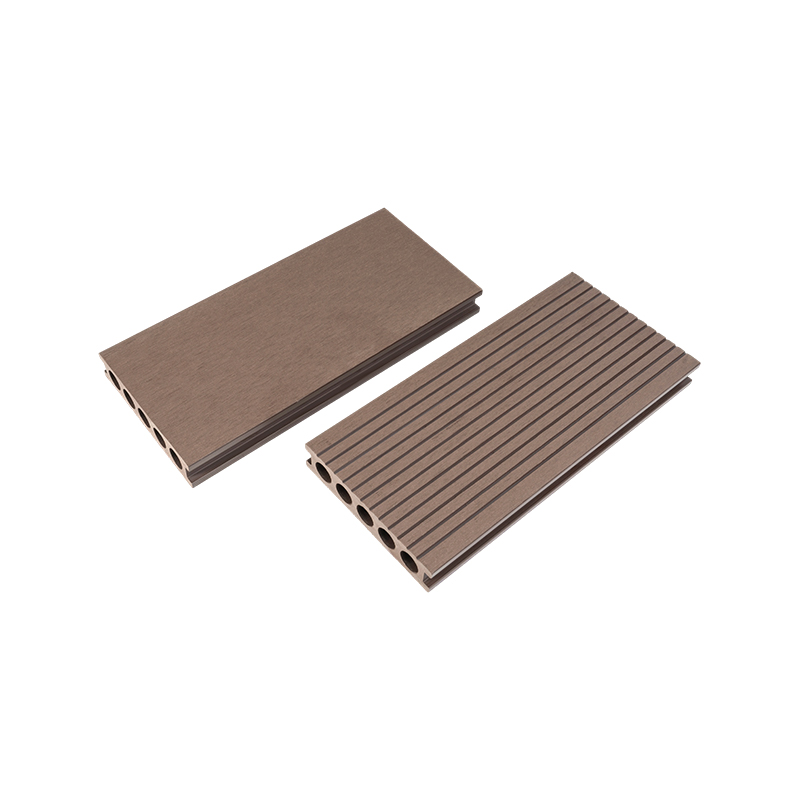
- Hollow-core boards: Lighter weight per linear metre with internal longitudinal void channels that reduce material use without significantly compromising structural performance under typical residential fence loads. Hollow boards are easier to handle during installation, produce less waste when cut, and are the standard choice for most board-on-post residential fencing systems.
Key Advantages of WPC Fencing
Excellent Weather Resistance: Built to Withstand the Outdoors
WPC fencing is engineered for continuous outdoor exposure from the ground up. The thermoplastic polymer matrix that surrounds and binds the wood fibre creates a composite material that resists rain, humidity, temperature cycling, and the UV radiation that causes natural timber to grey, crack, and degrade over time. UV stabilisers incorporated throughout the board material during manufacturing retard the photodegradation that affects unprotected timber, maintaining the board's surface character and structural integrity under prolonged sun exposure. In typical temperate climates, quality WPC fence boards maintain their appearance and structural performance for 15 to 25 years without any protective treatment or structural repair — a durability standard that pressure-treated softwood timber cannot match without consistent, recurring treatment expenditure.
Resistant to Rot, Decay, and Insect Attack
WPC fencing does not rot, decay, or suffer insect attack — the three most common and costly failure modes of natural timber fencing in outdoor garden environments. Rot requires a continuous moisture pathway through wood cell walls that fungal organisms can exploit; the polymer matrix in WPC prevents this pathway from forming, denying decay fungi the conditions they need to establish and spread. Insect attack — most commonly by wood-boring beetles and termites — is prevented by the plastic content of the composite, which provides no nutritional value. And unlike softwood timber, which can begin to show surface decay within 2 to 3 years in ground-adjacent or persistently damp conditions without treatment, WPC fencing boards in comparable conditions remain structurally sound throughout their rated service life.
Simple Installation and Minimal Maintenance
WPC fencing systems are designed for straightforward installation. Board-on-post systems use grooved aluminium or composite posts into which boards slide horizontally or vertically during installation — no specialist tools or skills are required beyond basic woodworking competence and a level and plumb post setting. Once installed, no painting, staining, oiling, or protective treatment is ever required at any point during the fence's service life. Maintenance consists solely of washing with water and mild detergent once or twice per year to remove surface soiling. On a standard 20-metre residential fence run, this replaces the recurring cost of repainting or restaining softwood timber fencing every 1 to 3 years — a saving estimated at $1,500–$4,000 over 20 years in material and labour costs alone.
High Strength and Effective Privacy Protection
WPC fence boards have high structural rigidity and do not develop the splits, knots, or soft rot pockets that compromise the structural integrity of ageing timber boards. A correctly installed WPC board-on-post fence with proper post foundation depth and correct post spacing provides a solid, rigid privacy barrier that does not flex, rattle, or develop gaps over time as boards shrink, warp, or rot. For privacy applications, WPC boards maintain their full height and full-face coverage throughout their service life — unlike timber boards that cup, split, and gap at joints as they age, creating sightlines through fence panels that defeat the purpose of a privacy fence.
Natural Timber Appearance Without Timber's Upkeep
The embossed wood grain surface of WPC fence boards replicates the natural character of sawn timber across a range of wood-inspired tones — from light natural and honey shades through warm mid-tones to deep charcoal and dark ebony finishes. The colour is consistent across all boards in a production batch, making long uniform fence runs achievable without the colour grading and board sorting that natural timber requires. The grain retains its character throughout the product's service life without the greying, peeling, and cracking that affect untreated or undertreated timber fencing over time.
Environmentally Responsible Material
WPC fencing is manufactured from recycled material streams — diverting industrial wood waste and post-consumer plastic from landfill while reducing demand for virgin timber. The long service life of 15 to 25 years means one WPC fence installation replaces one or two timber fence installations over the same period, reducing the total material throughput, production energy, and disposal waste associated with the boundary over its lifetime. No chemical adhesives, no harmful preservatives, and E0 formaldehyde certification mean WPC fencing is safe in garden environments adjacent to plants, soil, pets, and children throughout its service life.
WPC Fencing vs Timber vs Vinyl: Side-by-Side Comparison
Performance comparison of WPC fencing against pressure-treated softwood, hardwood, and vinyl (uPVC) fencing across criteria most relevant to residential and commercial boundary applications
| Criterion |
WPC Fencing |
Softwood Timber |
Hardwood Timber |
Vinyl (uPVC) |
| Rot resistance |
Excellent |
Poor (without treatment) |
Moderate–good |
Excellent |
| Insect resistance |
Excellent |
Poor |
Moderate |
Excellent |
| Dimensional stability |
Excellent |
Poor (warps, splits) |
Moderate |
Moderate (thermal movement) |
| Maintenance required |
Wash only |
Paint/stain every 1–3 yrs |
Oil/treat every 2–4 yrs |
Wash only |
| Natural timber appearance |
Very good |
Excellent |
Excellent |
Poor |
| Typical service life |
15–25 years |
10–15 years |
15–25 years (maintained) |
20–30 years |
| Initial material cost |
Medium–high |
Low |
High |
Medium |
| 20-year total cost |
Lower overall |
High (treatment + replacement) |
Medium–high |
Medium |
| Eco credentials |
Good (recycled content) |
Good (if certified) |
Good (if certified) |
Poor (virgin PVC) |
WPC Fencing System Configurations
WPC fencing is available in several system configurations to suit different boundary, privacy, and design requirements:
Horizontal Board-on-Post Systems
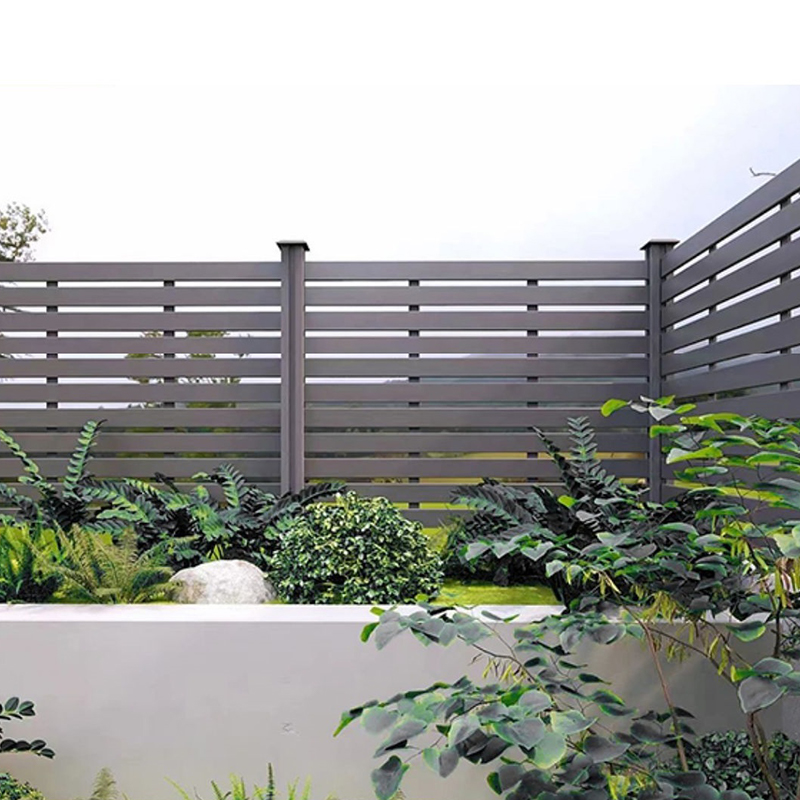
Individual WPC boards slot horizontally into grooved aluminium or composite posts. This is the most widely used residential WPC fencing configuration, offering a clean contemporary aesthetic with a smooth, fastener-free board face and the ability to adjust board density — closely butted for full privacy, or spaced to allow airflow and partial visibility. Individual boards can be replaced without dismantling the entire fence run, making maintenance and repair straightforward if a single board is damaged.
Vertical Board Configurations
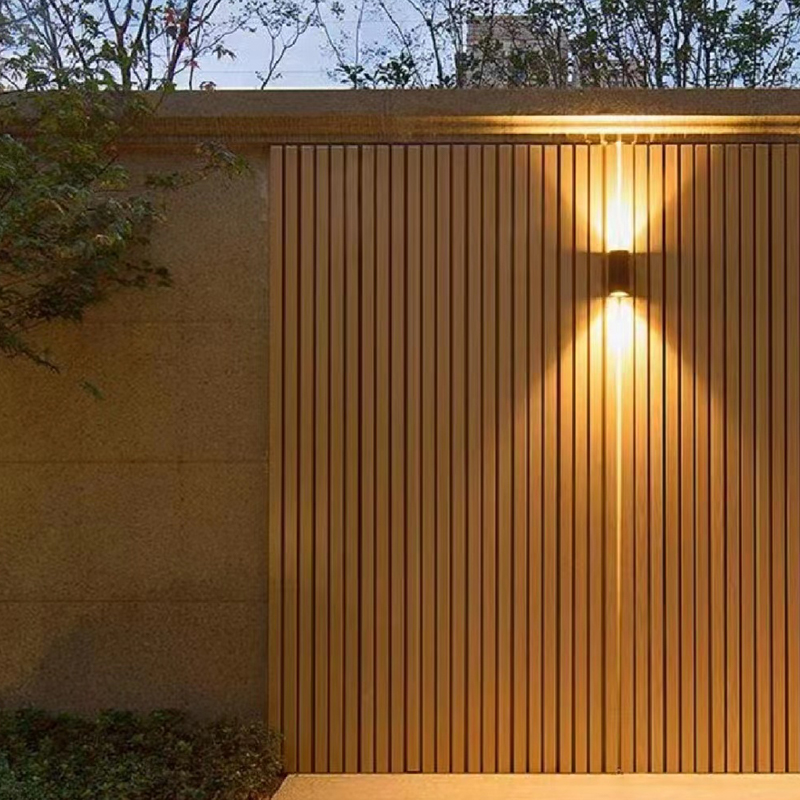
WPC boards installed vertically into a top and bottom rail produce a tall, elongated fence character that suits contemporary residential garden designs, commercial entrance features, and architectural screening applications. Vertical board configurations also handle sloped ground more naturally than horizontal systems, as the boards themselves do not need to be cut to follow a slope — the post heights are adjusted to follow the ground profile while the vertical boards remain constant in length.
Slatted Privacy Screens and Louvre Systems
Spaced WPC slats or angled louvre boards create privacy screens that allow partial airflow and light transmission while blocking direct sightlines. These configurations are used extensively for pool surrounds, garden room screening, commercial entrance features, balcony privacy panels, and terrace screening where a solid fence would create planning objections or an undesirably enclosed feel.
Traditional Panel Systems
Pre-assembled WPC panels in standard widths — typically 1.8 m — are installed between posts, replicating the installation approach of traditional lapped timber panel fencing. Panel systems are faster to install on long straight runs and are a practical choice for straightforward residential boundaries where design variation is not required. Standard panel widths may limit flexibility on irregular boundary lines or significantly sloped ground.
Post and Foundation Specification: Getting the Structure Right
The structural performance of a WPC fence depends as much on its post specification as on the board quality. The boards themselves are the visible element, but the posts determine whether the fence remains plumb and rigid throughout its service life.
Recommended Post Materials
- Aluminium posts: The preferred specification for WPC fencing. Will not rot, corrode in soil contact, or suffer insect attack — matching the WPC board's full service life without the structural degradation that affects timber posts at grade level. Aluminium posts with pre-machined groove channels integrate cleanly with most WPC board-on-post fencing systems. Powder-coated finishes in colours matched to the fence board palette provide a unified aesthetic.
- Steel posts: Higher structural strength for taller fence runs, exposed and high-wind sites, and commercial boundary applications. Must be hot-dip galvanised or powder-coated for corrosion resistance in outdoor and soil-contact conditions. Steel posts provide the greatest wind load resistance where fence heights exceed 1.8 m or site exposure is significant.
- WPC composite posts: Visually consistent with WPC boards at fence ends, corners, and intermediate post positions where the post face is visible. Must be correctly specified for the fence height and ground conditions — WPC posts in direct soil contact should have base caps or sleeves to protect cut end-grain from moisture ingress.
- Timber posts: Functionally compatible with WPC boards but create a maintenance inconsistency — the WPC boards require no treatment while timber posts continue to need treatment to prevent decay at ground level. If timber posts are used, specify Class 4 treated hardwood or pressure-treated softwood graded for ground contact use.
Foundation Depth and Post Spacing
The standard requirement for fence post foundation depth is one-third of the total post length set in concrete below ground level. For a 1.8 m (6 ft) finished fence height, this requires a minimum 2.7 m post with 900 mm set in concrete. Post spacing in WPC board-on-post systems should not exceed 1.8 m between post centres — wider spans increase mid-span board deflection under wind load beyond acceptable limits for most system specifications and can cause board-to-post connections to work loose over time. On exposed or coastal sites, reduce post spacing to 1.5 m and increase foundation depth by 150–200 mm.
Critical Installation Details That Affect Long-Term Performance
Thermal Expansion Gaps
WPC boards expand along their length as temperature rises — a predictable dimensional change that must be accommodated in every installation. A 5–8 mm expansion gap must be left at each board terminus, where the board end seats into the post groove or channel. Boards installed tight against the post channel walls with no end gap will buckle and bow when they expand in warm weather, causing permanent board deformation and potential post damage. This is one of the most common installation errors in DIY WPC fencing projects and one of the most avoidable with correct installation guidance.
Sealing All Cut Board Ends
Every board end cut on site must be sealed immediately with manufacturer-approved end-grain sealant. The through-colour WPC material is consistent to the board core, but cutting exposes raw wood fibre at the cut face. This exposed face is the primary remaining moisture entry point once the board surface is intact. Sealing is mandatory for warranty compliance and is particularly important at the bottom of fence boards, where cut ends in close proximity to ground moisture are most at risk.
Minimum Ground Clearance
The lowest WPC board in any fence run should maintain a minimum 50 mm clearance above finished ground level or above any surface material — including mulch, bark, gravel, or decking — that can retain moisture against the board base. Persistent contact between board bases and damp ground surfaces creates conditions for biological growth against the board and accelerates soiling in the lowest boards. On sloped sites, step fence panels rather than running boards to ground level.
Stainless Steel Fixings Only
Where face fixings are required — for rail-to-post connections, capping trims, or supplementary board fixings — use only stainless steel screws or clips. Galvanised or standard steel fixings corrode in outdoor conditions, producing rust staining on WPC board surfaces and eventual fixing failure. Rust staining on WPC boards cannot be removed without permanently damaging the board surface.
Maintaining WPC Fencing: What the Annual Routine Actually Involves
No painting, staining, oiling, or chemical treatment is ever required. The complete annual maintenance programme for a WPC fence is:
- Brush loose debris from board surfaces and between boards: Remove leaves, mud splash, and organic debris from board faces and the spaces between boards, particularly at the fence base where material accumulates at ground level
- Wash board surfaces with mild detergent and water: Apply warm water and a few drops of household washing-up liquid with a soft brush or cloth, working along the board grain length rather than across it. Rinse thoroughly with clean water. For the fence base and lower boards, a garden hose at low pressure is effective.
- Treat biological growth if present: On shaded north-facing panels or those overhung by trees, surface algae or mould can develop. A dilute white vinegar solution (1 part vinegar to 4 parts water) or manufacturer-approved composite cleaner removes biological growth effectively without damaging the board surface. Apply, leave for 10 minutes, scrub gently along the grain, and rinse.
- Inspect board ends, post bases, and fixings annually: Check that expansion gaps at board ends remain clear and unobstructed, that ground clearance beneath the lowest board is maintained, and that no stainless steel fixings show signs of corrosion that might indicate non-stainless substitutions during installation
For a typical 20-metre residential WPC fence, this annual routine requires under two hours — replacing the full-day repainting and treatment work that an equivalent softwood timber fence requires every 1 to 3 years.
Frequently Asked Questions About WPC Fencing
How long does WPC fencing last?
Quality WPC fencing boards have a realistic service life of 15 to 25 years, with manufacturer warranties of 10 to 20 years depending on product tier. Standard WPC fencing typically carries a 10–15 year warranty; premium co-extruded WPC fencing 20–25 years. The boards are typically the longest-lasting element of the system — post and fixing specification usually determines the overall fence lifespan. Using aluminium posts eliminates the post decay that causes most timber-framed fence failures prematurely.
Does WPC fencing fade in sunlight?
Some colour change from UV exposure is normal for all outdoor materials, including WPC. Budget WPC fencing with inadequate UV stabiliser specification can show noticeable fading within 2 to 3 years in full sun. Quality WPC fencing products with properly specified UV stabiliser packages maintain colour stability for 10 to 15 years under normal exposure. Premium co-extruded WPC fencing — with a concentrated UV stabiliser package in the cap layer — offers the strongest fade resistance, with explicit written warranties of 15 to 20 years covering colour performance. An initial weathering phase of 6 to 12 months after installation, during which surface pigments stabilise, is normal for all composite products.
Is WPC fencing strong enough to provide security?
WPC fence boards provide effective deterrence and privacy for residential garden boundaries and commercial perimeter fencing at standard heights. At 1.8 m (6 ft), a correctly installed solid-board WPC fence on properly concreted posts provides a robust barrier that maintains its integrity without the gaps and board failures that develop in ageing timber fences. For applications requiring high-security specifications — prisons, data centres, or high-value commercial sites — WPC fencing alone is not typically the appropriate boundary solution; it is most suited to privacy and deterrence boundary applications rather than high-security perimeter duty.
Can WPC fencing be installed on a slope?
Yes. The two standard approaches are stepped panels — where each panel is installed horizontally level and the ground slope is accommodated in steps between panels — and raked boards, where boards are cut at an angle to follow the ground profile. Stepped installation is generally preferred for WPC board-on-post systems, as it maintains level board lines within each panel and avoids the angled cuts that require additional end-grain sealing. All fence posts must be installed plumb regardless of ground slope. On raked installations, every angled cut board end must be sealed with end-grain sealant immediately after cutting.
Is WPC fencing safe for gardens with children and pets?
Yes — WPC fencing is well-suited for gardens used by children and pets. The composite board surface does not splinter the way that ageing timber boards do. No chemical preservatives, paint solvents, or wood treatment chemicals are used — making WPC boards safe in soil-adjacent garden settings. The boards meet E0 formaldehyde emission standards and contain no harmful adhesives. The smooth, splinter-free surface is safe for children and pets that make contact with the fence during normal garden use.
Can I paint or stain WPC fencing to change its colour?
Painting or staining WPC fencing boards is not recommended. Paint and stain do not bond reliably to the polymer-rich composite surface — they typically adhere poorly, peel within 1 to 2 years under outdoor UV and moisture exposure, and create a worse visual result than the original untreated board. Because WPC boards are manufactured with colour integrated throughout the material, the colour cannot be changed by surface treatment. Colour selection must be made at the specification stage before purchasing — most WPC fencing ranges offer 4 to 8 standard colours covering the full spectrum from natural timber tones to contemporary dark finishes.
What is the difference between WPC fencing and composite fencing?
The terms are often used interchangeably — all WPC fencing is composite fencing, and all composite fencing used for this application is WPC. Where a distinction is sometimes drawn, "composite fencing" may be used as the broader category term that includes both standard WPC and premium co-extruded products, while "WPC fencing" most commonly refers to standard single-material extrusion products. Co-extruded composite fencing — where a polymer cap layer is bonded to all surfaces of the WPC core — offers higher moisture resistance (less than 1% water absorption versus 3–8% for uncapped WPC), stronger UV fade performance, and longer warranties, at a higher initial price point.
How do I remove green algae from WPC fence boards?
Green algae on WPC fence panels is a surface biological growth and does not penetrate the board or damage its structure. Remove it by applying a dilute white vinegar solution (1 part white vinegar to 3–4 parts water) or a purpose-formulated composite cleaner to the affected boards, leaving it to work for 10 to 15 minutes, then scrubbing gently along the board grain with a medium-soft brush before rinsing thoroughly with a garden hose. For persistent growth on heavily shaded panels, repeat treatment twice per year. Never use bleach, solvents, or steel wire brushes — these permanently damage the board surface and typically void the product warranty.
Buying WPC Fencing: A Practical Checklist Before You Order
- Confirm boundary ownership and check planning permission requirements. Establish which boundaries are yours to fence before ordering materials. Check local planning rules for fence height limits — particularly on front boundaries and in conservation areas — before committing to a fence height specification.
- Choose product tier to match your site and expected service life. Standard WPC fencing is well-suited to sheltered residential gardens in temperate climates. For coastal sites, high-UV climates, or commercial applications where maximum long-term performance is required, specify co-extruded WPC with a polymer cap layer and an explicit written fade warranty of 15+ years.
- Specify aluminium posts to match the WPC board service life. Using aluminium posts eliminates the post decay that causes most composite fencing systems to fail prematurely. Verify that the post groove specification matches your chosen board profile and thickness before ordering.
- Request a written warranty covering both colour stability and structural performance. A quality WPC fencing manufacturer will provide a written warranty of 10+ years covering fade and structural integrity. Warranties that exclude colour change or are shorter than 10 years indicate inadequate UV stabiliser specification.
- Assess physical board samples against your garden's actual light and colour context. WPC board colour and grain character look significantly different on screen compared to in natural outdoor light. Request physical samples and assess them against your garden's existing materials — paving, decking, render — before finalising colour selection.
- Order all boards for the project from a single production batch with a 10% waste allowance. Include a minimum 10% waste allowance for cuts, angled ends on sloped boundaries, and spare boards for future repairs. Colour can vary slightly between production batches — ordering all material together guarantees consistent colour across the completed fence run.

 English
 Français
 Español
 Deutsch