2026-10-23
Content
A west-facing patio of forty square metres takes more punishment in one summer than a sheltered courtyard takes in five years. UV light hits the surface, rainwater sits in the gaps between boards, garden furniture drags across the grain, and the freeze-thaw cycle works on every fixing. That is why the material decision matters far more than the colour swatch at the top of the catalogue.
For most residential and light commercial patios, WPC patio decking materials give the most forgiving balance of weather resistance, low maintenance and installed cost, provided the board section, the surface treatment and the fixing system are specified together as one package instead of being bought as three unrelated items.
Buyers usually shortlist four or five material families before they look at profiles. The table below sets out how those families behave outdoors, because the maintenance rhythm and the failure mode are often more important than the purchase price.
| Material | Typical outdoor service life | Maintenance rhythm | Strongest fit | Main risk on site |
|---|---|---|---|---|
| Pressure treated softwood | 10 to 15 years | Re-oil or re-stain each year, sand splinters | Low budget garden decks | Warping and rot at ground contact points |
| Tropical hardwood | 20 to 30 years | Annual oiling, natural greying | High end terraces | High cost, movement, screw pull out |
| WPC composite | 15 to 25 years | Soap and water wash two or three times a year | Patios, pool surrounds, walkways | Weak substructure or low filler quality board |
| PVC decking | 20 to 30 years | Occasional wash | Hot, humid and coastal sites | Softer under heavy point loads, higher unit price |
| Aluminium | 30 years and above | Occasional wash | Rooftop and coastal projects | Hot underfoot, premium price, noisy underfoot |
| Porcelain tile on pedestals | 25 years and above | Sweep and wash | Roof terraces, balconies | Needs accurate levelling and drainage design |
Two numbers in that table decide most projects. The first is the maintenance rhythm a client will realistically accept. The second is the failure mode, because a deck that greys is a cosmetic issue while a deck that lifts at a board end is a safety issue. WPC sits in the middle of the price band but near the top of the convenience band, which is why it now appears in tenders that once specified timber by default.
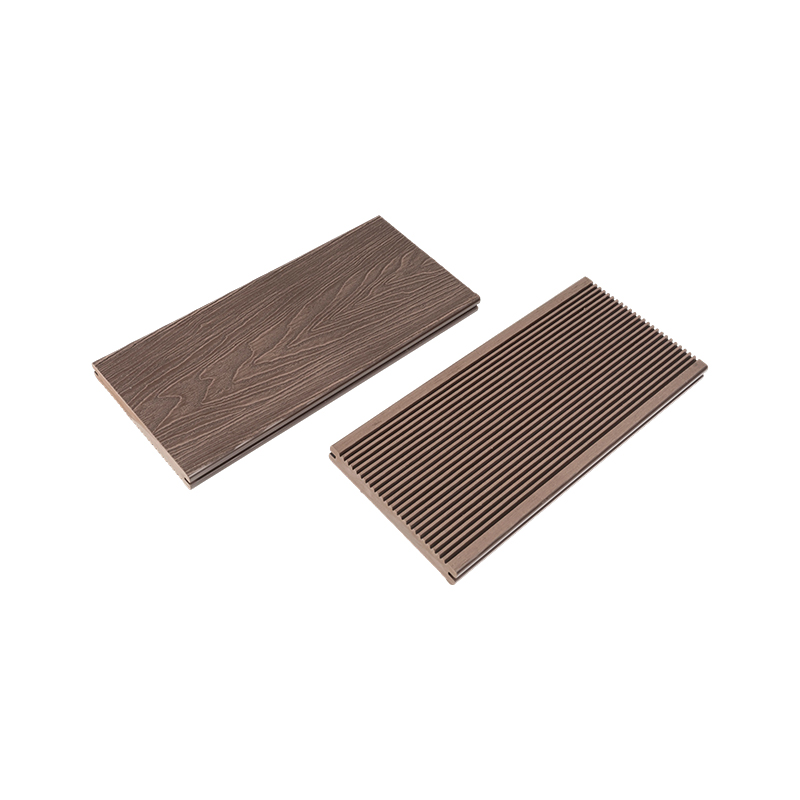
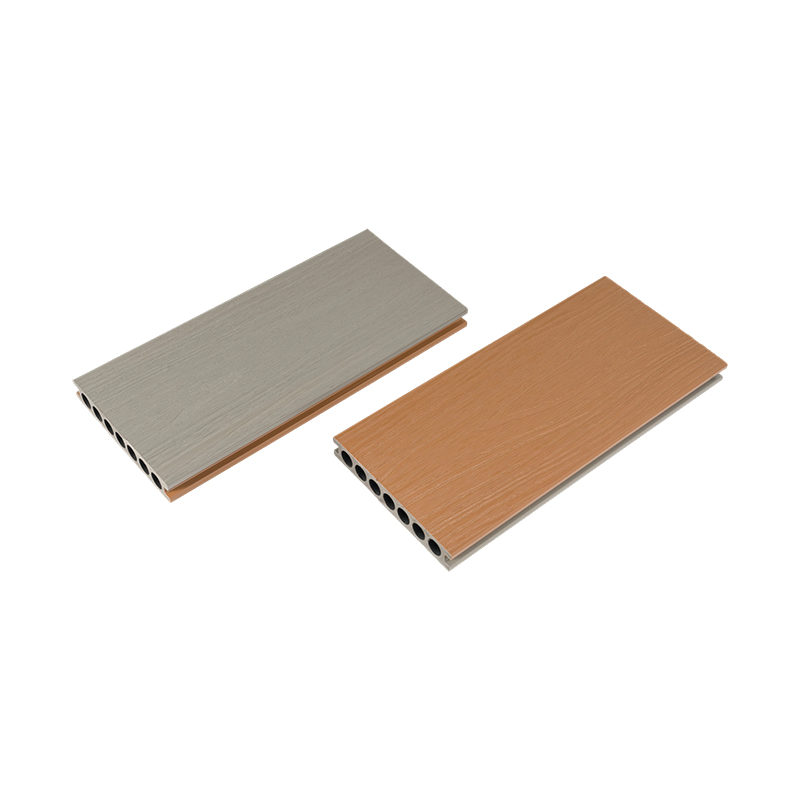
Once the material family is settled, the next decision is the section of the board itself. WPC decking is produced in hollow and solid profiles, and the difference is not cosmetic. A hollow board uses less material and is lighter to carry, which speeds up handling on multi-storey or rooftop projects. A solid board carries more mass, feels firmer underfoot, and generally tolerates wider support spacing.
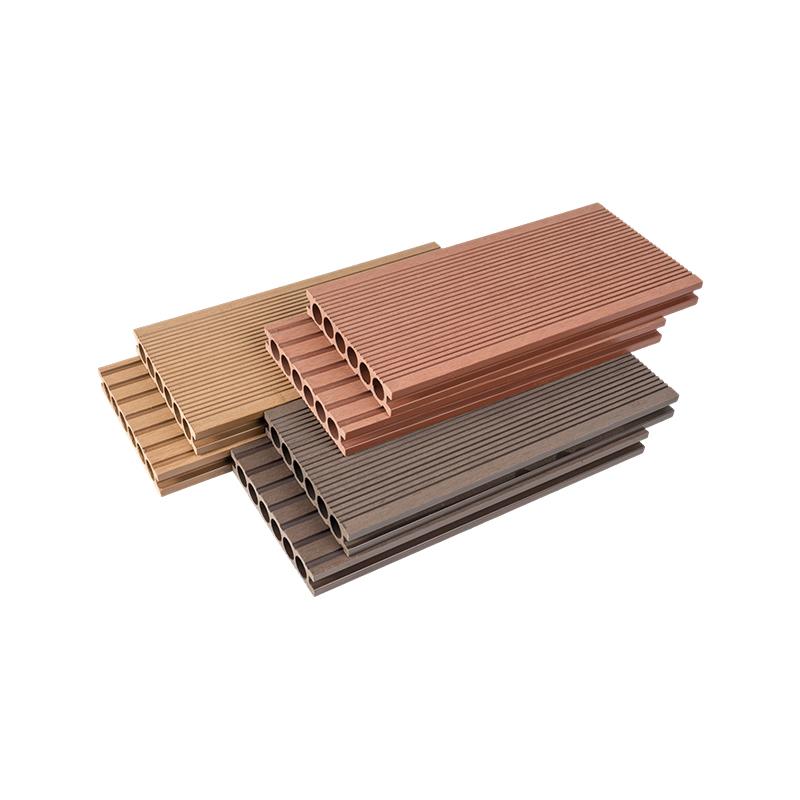 Hollow WPC Decking Boards for Outdoor PatiosLightweight hollow WPC decking with waterproof wood-grain surface; consider it where easier handling matters, but verify support spacing against the manufacturer's span table.View Product →
On site, hollow profiles are commonly installed on joists at roughly 300 mm to 350 mm centres, while solid profiles in the same thickness range often allow 400 mm to 500 mm centres. Those figures move with board thickness, span direction and the load the patio must carry, so they should always be confirmed against the manufacturer's span table rather than copied from a previous job.
The practical questions to ask are simple. Will a hot tub or a heavy planter sit on this deck? Is the deck at ground level or raised more than a metre? Raised decks usually favour solid boards or closer joist spacing because the deck must resist deflection across a longer clear span. Ground level garden patios frequently use hollow boards, since the support structure is cheap to add and the weight saving helps the installation crew.
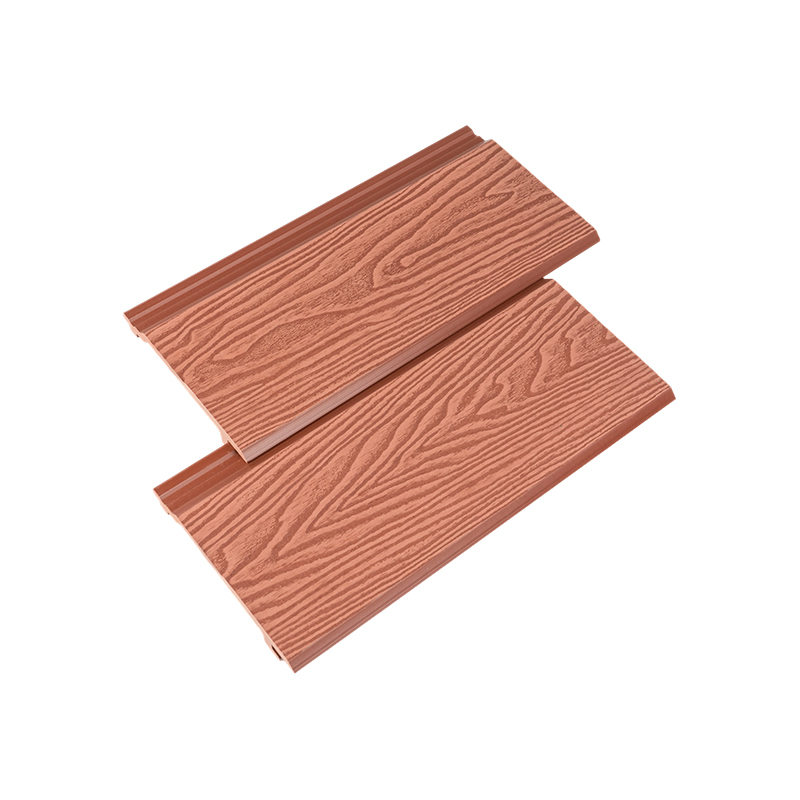
Surface technology is where two boards with the same section can behave very differently after three summers. There are three finishes that appear in most WPC catalogues, and each one solves a different problem.
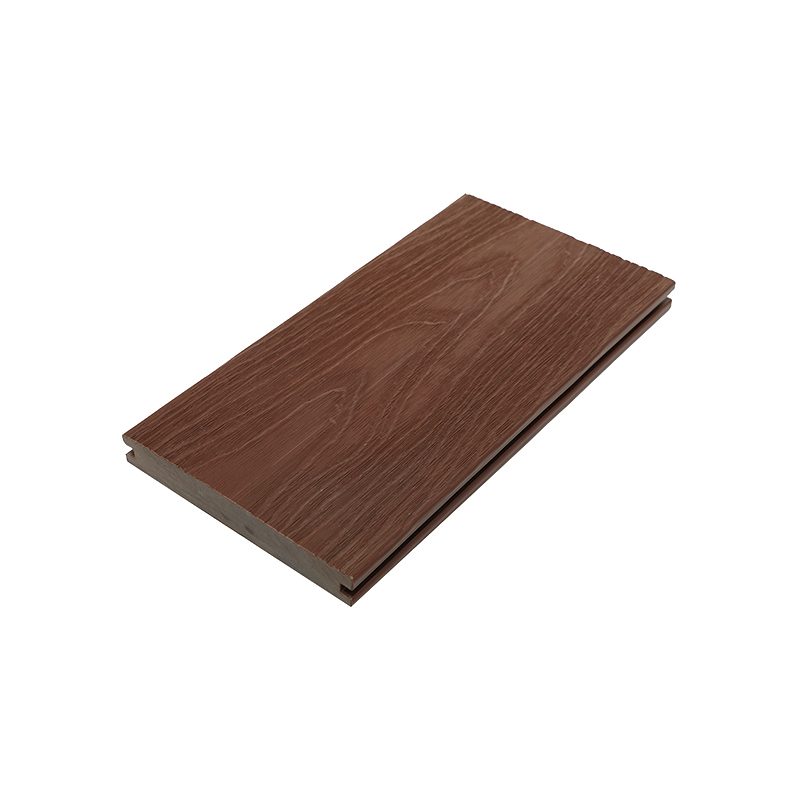 Solid Co-Extrusion WPC Decking with Protective SurfaceCo-extruded solid WPC boards with a wood-grain HDPE layer; a fitting choice for sun-exposed patios where fade resistance and low maintenance matter.View Product →
For a patio that faces strong sun, co-extrusion in a mid tone is the safer specification than a dark single layer board, even though the dark board looks better in the showroom. For a shaded courtyard or a covered veranda, 3D embossed classic boards deliver most of the visual benefit at a lower unit cost.
Most complaints about composite patios are not about the boards. They are about movement, squeaks, uneven joints and water sitting under the deck. All four come from the substructure and the accessories, which is exactly where budgets get trimmed first.
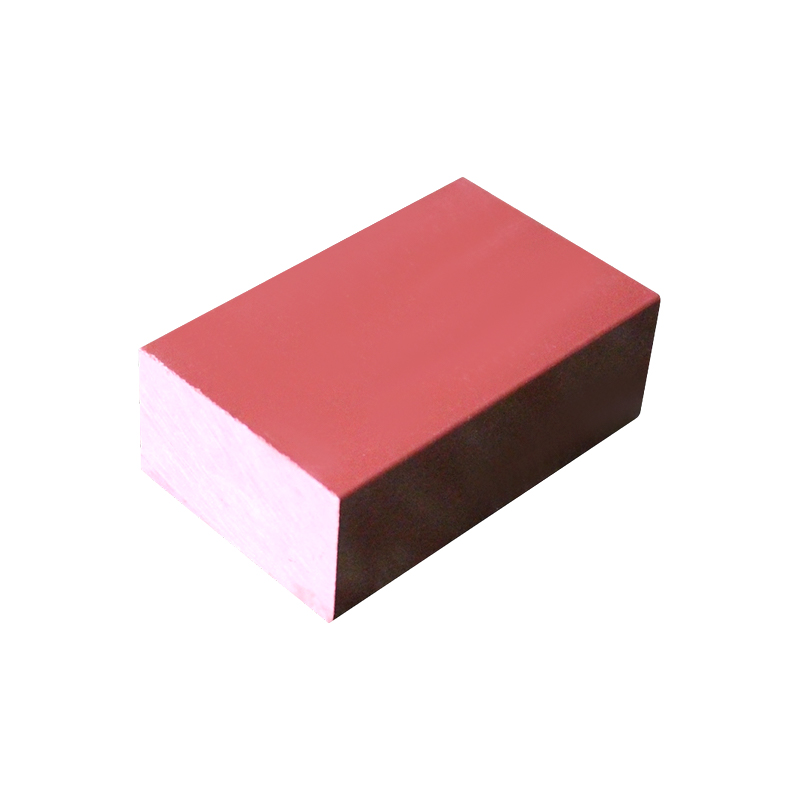 WPC Joists and Keels for Deck SubstructuresCorrosion-resistant WPC joists and keels that frame decks above damp slabs; choose double or steel versions to suit panel support and budget.View Product →
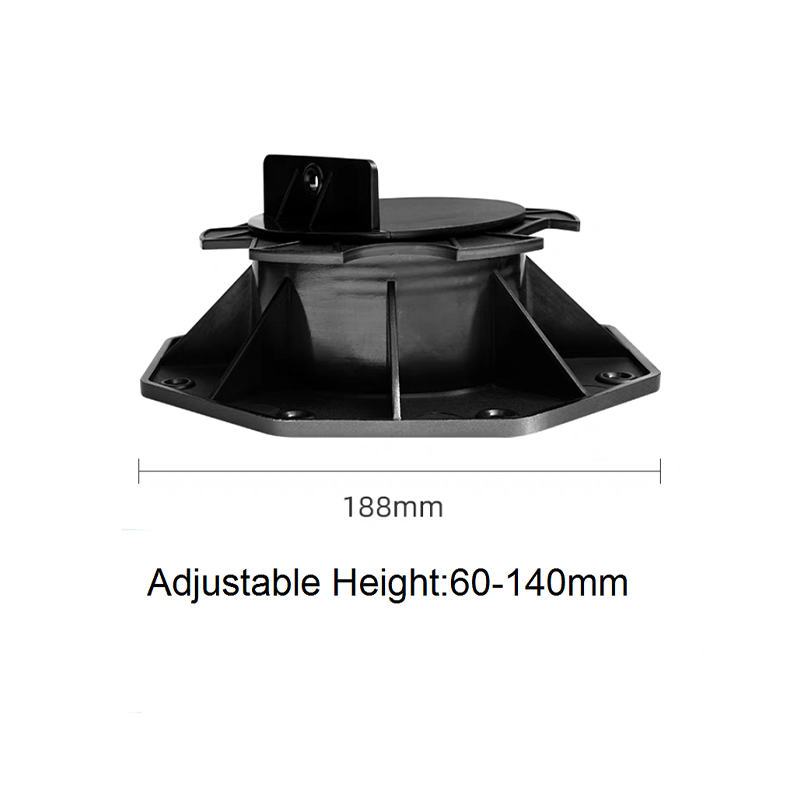
A WPC joist provides a rot resistant frame that does not absorb water from the slab, and it keeps the deck surface above the damp zone. From there, the rest of the system follows a logical order: an adjustable pedestal for levelling over a sloping or uneven roof slab, a clip that holds each board while leaving a controlled expansion gap, a stainless steel screw where a clip is not practical, and an edge cap to close the visible ends and corners.
Before releasing a purchase order, confirm each of the following in writing, because these are the points that generate variation claims later.
Item three is the one buyers overlook most often. If a patio is completed with boards from two different production runs, the colour difference can be visible in strong sunlight even when both batches meet the same specification.
Patio decking is a project material, so availability drives the programme as much as price. A supplier who can deliver boards, joists, clips and pedestals from one production base removes the risk of a half-finished installation waiting on a missing accessory. It also means one point of responsibility if a profile does not match the approved sample.
For buyers new to the material, it helps to understand the manufacturing route before negotiating: what WPC decking is and how it is made explains how polymer and treated cellulose are compounded, extruded and finished, which makes it easier to ask the right questions about filler content, wall thickness and colour layer thickness. Those three variables explain most of the price gap between quotations that look identical on paper.
Senyu Wood produces WPC decking profiles, cladding, fencing and the full accessory range from a single manufacturing base with an annual capacity of 20,000 tonnes. For project buyers that means deck boards, joists, clips and edge caps can be ordered as one system with matching dimensions and one delivery schedule.
If you have a patio drawing, a quantity list or simply a span and a load requirement, send the details to the factory and ask for a section recommendation, a colour sample and a per square metre material breakdown before you commit to a specification.
Choosing patio decking materials comes down to three linked decisions: the material family, the board section and surface, and the substructure that holds it all. Get those three aligned with the span, the traffic and the climate on site, and the patio will still look deliberate a decade after handover. Get any one of them wrong, and the most expensive component on the job will be the one nobody sees.



 English
 Français
 Español
 Deutsch