2026-11-20
Content
A deck handrail that feels solid in a showroom can still fail an inspection or work loose within two seasons. The difference is rarely the rail profile. It is the post base, the blocking under the deck surface, the alloy wall thickness and the fastener grade. Here is the short answer before the detail: for most residential decks, specify 6063-T5 aluminum with a rail wall of at least 1.5 mm and a post wall of at least 2.5 mm, powder coated at 60 to 80 microns, fixed with 316 stainless fasteners into solid blocking. Confirm rail height, gap limits and post spacing against the local code before you approve the shop drawing. The sections below explain why each of those numbers matters and where projects usually go wrong.
Guard rails are tested as a system, not as a length of tube. A typical requirement is a 200 lb concentrated load applied in any direction at the top of the rail, and that load travels straight into the post base plate. If the base is screwed only through the deck boards, the boards carry the moment. Boards creep, the screws lose tension, and the rail starts to move.
The reliable detail is a base plate bolted through the deck surface into structural blocking, usually 4x4 or doubled 2x8 blocking fixed between joists and flush with the top of the frame. Four 5/16 in stainless bolts with washers, plus a bead of sealant in each hole, is a common and defensible approach. Where a post lands over a rim joist, through bolts with a backing plate work well. Avoid anchoring to fascia alone, and avoid relying on a single lag screw in the centre of the plate; the plate will rotate around it.
Two smaller points matter in service. First, keep the base plate clear of standing water by setting it on a bed of sealant rather than a trapped shim. Second, check the plate alloy or coating; a well-coated rail on a bare mild steel base is a corrosion failure waiting for the first wet winter.
Most deck railing in aluminum is extruded from 6063-T5, which gives a good surface finish and enough strength for residential spans. Stronger options such as 6005A-T5 or 6061-T6 are used where posts are longer or spans are wider, and they cost more per metre. The grade matters less than the wall thickness in day to day use, because thin walls are what allow screws to pull out and miters to open.
Ask for the wall thickness of each component rather than the overall profile size. A practical specification is 1.5 to 2.0 mm for top and bottom rails, 1.2 to 1.5 mm for balusters or infill channels, and 2.5 to 3.0 mm for posts and corner sections. A 50 mm post with a 1.2 mm wall looks identical to a 2.8 mm version from the outside. The difference appears at the cut end, so request a cut sample or a section drawing with dimensions before production. If a supplier cannot state wall thickness in writing, treat that as a buying risk rather than a paperwork detail.
Powder coating thickness is usually quoted at 60 to 80 microns for architectural work. Standard polyester coatings suit inland projects, while a fluoropolymer or a coating tested to AAMA 2604 level holds colour better on south facing rails and pool decks. Anodized finishes at 15 to 18 microns are a sensible alternative where abrasion is the main concern, such as public walkways. Salt spray test results are worth asking for, but read the test hours alongside the coating system, because 1000 hours means little without knowing which coating was tested.
Fasteners should be 316 stainless on any project within about 1 km of salt water, and 304 is normally acceptable inland. Isolate aluminum from treated timber and from steel with a barrier tape or a plastic washer, and seal every cut end and drilled hole with touch up paint. Unsealed cut ends are the most common starting point for white corrosion on an otherwise sound rail.
| Exposure | Suggested finish | Fastener | Main watch point |
|---|---|---|---|
| Inland residential deck | Polyester powder coat, 60 to 80 microns | 304 stainless | Seal cut ends and drilled holes |
| Within 1 km of the coast | Powder coat plus sealed cut ends, or anodized | 316 stainless | Wash salt residue twice a year |
| Pool and spa surrounds | Powder coat, smooth profile for cleaning | 316 stainless | Chlorine attack on base plates |
| Commercial or public walkway | Fluoropolymer or AAMA 2604 level coating | 316 stainless | Abrasion and colour retention |
| Cold climate with deicing salt | Powder coat, thicker post walls | 316 stainless | Salt trapped under base plates |
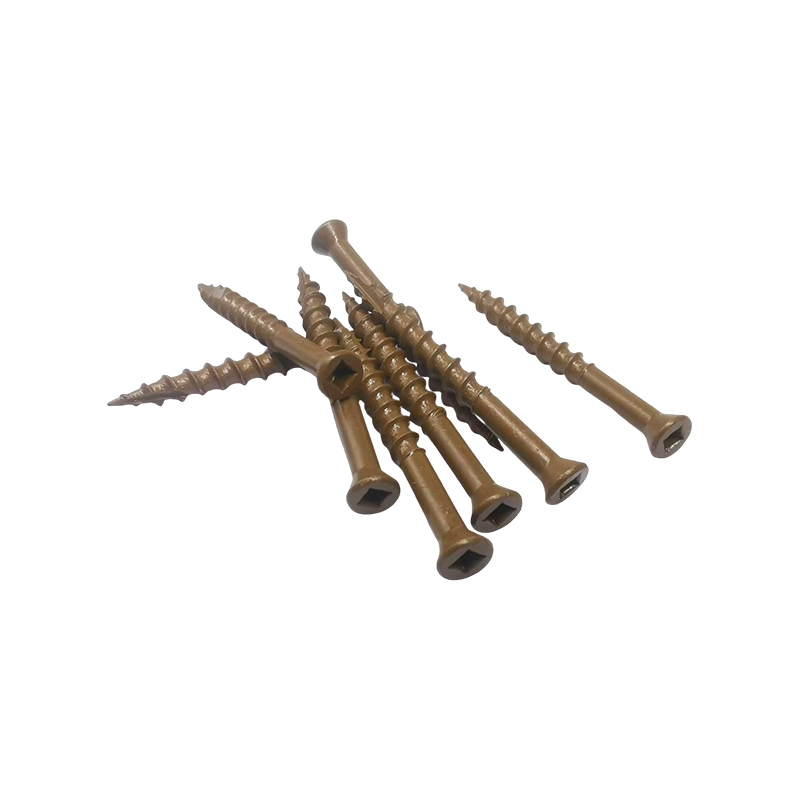 Stainless Steel Self-Tapping Screws for WPC and MetalCorrosion-resistant 304/316 self-tapping screws in 20–25 mm lengths suit WPC or wood studs, with drill-tapped versions for metal framing.View Product →
Residential guards are commonly set at 36 in measured vertically from the deck surface to the top of the rail, and commercial or public guards at 42 in. A handrail on a stair is usually 34 to 38 in above the stair nosing line. The infill must not pass a 4 in sphere anywhere in the guard, including the triangle formed where a stair rail meets a horizontal rail. A graspable handrail profile is generally 1.25 to 2 in across, so a wide flat top cap alone may not satisfy the handrail requirement unless a separate rail is fitted.
Post spacing follows from the load case. A 4 ft to 6 ft post spacing with a properly blocked base is common for residential work, and 4 ft is safer where infill panels are heavy or where the deck is elevated. If the deck is higher than 30 in above grade, assume a guard is required and design the framing for it from the start. Retrofitting blocking under a finished deck costs far more than adding it during framing.
Aluminum and wood plastic composite move differently. Aluminum expands and contracts with temperature, roughly 2.5 mm over a 3 m rail across a 40 degree swing, and WPC boards move along their length as well. Never trap a rail end hard against a wall or post without a clearance slot, and never fix a post base through a deck board in a way that locks the board in place. Drill the board with a clearance hole at least 3 mm larger than the bolt so the deck can move under the plate.
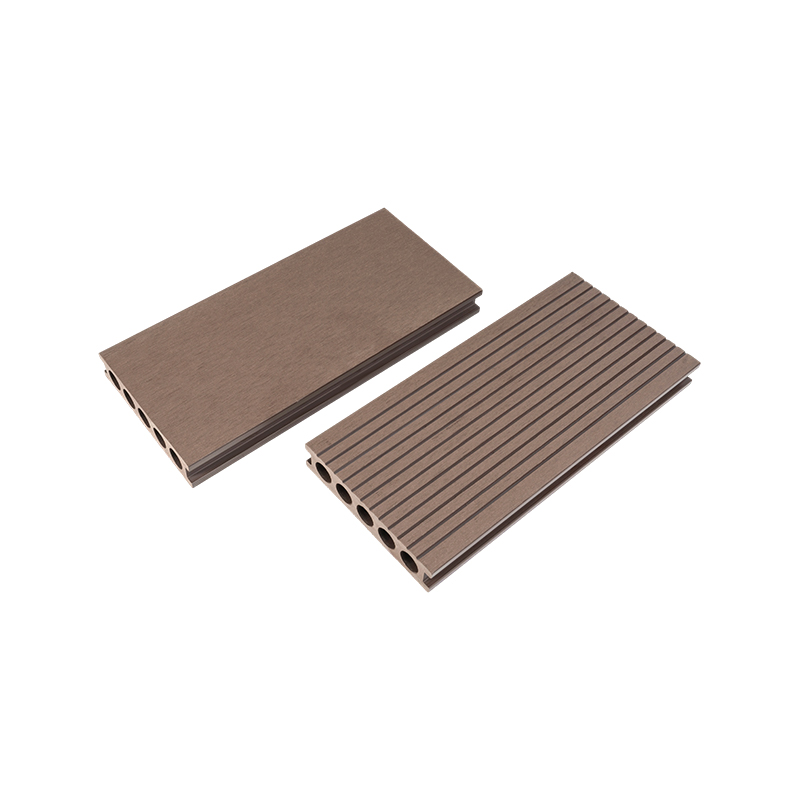
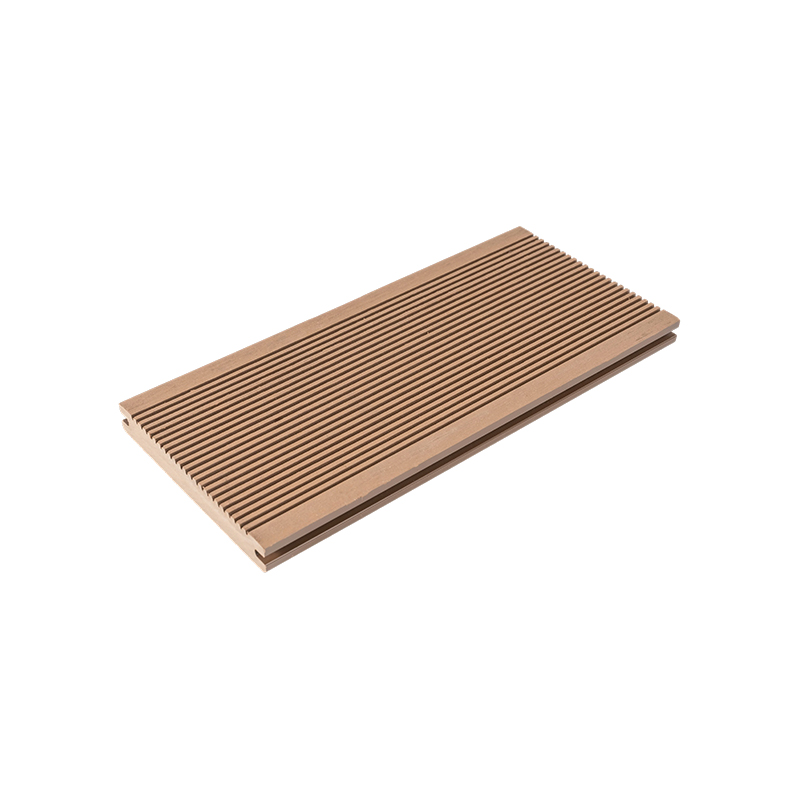
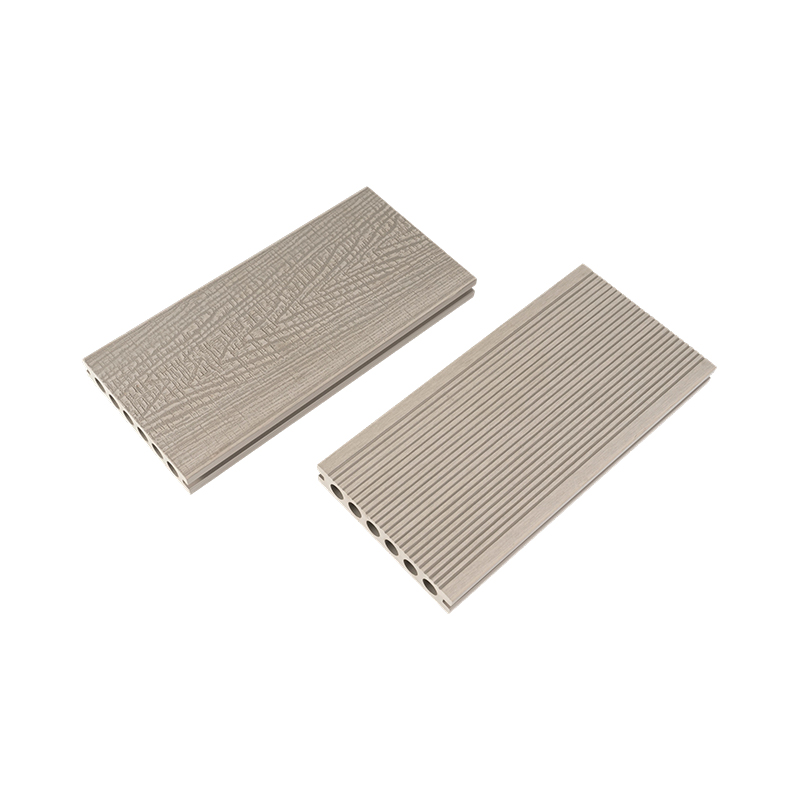
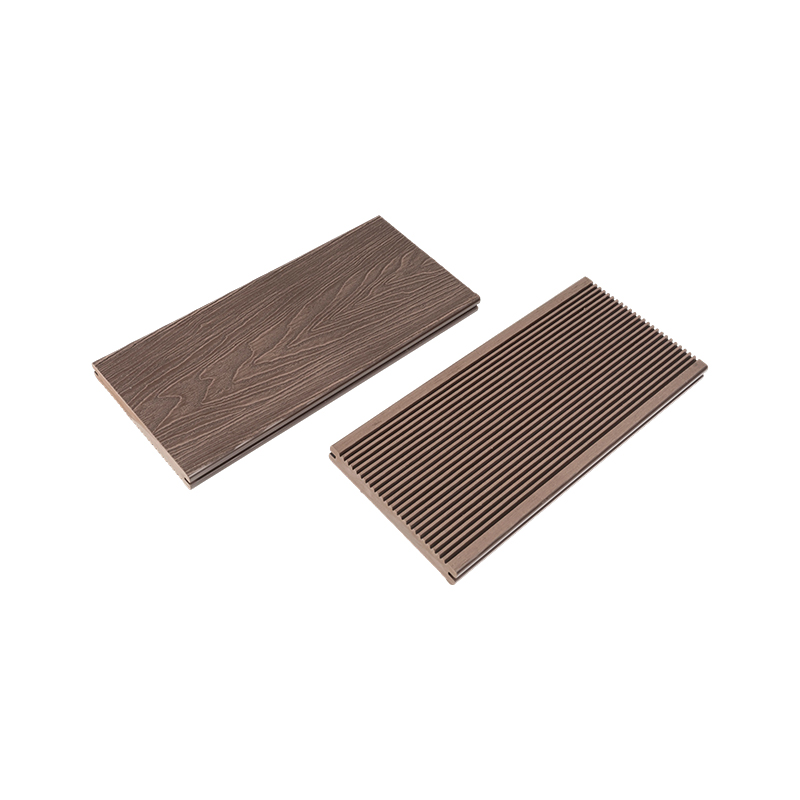
On a composite deck surface, the rail system also has to look like part of the same build. Matching powder coat colour to the board tone, or running a slim aluminum rail over composite infill, keeps the assembly coherent. The same logic applies to WPC decking boards themselves, which are worth selecting with the railing layout already in hand so that post positions land on joists rather than between them; a short guide on what WPC decking is covers the board and joist basics.
Where a project needs a matching privacy screen or boundary fence behind the rail, a combined WPC panel and aluminum frame is often the simplest way to keep colour and finish consistent across the whole outdoor build.
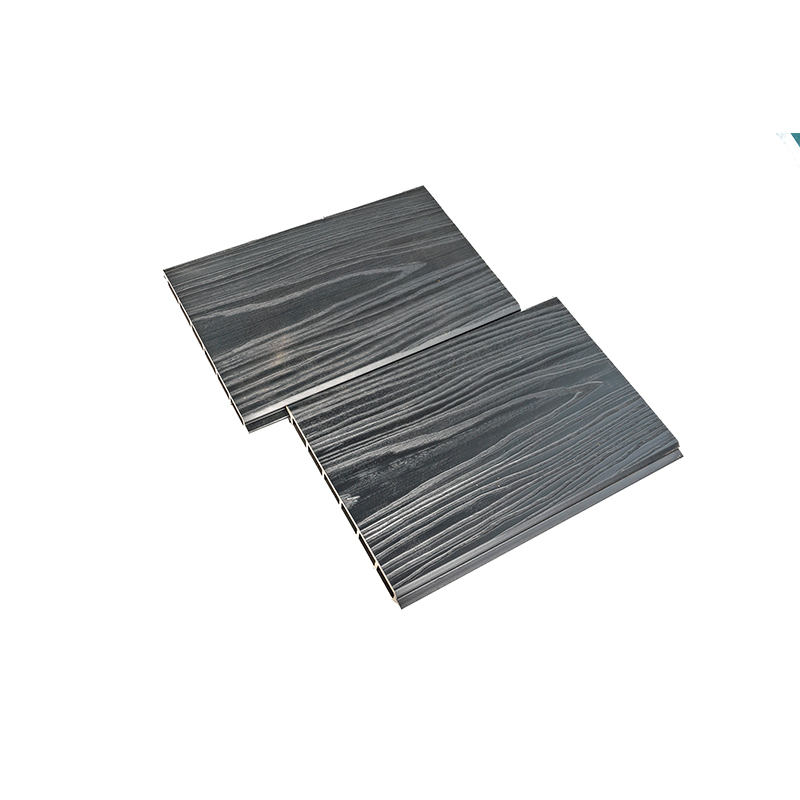 WPC and Aluminum Privacy Fencing with Wood-Grain PanelsModular aluminum-framed WPC fencing in teak, maple, gray, or off-white offers waterproof, UV-resistant privacy for gardens, pools, balconies, and outdoor boundaries.View Product →
Most disputes on handrail orders trace back to information that was never confirmed at drawing stage. Run through these checks in order:
For a container order, the specification sheet is the contract. Ask for the alloy and temper, the wall thickness of each profile, the coating system and thickness, the colour reference, and the fasteners supplied with each set. Request a packing list that separates rails, posts, infill, base plates and fixings, because a mixed carton that is short of base plates will stop a crew on site.
A rail system is only as good as the frame under it and the paperwork behind it. Send the deck layout, post positions and finish reference to the supplier before the order is released, and ask for the shop drawing to be returned with wall thickness and coating marked on it. You can contact the team to check profile options against a specific deck plan.



 English
 Français
 Español
 Deutsch