2026-05-15
Content
The short answer is: it depends on the type of composite decking. Not all composite decking is equally waterproof, and the distinction matters enormously for long-term performance. Co-extruded composite decking — where a protective polymer shell fully encases the wood-plastic composite core — is effectively waterproof and can resist water absorption at rates as low as less than 0.5% by weight after prolonged immersion. Standard WPC (Wood-Plastic Composite) decking without a capped shell, by contrast, is highly water-resistant but not fully waterproof: it absorbs significantly less water than natural timber but still allows some moisture ingress, particularly through cut ends and fastener holes.
Understanding the difference between "waterproof," "water-resistant," and "moisture-resistant" — and which category each composite decking type falls into — is essential for making the right choice for pools, docks, balconies, and other wet environments. This article explains the science behind composite decking's water performance, compares the three main product types, and gives you the data to select the right product for your application.
In the context of outdoor decking, three terms are frequently used — often interchangeably, but incorrectly — to describe water performance:
Natural hardwood decking, by comparison, absorbs water readily — untreated timber can absorb 20–30% of its own weight in water when wet, leading to swelling, warping, splitting, and accelerated decay. Even pressure-treated timber allows significant moisture ingress once the protective chemical layer is compromised by weathering or cutting. The water performance advantage of composite decking over timber is real and substantial — the question is simply how waterproof different composite products are relative to each other.
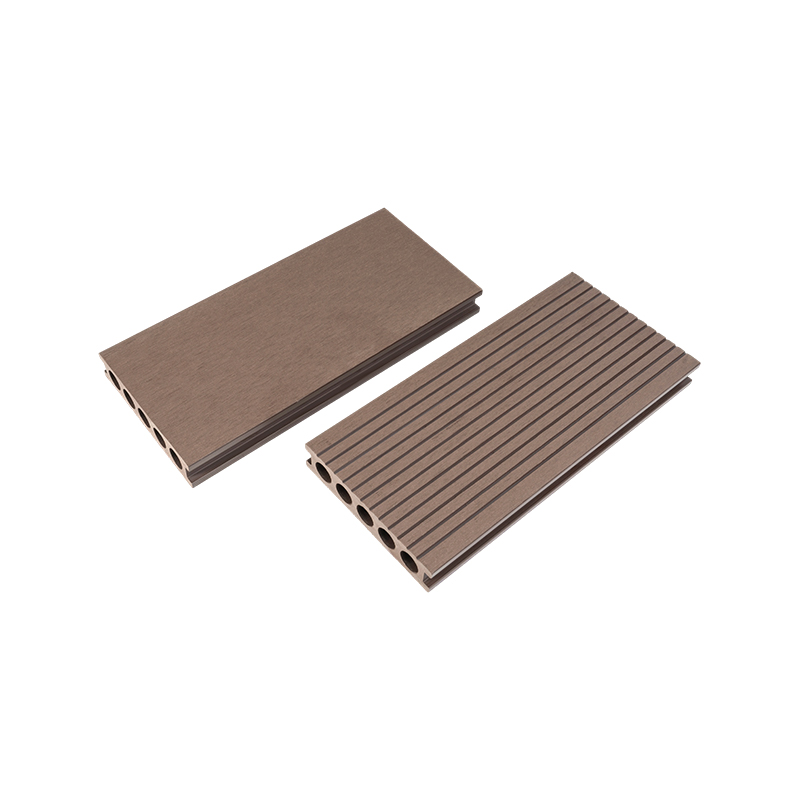
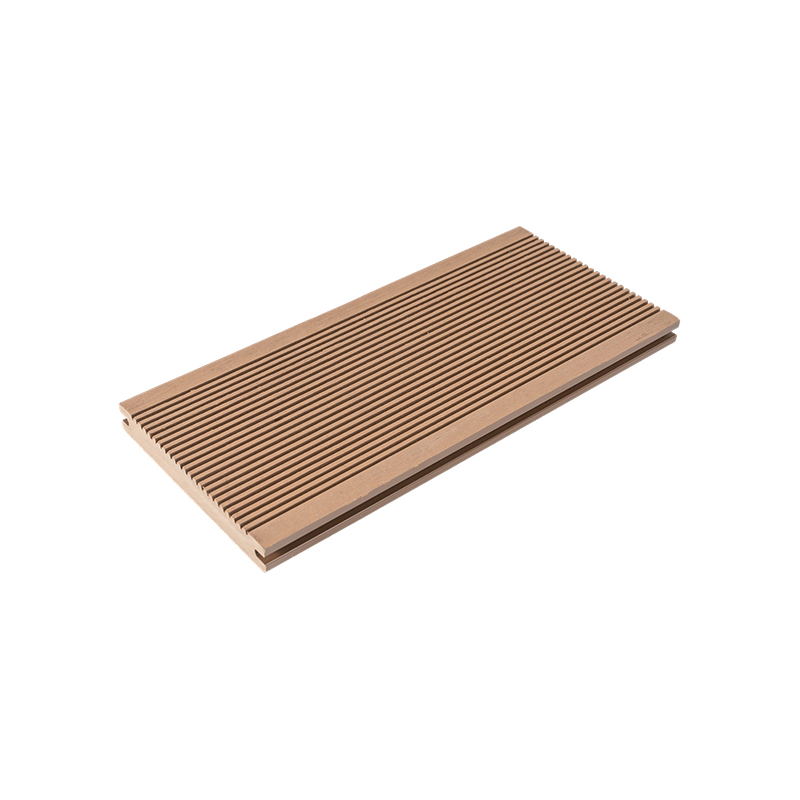
Composite decking is produced in three primary configurations, each offering a different level of water resistance performance:
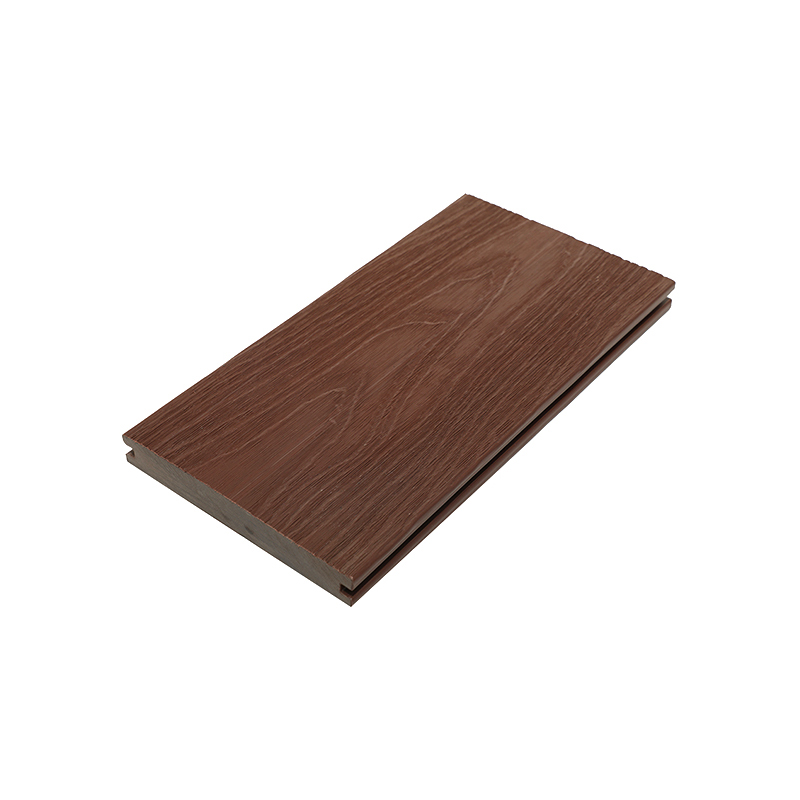
Standard WPC decking is manufactured by blending wood fiber (typically 50–60%) with thermoplastic polymer (polyethylene, polypropylene, or PVC) and extruding the mixture into board profiles. The plastic binder coats and binds the wood particles, dramatically reducing — but not eliminating — the board's ability to absorb water. In laboratory immersion tests, quality WPC decking typically absorbs 3–8% of its weight in water after 24 hours of submersion, compared to 20–30% for untreated timber. The primary vulnerability of standard WPC is at cut ends, where wood fibers are directly exposed, and at fastener holes, where drilling or screwing breaks the plastic surface layer.
For most residential outdoor applications — patios, garden terraces, balconies — standard WPC's water resistance is more than adequate. However, for direct water contact environments such as pool surrounds, docks, and commercial port installations, the more water-resistant options below are preferable.
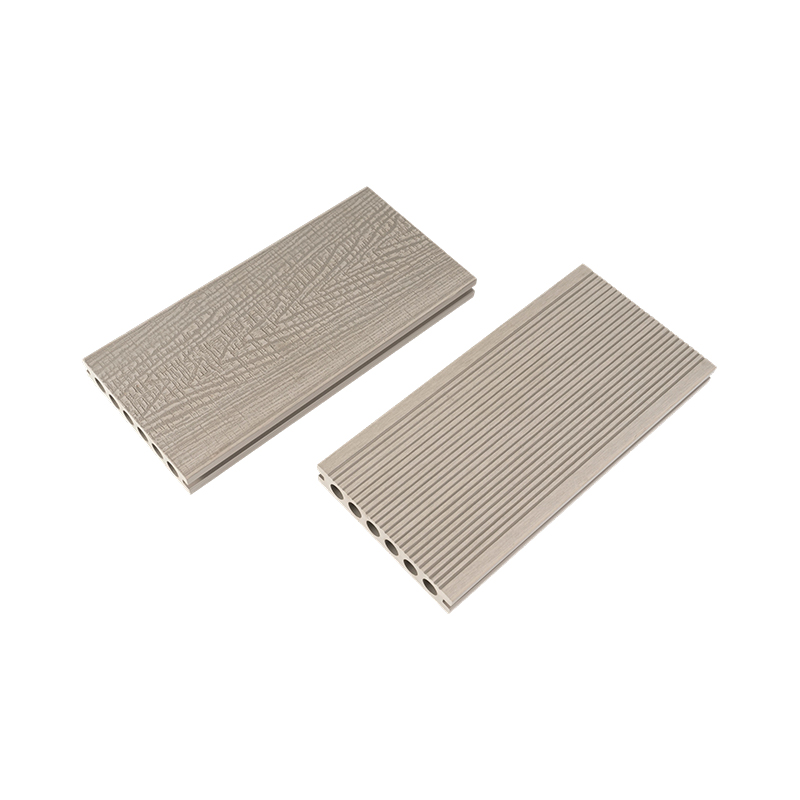
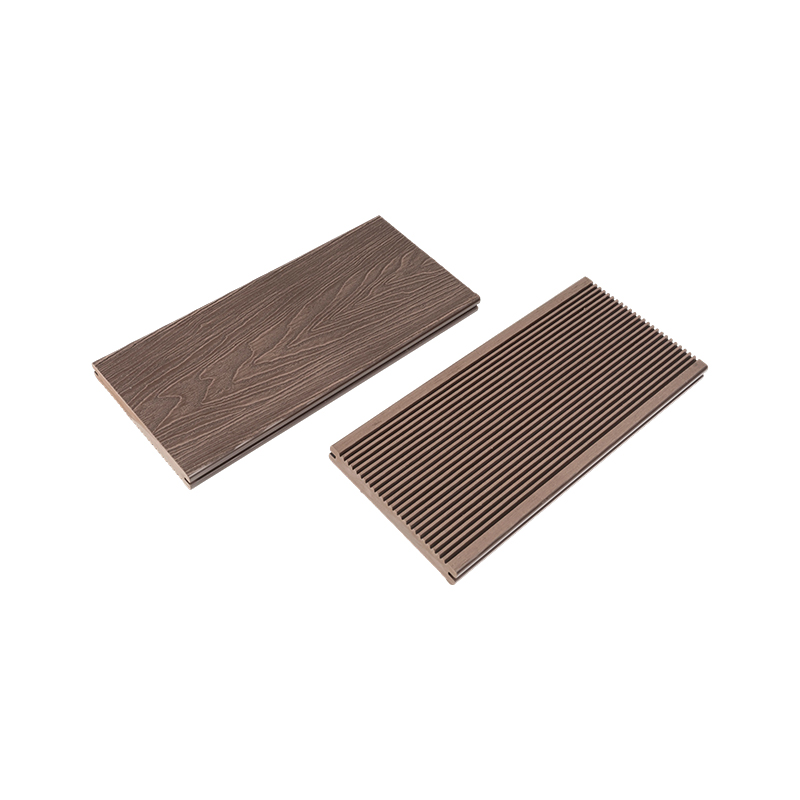
3D embossed composite decking uses the same WPC core material as standard boards but applies a three-dimensional surface texture through an embossing process during manufacturing. This creates a realistic wood-grain appearance with enhanced surface detail. The embossing process densifies the surface layer slightly and can improve surface water shedding compared to a flat WPC surface, but the water resistance performance is fundamentally similar to standard WPC — significantly better than timber, but not fully waterproof. The 3D texture also affects cleaning: the grooves of the embossed pattern may collect debris more readily than a smooth surface, though the material itself remains stain-resistant.
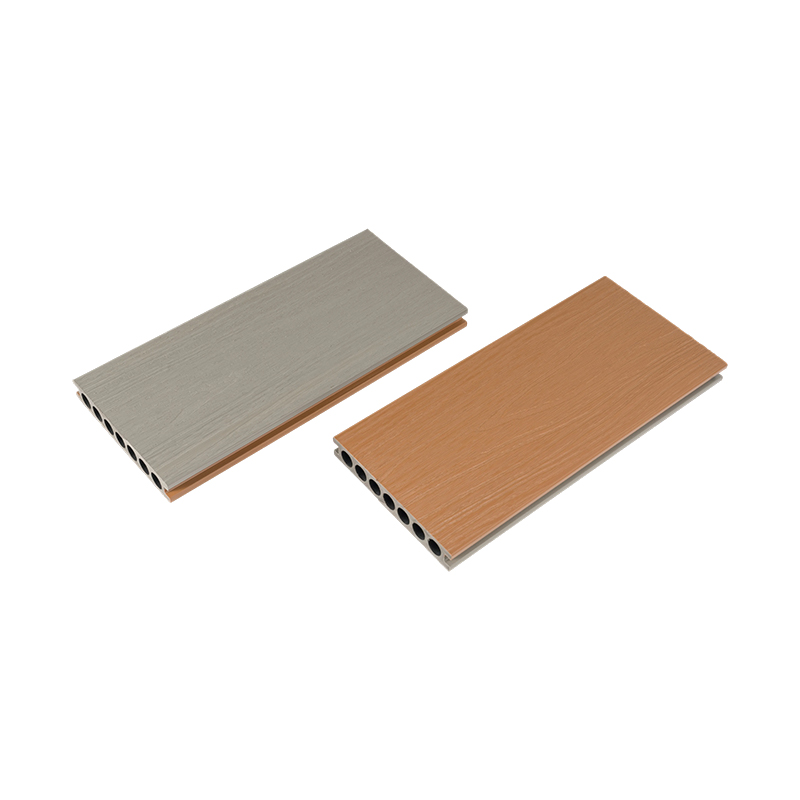
Co-extruded composite decking represents the highest level of water protection available in composite decking technology. In the co-extrusion manufacturing process, the WPC core is simultaneously wrapped during extrusion with a continuous, fully bonded outer shell of pure high-density polyethylene (HDPE), polypropylene, or ASA (acrylonitrile styrene acrylate). This shell — typically 0.5–2.0 mm thick — completely encapsulates the wood-plastic core on all four sides, creating a physical barrier that prevents water from reaching the wood fiber content at all.
Water absorption tests on quality co-extruded composite decking show absorption rates of less than 0.5–1.5% after 24-hour immersion — comparable to solid PVC and dramatically lower than either standard WPC or natural timber. The co-extruded shell also provides superior resistance to staining, fading, mold, and surface scratching compared to uncapped WPC, making it the preferred choice for demanding applications including pool surrounds, waterfront decking, commercial hospitality venues, and marinas.
The following table compares the water absorption performance of composite decking types against natural wood and PVC alternatives, based on standardized immersion test data:
| Decking Material | Water Absorption (% by weight) | Swelling Risk | Mold / Rot Risk | Suitable for Wet Environments |
|---|---|---|---|---|
| Untreated Softwood (Pine) | 20–30% | Very High | Very High | No |
| Pressure-Treated Timber | 15–25% | High | Moderate | Limited |
| Tropical Hardwood (e.g., Ipe) | 8–15% | Moderate | Low–Moderate | With maintenance |
| Standard WPC Composite | 3–8% | Low | Very Low | Yes (most applications) |
| 3D Embossed WPC Composite | 3–7% | Low | Very Low | Yes (most applications) |
| Co-Extruded (Capped) Composite | <0.5–1.5% | Negligible | Negligible | Yes (including pools, docks) |
| Solid PVC Decking | <0.1% | None | None | Yes |
The data confirms that even standard WPC composite decking outperforms all timber alternatives on water resistance, while co-extruded composite approaches the performance of solid PVC — with the significant advantage of providing a natural wood aesthetic that PVC cannot replicate convincingly.
Understanding why water resistance is a critical decking specification — not just a marketing feature — requires examining what happens to decking materials when they absorb moisture repeatedly over years of outdoor exposure:
When wood fibers within a composite board absorb water, they expand. When they dry out, they contract. This repeated wet-dry cycling over seasons causes cumulative dimensional change and board warping. Quality composite decking is formulated to minimize this effect: WPC boards typically show linear expansion coefficients of 0.3–0.8 mm per meter per 10°C temperature change combined with moisture cycling, compared to solid timber which can swell or shrink by several millimeters per board width in wet conditions. Co-extruded boards, with their moisture-blocking shell, show even lower dimensional movement.
Mold and mildew require three conditions to grow: moisture, organic material, and warmth. Standard WPC composite boards contain wood fiber — organic material — so if moisture reaches the core, mold growth is theoretically possible, though dramatically less likely than with timber. In practice, the plastic binder in WPC dramatically reduces the availability of wood fiber as a nutrient source. Surface mold (growth on top of the board rather than within it) is the more common concern, particularly in shaded or persistently damp locations, and is addressed by surface cleaning rather than indicating material degradation. Co-extruded boards, where the wood core is sealed behind a plastic shell, essentially eliminate this risk.
Repeated moisture cycling progressively degrades the wood fiber within standard WPC boards, reducing the board's flexural strength and stiffness over a period of many years. This is why composite decking manufacturers specify deck span tables with conservative span limits — typically 400–500 mm maximum joist spacing for residential composite decking — that account for some reduction in structural performance over the product's service life. Co-extruded boards maintain structural performance more consistently because moisture cannot reach the core to initiate wood fiber degradation.
A moisture-absorbing surface is also more susceptible to tannin staining from leaves, algae growth in wet conditions, and penetration of food and beverage spills. Surfaces that repel water also repel most staining agents. Co-extruded composite boards with their dense polymer shell surface are stain-resistant to a very wide range of substances — including coffee, wine, vinegar, sauce, red ink, lipstick, nail polish, and shoe polish — because these substances cannot penetrate the non-porous surface layer and can be wiped off before drying. Standard WPC's slightly more porous surface may require more prompt cleaning to prevent staining.
The water resistance of composite decking is not achieved through surface treatments or coatings applied after manufacturing — it is built into the material composition and manufacturing process itself. This is a fundamental difference from timber, where water resistance depends entirely on surface sealants that wear off and require periodic reapplication.
In WPC decking, wood fiber particles are thoroughly coated and encapsulated by the thermoplastic polymer matrix during extrusion. The polymer to wood fiber ratio significantly affects water resistance: boards with higher polymer content (40–50% polymer by weight) absorb less water than boards with higher wood content. The choice of polymer also matters: HDPE-based WPC is generally more hydrophobic than polypropylene-based WPC, while PVC-based WPC provides the highest water resistance of the uncapped WPC options due to PVC's inherently low moisture vapor transmission rate.
Additives including hydrophobic agents, compatibilizers, and coupling agents are incorporated into the formulation to improve the bonding between wood fiber and plastic matrix, reduce water uptake pathways, and enhance dimensional stability under moisture cycling.
The co-extruded polymer shell works by creating a continuous, unbroken physical barrier between the external environment and the wood-containing core. Unlike a post-applied coating, the co-extruded shell is chemically bonded to the core during manufacturing and cannot delaminate, peel, or wear away under normal service conditions. The shell material is selected for its combination of weatherability, UV resistance, scratch resistance, and water impermeability. ASA (acrylonitrile styrene acrylate) shells are particularly valued in demanding applications because ASA maintains its mechanical properties and color stability under long-term UV exposure without chalking or color fade.
Composite decking is available in both hollow (with internal voids) and solid board profiles. From a water management perspective:
Even the most water-resistant composite decking has vulnerable points where moisture can enter if proper installation practices are not followed. Knowing these points and how to address them is essential for long-term deck performance:
| Vulnerable Point | Risk Level (WPC) | Risk Level (Co-Extruded) | Prevention Measure |
|---|---|---|---|
| Cut ends (board trimming) | High — wood fiber exposed | Moderate — core exposed | Apply end-grain sealant; use manufacturer end caps; plan cuts to minimize exposed ends |
| Face-screw fastener holes | Moderate | Low–Moderate | Use hidden fastener systems wherever possible; apply sealant if face screwing is required |
| Surface scratches and abrasion | Low–Moderate | Low | Use protective furniture pads; avoid dragging heavy objects; choose scratch-resistant profiles |
| Board-to-board gaps (debris accumulation) | Low (surface issue only) | Low | Maintain recommended gap spacing (6–8 mm); clean gaps regularly to prevent organic debris buildup |
| Substructure contact points | Low | Negligible | Ensure adequate ventilation below deck; use aluminium or treated timber subframes |
The single most important installation practice for maximizing water resistance is sealing all cut ends immediately after trimming. Manufacturers typically supply matching color end-grain sealant or snap-on end caps for this purpose. Neglecting end sealing is the most common cause of premature moisture-related performance issues in otherwise well-installed composite decks.
Composite decking's water resistance makes it a popular choice for the most demanding wet-environment applications. Here is how different composite types perform in each context:
Pool surrounds experience constant wetting and drying cycles, chlorinated water splash, and high foot traffic from wet feet. For pool decking, co-extruded composite decking is strongly recommended. The sealed surface resists chlorine and pool chemical absorption, dries quickly, and does not develop the surface slipperiness that some algae-prone materials do. Look for composite boards with a brushed or grooved surface texture to provide slip resistance when wet — smooth-surface composites can become slippery when wet, a significant safety concern around pools. Anti-slip surface ratings of at least R11 (wet slip resistance) per DIN 51130 are recommended for pool perimeters.
Dock and waterfront applications expose decking to salt spray, standing water, wave splash, and in tidal zones, periodic submersion. Co-extruded composite decking performs well in these conditions because its polymer shell resists both freshwater and saltwater absorption. Unlike timber — which degrades rapidly in marine environments due to rot, marine borer activity, and repeated wetting — composite decking in marine environments requires no preservative treatment, no annual oiling, and no replacement of rotted boards. The subframe supporting composite decking in marine applications should be aluminum or hot-dip galvanized steel, as timber subframes remain vulnerable even when composite decking is used for the deck surface.
Balconies and rooftop terraces present a specific challenge: water must drain away from the decking surface and away from the building structure below. Composite decking's water resistance means that water that lands on the deck surface runs off rather than being absorbed, which reduces moisture loading on the waterproof membrane beneath the deck. Proper installation requires maintaining gap spacing between boards (typically 5–8 mm) to allow water drainage, and the deck should be installed with a slight fall toward drainage points. Composite decking does not require the elaborate surface sealing and re-treatment cycles that timber balcony decking demands, significantly reducing long-term maintenance costs for building managers.
Commercial applications subject decking to intensive foot traffic, frequent cleaning with water jets, and spillage of food, beverages, and cleaning chemicals. Co-extruded composite decking's stain-resistant, water-repellent surface withstands pressure washing without surface degradation — a key advantage over timber, which can be damaged by high-pressure cleaning. The absence of splinter risk is also commercially significant: composite decking does not develop the surface splinter hazard that aged timber decking presents, reducing liability in public and hospitality environments.
Water resistance and UV resistance are closely linked in outdoor decking performance because environments with high water exposure (pools, coasts, tropical climates) also tend to have high UV intensity. Composite decking's performance under the combined stress of UV and moisture is a critical indicator of long-term quality.
Quality composite decking incorporates UV stabilizers — typically HALS (Hindered Amine Light Stabilizers) and UV absorbers — throughout the board or, in co-extruded boards, concentrated in the outer shell where UV exposure occurs. These stabilizers prevent the photodegradation that causes fading, chalking, and embrittlement in unstabilized polymers. Accelerated weathering tests per ASTM G154 (UV exposure) and ASTM D6662 (composite decking standard) are used to verify color retention after simulated years of outdoor exposure.
Color in high-quality composite decking is either integrated throughout the full board cross-section (through-color) or, in co-extruded boards, built into the outer shell. Through-color boards show minimal visible fading even if the surface is scratched, because the color is consistent at all depths. Surface-colored boards may show slightly lighter tones at scratch points, which is why scratch resistance is an important secondary consideration when evaluating color stability for high-traffic applications.
Composite decking should be expected to show some initial lightening in color over the first 8–16 weeks of outdoor exposure as surface oils weather out — this is normal and the color then stabilizes. Products that are formaldehyde-free and use no chemical adhesives in manufacture, meeting E0 emission standards, present no ongoing off-gassing concern once installed.
One of the most practically significant benefits of composite decking's water resistance is the dramatic reduction in maintenance requirements compared to timber. The following table illustrates the maintenance differences:
| Maintenance Task | Timber Decking | Standard WPC Composite | Co-Extruded Composite |
|---|---|---|---|
| Annual oiling / sealing | Required (1–2 coats/year) | Not required | Not required |
| Sanding / re-finishing | Every 2–3 years | Not required | Not required |
| Splinter inspection / removal | Annual | Not required | Not required |
| Mold / mildew treatment | Annual in wet climates | Occasional surface cleaning | Rarely needed |
| Board replacement (rot / damage) | Every 5–15 years (partial) | Rarely needed | Very rarely needed |
| Routine cleaning | Sweep + periodic wash | Sweep + occasional wash | Sweep + occasional wash |
The maintenance saving over a 25-year deck lifespan can be substantial. Timber decking that requires annual oiling at a cost of $3–5 per square meter per application accumulates maintenance costs of $75–125 per square meter over 25 years — often exceeding the original installation cost. Composite decking's primary maintenance requirement is periodic cleaning with soap and water, making its true lifetime cost significantly lower than the higher upfront price might suggest.
Matching the composite decking specification to the actual water exposure of the application avoids both under-specifying (leading to premature performance issues) and over-specifying (paying for performance levels that aren't needed). Use the following guide:
| Application | Water Exposure Level | Recommended Decking Type | Key Specification Consideration |
|---|---|---|---|
| Residential garden patio / terrace | Low–Moderate (rain only) | Standard WPC or 3D Embossed WPC | Seal cut ends; hidden fasteners preferred |
| Balcony / rooftop terrace | Moderate (rain + drainage management) | Co-Extruded or high-quality WPC | Board gap spacing for drainage; lightweight hollow profile |
| Park / public walkway | Moderate | WPC or Co-Extruded | Slip resistance; load capacity; UV stability |
| Swimming pool surround | High (constant wetting) | Co-Extruded only | R11 wet slip resistance; chlorine resistance; fast-drying surface |
| Commercial restaurant / plaza | Moderate–High (cleaning, spills) | Co-Extruded | Stain resistance; pressure-wash compatible; heavy load rating |
| Marina / dock / waterfront | Very High (salt spray, splash) | Co-Extruded only | Salt resistance; aluminum subframe; sealed ends essential |
Composite decking's water resistance also contributes directly to its environmental credentials. A material that does not absorb water does not rot, does not need chemical preservatives to maintain performance, and does not require replacement at the frequency of untreated timber. This translates to:



 English
 Français
 Español
 Deutsch