2026-05-08
Content
WPC (Wood-Plastic Composite) garden planters offer a compelling combination of advantages that neither solid wood nor plain plastic can match individually: the natural aesthetic of real wood grain, the weather and rot resistance of plastic, a lifespan typically exceeding 15–25 years outdoors, and full customizability in size, color, and shape. For homeowners, landscapers, and commercial property managers who want attractive, low-maintenance planters that perform reliably in all climates, WPC is consistently the most practical choice.
Wood-Plastic Composite is manufactured by combining wood fiber or wood flour — typically comprising 50–70% of the total composition by weight — with thermoplastic polymers such as polyethylene (PE), polypropylene (PP), or PVC, along with UV stabilizers, colorants, and processing additives. The mixture is extruded under heat and pressure into boards, profiles, or panels with consistent dimensions and a surface texture that closely replicates natural wood grain.
Garden planters are assembled from WPC decking boards or purpose-extruded WPC profiles that are cut, mitered, and joined using stainless steel fasteners, hidden clips, or adhesive bonding. The same board stock used for outdoor decking platforms can be repurposed directly into planter box walls, making WPC planters structurally robust and dimensionally stable. A final surface polishing step — applied either at the factory or on-site — smooths the board faces and enhances the appearance of the wood grain texture.
This construction method means that WPC planters inherit all of the material properties engineered into the composite, rather than relying solely on a surface coating or treatment that can wear away over time.
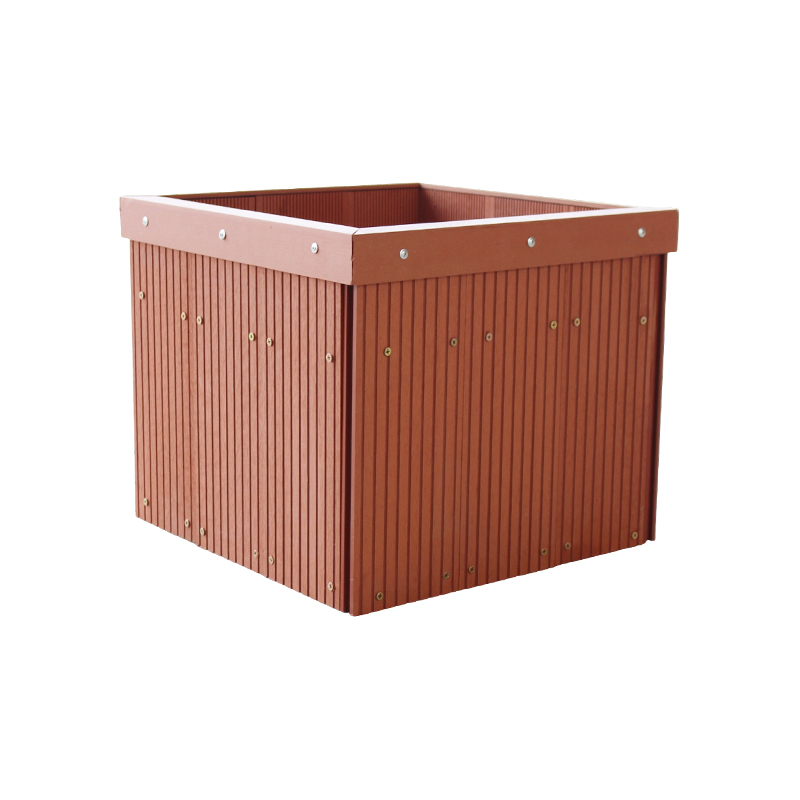
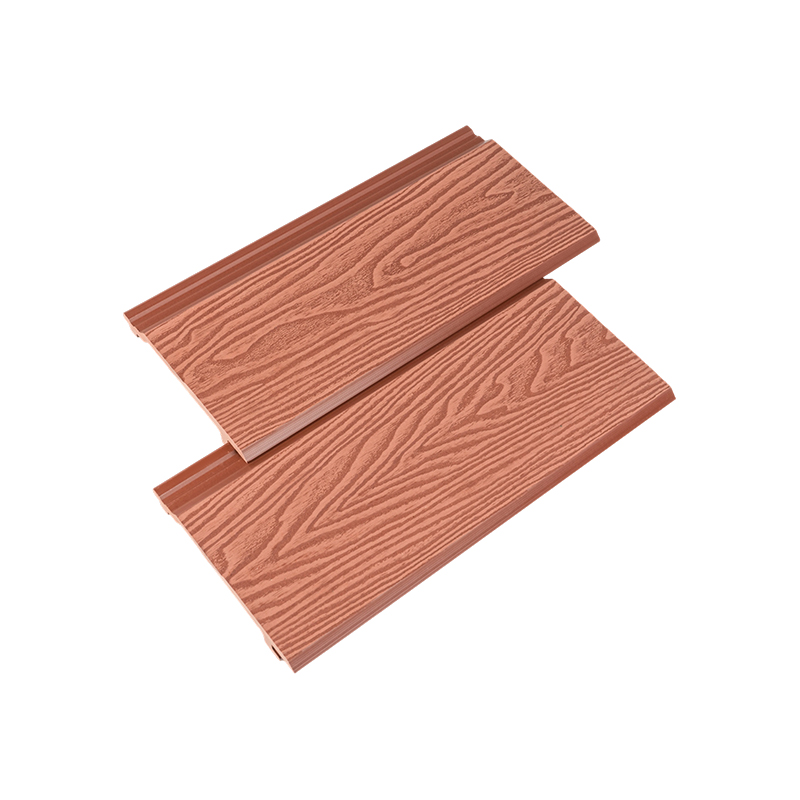
One of the most valued properties of WPC garden planters is their visual resemblance to natural timber. The embossed wood grain texture on the board surface — produced during extrusion by textured rollers — creates the depth and variation of real wood without the inconsistencies of natural grain, knots, or color patches that can make solid wood planters look uneven over time.
Unlike real wood, WPC does not:
For commercial applications such as hotel courtyards, restaurant terraces, and public parks, the consistent appearance of WPC planters across an installation — all boards with matching grain pattern and color — is a significant aesthetic advantage over natural timber, where color variation between planks is unavoidable.
The most measurable practical advantage of WPC garden planters over alternatives is their resistance to the environmental forces that cause other materials to fail. Planters are among the most demanding outdoor applications for any material — they hold moist soil, are constantly exposed to rain and sun, and must maintain structural integrity through years of thermal cycling.
The thermoplastic polymer matrix in WPC encapsulates the wood fibers, significantly reducing water absorption compared to solid wood. Quality WPC products absorb less than 1–3% of their weight in water after 24-hour immersion testing (per ASTM D1037), compared to 15–30% for untreated solid pine under the same conditions. This low moisture absorption means that WPC planters do not rot, swell, or support fungal growth even when in continuous contact with wet soil — the primary failure mode of untreated or inadequately treated wooden planters.
UV stabilizers blended into the WPC compound protect against photodegradation that would otherwise cause surface chalking, bleaching, and embrittlement. High-quality WPC planters retain over 80% of their original color depth after 5,000 hours of accelerated UV testing (equivalent to approximately 10 years of outdoor exposure in temperate climates), versus untreated wood which begins to gray and silver within a single season without annual re-coating.
WPC garden planters perform reliably across a wide temperature range — typically rated for continuous service from -40°C to +60°C — without the cracking, splitting, or joint failure that affects natural wood planters during hard winters. The composite material's thermal expansion coefficient is managed through formulation to minimize dimensional change across this range, preventing the gap openings and board lifting that can occur in wood planter joints after freeze-thaw cycling.
The initial purchase price of a WPC garden planter is typically higher than an equivalent untreated pine planter, but the total lifetime cost calculation strongly favors WPC. The comparison must account for maintenance costs and replacement frequency over the planter's useful life.
| Material | Typical Outdoor Service Life | Annual Maintenance Required | Rot / Corrosion Risk |
|---|---|---|---|
| WPC (Wood-Plastic Composite) | 15–25 years | Occasional cleaning only | Very low |
| Untreated pine / softwood | 3–5 years | Annual sanding and re-staining | High |
| Pressure-treated timber | 8–15 years | Bi-annual re-sealing | Medium |
| Plain plastic (HDPE/PP) | 10–20 years | Minimal | Very low |
| Steel (powder coated) | 10–15 years | Touch-up coating as needed | Medium (rust at chips) |
Over a 20-year period, a homeowner with untreated pine planters would typically replace them four to six times, along with the cumulative cost of annual staining materials and labor. A single WPC planter installation can serve the full 20 years with nothing more than occasional washing with soap and water.
WPC garden planters are one of the most versatile options for custom landscape design because both the board material and the assembled structure can be tailored precisely to project requirements.
Colorants are incorporated into the WPC compound during extrusion, meaning the color runs through the full thickness of the board rather than existing only as a surface coating. Standard color ranges include teak, golden oak, dark walnut, charcoal gray, and anthracite, but custom colors can be matched to project specifications for large orders. Because the color is integral, minor surface scratches do not expose a different-colored substrate — the board looks the same at any depth.
WPC boards can be cut with standard woodworking tools — circular saws, jigsaws, and mitre saws — without special equipment or dust hazards beyond normal woodworking precautions. This means planters can be built to any footprint or height on-site, from compact 30 × 30 cm window box units to large raised bed planters exceeding 2 metres in length. Curved or angled planter designs are achievable by cutting mitered joints or by using thinner WPC sheet profiles that can be bent to a gentle radius.
WPC planters can be built from boards with different surface profiles — smooth-faced for a contemporary look, deep-embossed wood grain for a traditional garden aesthetic, or brushed for a matte finish that minimizes visible dirt and fingerprints. The same installation can mix profiles on different faces of the planter for a design-forward result.
WPC planters are straightforward to assemble using basic tools, whether from prefabricated kit components or from boards cut to length on-site. The assembly process for a typical rectangular raised planter involves:
WPC does not require pre-drilling with the same care as hardwood, as it is less prone to splitting. It can be worked with the same tools used for natural wood, requires no specialist adhesives, and generates no toxic dust hazards beyond standard woodworking practice — making it accessible for DIY installation as well as professional landscaping contractors.
WPC garden planters carry a meaningful environmental advantage over both virgin timber and pure plastic alternatives. The wood fiber content in WPC is typically sourced from sawmill residues and reclaimed wood waste that would otherwise be discarded, while the polymer component increasingly incorporates recycled plastics from post-consumer or post-industrial sources.
While the advantages of WPC garden planters are substantial, a few practical considerations help ensure the best results:



 English
 Français
 Español
 Deutsch