2026-06-19
Content
Technically, you can paint composite decking, but in the vast majority of cases you should not — and with quality composite boards, you will never need to. Composite decking is engineered with colour integrated throughout the board body or evenly applied to the surface during manufacturing, giving it built-in fade resistance and UV stability that eliminates the need for painting entirely. Applying paint to composite decking creates a long list of problems including poor adhesion, peeling within one to two seasons, voided warranties, and a surface that becomes far harder to maintain than it was before. This article explains why painting composite decking is almost always the wrong choice, when it might be considered as a last resort, and — more usefully — how to achieve a colour change or surface refresh the right way.
To understand why painting composite decking is unnecessary and often counterproductive, it helps to understand how the material is manufactured and why its colour performance differs fundamentally from wood.
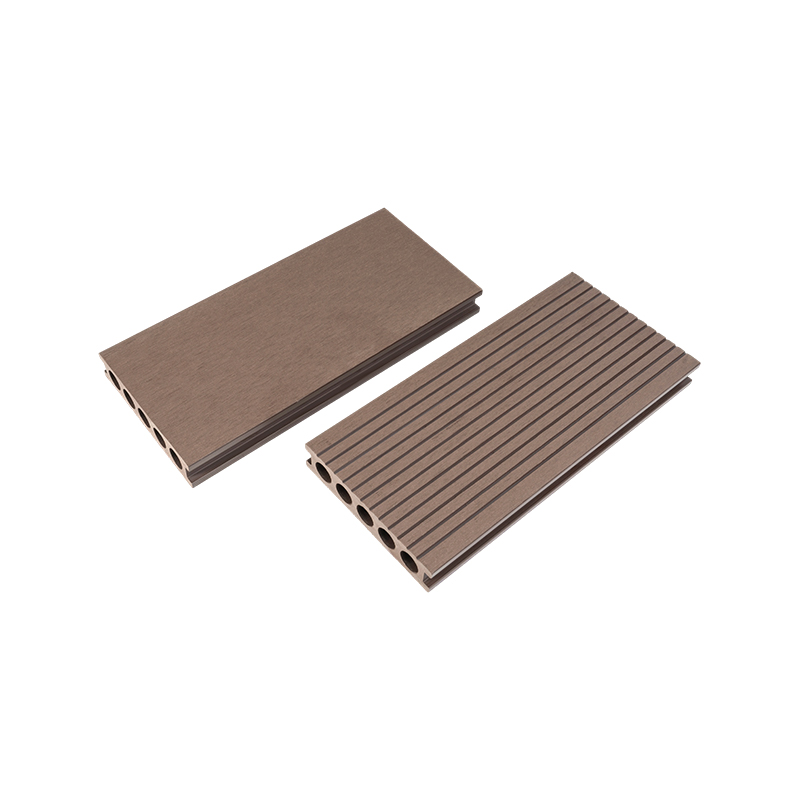
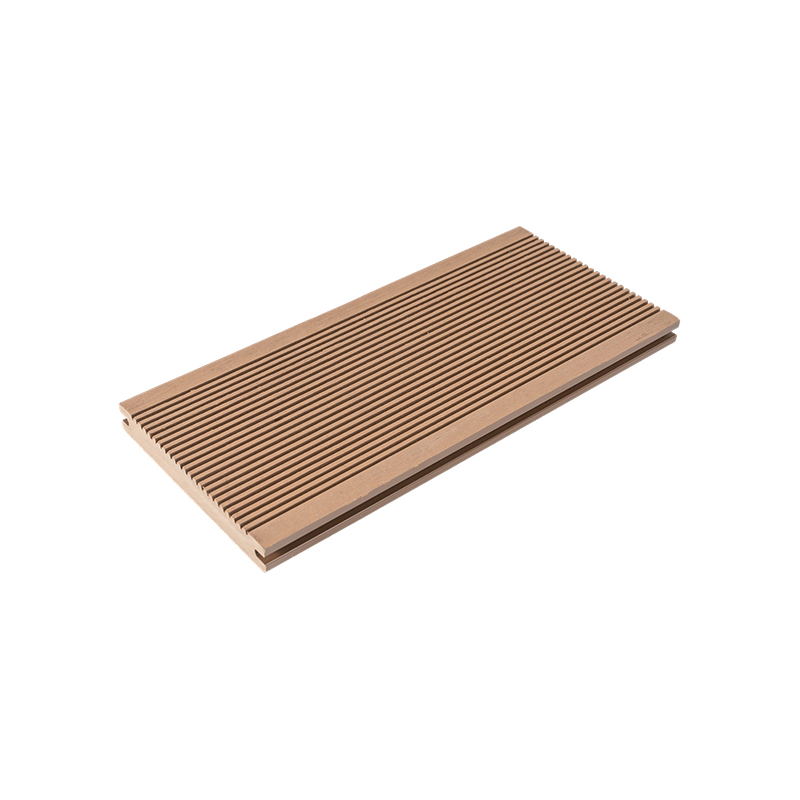
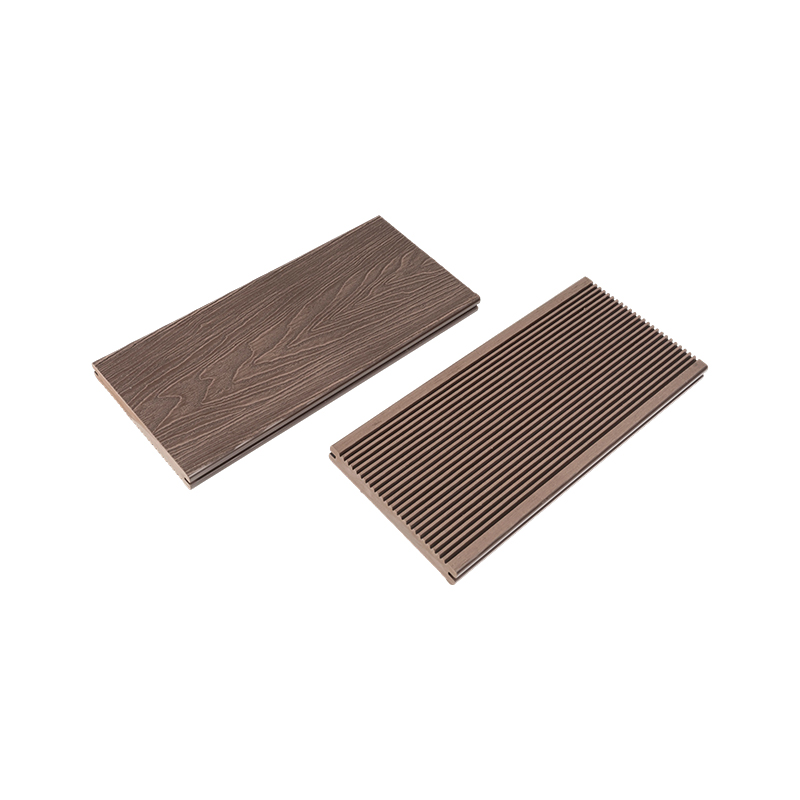
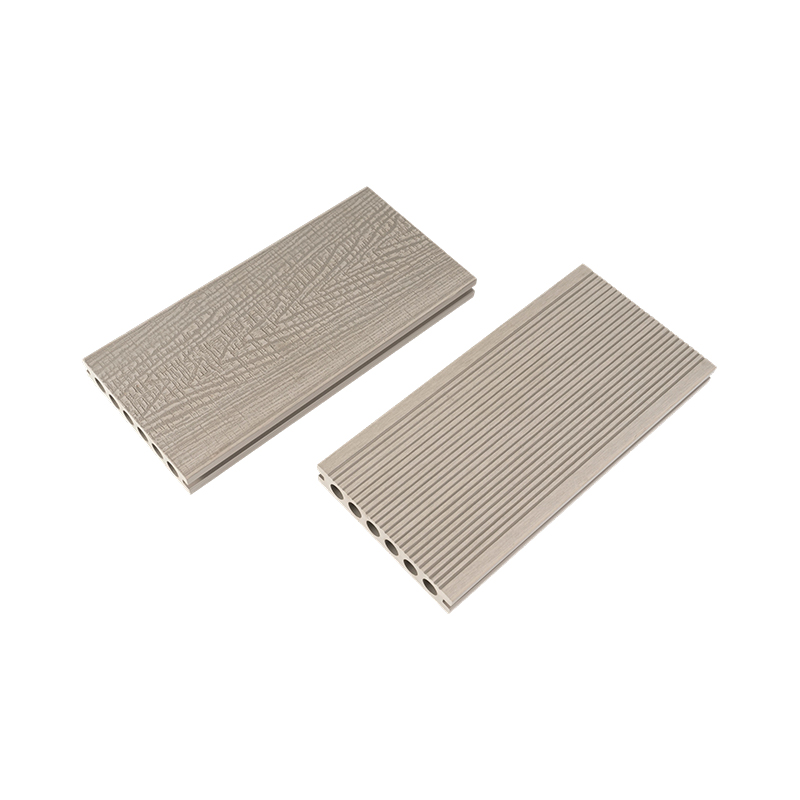
Composite decking is produced from a blend of cellulose materials — such as wood flour and rice bran — and polyolefin plastics. There are three main board types, each with different colour and surface characteristics:
Because the colour is engineered into the material itself rather than applied on top as a coating, composite decking does not fade, peel, crack, or flake in the way that painted timber does. It requires no annual repainting, no sanding back, and no primer coats. This is one of the principal advantages that makes composite decking a lower-maintenance alternative to traditional timber over its full service life of 25 years or more.
The fundamental reason painting composite decking causes problems is the nature of the material's surface chemistry. The polyolefin plastic component in WPC boards — typically polyethylene or polypropylene — is a non-polar material with a very low surface energy. Standard exterior paints and deck coatings are formulated to bond with porous, high-surface-energy substrates such as bare timber, masonry, or properly primed metal.
When paint is applied to the smooth, low-energy surface of a composite board without specialist preparation, the paint film cannot form a mechanical or chemical bond with the substrate. The result is adhesion failure — the paint film remains essentially sitting on top of the board surface rather than bonded to it. Studies on coatings applied to polyolefin substrates without surface activation show adhesion failure rates of 60% to 80% within the first 12 months of outdoor exposure, even when exterior-grade products are used.
This adhesion failure manifests as:
Once paint has been applied and begins to fail, removing it completely from the textured surface of a composite board is extremely difficult. Standard paint strippers may damage the board surface. Mechanical sanding risks permanently altering the board texture and appearance. In many cases, boards that have been painted and then had the paint fail are effectively ruined in terms of appearance.
Beyond the practical problems, painting composite decking has significant warranty implications that homeowners and specifiers must understand before attempting any surface treatment.
Most composite decking manufacturers provide product warranties covering fade resistance, structural integrity, and surface performance for periods ranging from 10 to 25 years. These warranties are based on the board performing as designed — without any unauthorised surface treatments applied on top of the manufactured finish. Applying paint, stain, or any non-approved coating to composite decking typically voids the manufacturer's warranty in its entirety.
This means that if the deck boards subsequently develop structural issues, surface delamination, or colour problems — even issues entirely unrelated to the paint application — the manufacturer is no longer obligated to provide replacement boards or compensation under the warranty terms. Before considering any surface treatment, always read the warranty documentation supplied with your specific composite decking product and contact the manufacturer for written guidance if you are uncertain.
Despite the strong case against painting composite decking, there are a small number of scenarios where it might be considered as a last resort — specifically when the alternative is complete board replacement.
Early-generation composite decking products manufactured before approximately 2010 used formulations with lower UV stabiliser content and less effective plastic-to-fibre bonding. Some of these boards are now showing significant surface chalking, colour fading beyond what cleaning can restore, and surface fibre exposure. Where these boards are still structurally sound but aesthetically poor, and where replacement is not immediately feasible, a composite-compatible deck coating may be considered to extend the visual life of the deck temporarily.
In commercial settings such as a restaurant terrace or retail plaza undergoing renovation, it is occasionally necessary to change the colour of an existing composite deck to match a new brand palette without the budget or timeline for full replacement. In this scenario, painting may be explored as a short-term solution with the understanding that it will require ongoing maintenance and eventual board replacement.
Where a small section of a composite deck needs to be repaired or extended and the original board colour is no longer in production, a carefully applied composite deck coating may help blend the new boards into the existing installation more naturally while the original boards continue to weather.
In all of these scenarios, the results will be temporary. No paint or coating system currently available delivers the long-term colour performance of quality factory-finished composite decking. Plan for re-application every two to three years at minimum, and budget for eventual board replacement as the permanent solution.
If you have concluded that painting your composite deck is necessary after considering all the factors above, following the correct preparation and application process gives the paint the best possible chance of adhering and lasting. Cutting corners on preparation is the fastest route to failure.
Begin with a thorough cleaning of the entire deck surface to remove all dirt, mould, grease, organic residue, and any previous coatings. Use a composite-compatible deck cleaner and a stiff nylon brush. Rinse thoroughly with clean water and allow the deck to dry completely — ideally for a minimum of 48 to 72 hours in dry, warm conditions — before proceeding. Any moisture remaining in board grooves or gaps will prevent paint adhesion and cause immediate blistering.
Lightly abrade the board surface using 80 to 100 grit sandpaper to create micro-scratches that give the paint film a mechanical key. Work along the board grain direction, not across it, to avoid visible scratches in the finished surface. Remove all sanding dust with a tack cloth or vacuum before applying primer. Do not over-sand — the goal is surface scuffing, not material removal. Excessive sanding can expose wood fibre in uncapped WPC boards, increasing moisture sensitivity.
A bonding primer specifically formulated for plastic or composite substrates is essential. Standard wood primers do not adhere to polyolefin surfaces. Look for primers labelled for use on PVC, fibreglass, or plastic — these contain adhesion promoters designed to bond with low-energy surfaces. Apply a thin, even coat and allow it to cure fully according to the manufacturer's instructions before applying topcoat. Skipping the bonding primer step is the single most common cause of paint failure on composite surfaces.
Select a deck coating product that is explicitly stated by the manufacturer to be compatible with composite or WPC decking. Water-based acrylic deck coatings with elastomeric properties perform better on composite than standard paint because they flex with the board's thermal movement rather than cracking when the board expands in summer heat. Apply in thin coats rather than a single thick coat — two to three thin coats with full drying time between each deliver better adhesion and a more uniform finish than one thick application.
Inspect the painted surface every six months and touch up any areas showing adhesion failure before they expand. Expect to carry out a full re-application of the topcoat every two to three years at minimum in a temperate climate — sooner in climates with high UV exposure, extreme temperature swings, or heavy rainfall. Clean the painted surface gently with mild soapy water; avoid pressure washing above 1,000 PSI as high pressure will accelerate paint film delamination.
To illustrate why factory-finished composite decking almost always outperforms any painted alternative, the table below compares the key performance characteristics of painted composite boards against boards with integrated or co-extruded factory colour.
| Performance Factor | Painted Composite Deck | Factory-Finished Composite Deck |
|---|---|---|
| Colour longevity | 2 to 3 years before re-coat required | 15 to 25+ years with minimal fading |
| Adhesion reliability | Poor to moderate; failure-prone | Excellent; colour bonded in manufacturing |
| Maintenance required | Regular inspection, touch-up, periodic full re-coat | Routine cleaning only; no repainting |
| Slip resistance | Can reduce slip resistance; risk of slippery surface when wet | Designed slip resistance maintained throughout service life |
| Stain resistance | Paint surface can absorb stains; harder to clean | Superior stain resistance against common household substances |
| Warranty status | Manufacturer warranty voided | Full manufacturer warranty maintained |
| Total 10-year maintenance cost | High; multiple re-coats plus labour | Low; cleaning materials only |
In most situations where the impulse to paint a composite deck arises, the underlying goal is to refresh its appearance or address colour concerns. There are far better ways to achieve this without the risks associated with painting.
A surprisingly large proportion of composite decks that appear faded or dull have simply accumulated a layer of organic residue, oxidised surface particles, and environmental grime that obscures the original colour. A thorough deep clean using a composite-specific cleaning solution — applied, left to dwell for 10 to 15 minutes, and scrubbed along the board grain with a stiff nylon brush before rinsing — often restores the deck to near-original appearance without any other intervention. Many homeowners who have considered repainting find that professional cleaning resolves the appearance issue entirely.
The single most effective way to avoid any desire to change composite deck colour is to choose the correct colour at the design and purchase stage. Quality composite decking manufacturers offer a wide range of colour options — from light naturals and teak tones to deep charcoals and warm mid-browns — that maintain their appearance throughout the board's service life. Requesting physical sample boards in your shortlisted colours and viewing them in both direct sunlight and shade before committing to a purchase eliminates regrettable colour choices.
Jiangsu Senyu New Material Co., Ltd. addresses this need directly by offering a diverse range of colour options tailored to customer requirements, developed using CAD technology to allow customers to visualise the finished result across multiple cross-sectional profiles before production. This upfront colour flexibility means that the need to modify a deck's colour after installation is virtually eliminated for customers who specify their requirements correctly at the outset.
Where specific boards have been damaged, severely stained beyond cleaning, or are visually inconsistent with the rest of the deck, targeted board replacement is a more effective solution than painting the entire deck surface. Modern composite decking systems using hidden clip fixings allow individual boards to be removed and replaced without disturbing the surrounding installation. Replacing only the affected boards maintains the original factory-finished colour quality across the full deck area and preserves the structural integrity of the hidden fastener system.
If the goal is to update the visual appearance of an existing deck rather than address a quality problem, consider adding decorative elements that change the look without touching the board surface. Replacing or adding composite fascia in a contrasting colour, installing new deck lighting, adding border boards in a complementary shade, or updating furniture and accessories can transform the visual impact of a deck without any risk to the board finish or warranty.
Understanding the failure modes that result from using standard timber paint or deck stain on composite boards helps reinforce why the correct approach matters. The table below summarises what happens when different common coating types are applied to composite decking without proper preparation.
| Coating Type Applied | Initial Appearance | Typical Failure Mode | Time to Failure |
|---|---|---|---|
| Standard exterior timber paint | Acceptable initially | Peeling and flaking from edges inward | 6 to 18 months |
| Oil-based deck stain | Blotchy absorption due to low porosity | Sticky residue, uneven colour, surface contamination | Immediate to 3 months |
| Water-based deck stain | Minimal penetration; sits on surface | Fades and wears off unevenly under foot traffic | 3 to 12 months |
| Elastomeric deck coating (composite-rated) | Good coverage with correct prep | Gradual delamination at stress points and board ends | 2 to 4 years |
| Timber decking oil | Greasy, unabsorbed surface film | Tacky surface attracts dirt; slippery when wet | Immediate |
The pattern across all coating types is consistent: even the best-performing option — a composite-rated elastomeric coating applied with full surface preparation — delivers a fraction of the colour life of the original factory finish. The worst-performing options, such as timber oil or oil-based stain, create immediate problems including a dangerously slippery surface and a sticky film that makes the deck harder to use and maintain from the moment of application.
One of the most common reasons homeowners consider painting their composite deck is the perception that it has faded significantly. Understanding how colour change in composite decking actually works — and how it compares to timber — puts this concern in proper context.
All composite decking undergoes an initial weathering phase during the first 8 to 16 weeks of outdoor exposure. During this period, UV radiation oxidises the outermost molecular layer of the board surface, typically resulting in a 5% to 15% lightening of the original colour. This is a normal and expected process — it is not fading in the degradative sense but rather an initial UV stabilisation. After this phase, quality composite boards maintain their colour with minimal further change for the remainder of their service life.
By comparison, an unpainted hardwood timber deck requires re-oiling or re-staining every 12 to 24 months to maintain its appearance, and without treatment it typically turns to an uneven grey within two to three years. A painted timber deck requires full repainting every 3 to 5 years. The ongoing colour maintenance cost of timber makes composite decking's one-time factory finish a significant long-term advantage — not a deficiency requiring correction through painting.
Quality manufacturers such as Jiangsu Senyu New Material Co., Ltd. incorporate UV stabilisers and carefully selected pigment systems into their WPC products to ensure that colour consistency is maintained well beyond the initial weathering phase. The formaldehyde-free, E0-standard manufacturing process using treated polyolefin plastics and cellulose materials produces boards whose colour performance is part of the engineered specification — not an afterthought that requires on-site correction through painting or coating.
The answer for the overwhelming majority of composite deck owners is a clear no. Composite decking is specifically engineered to deliver long-term colour performance without painting — it is one of the defining advantages of the material over traditional timber. Painting a composite deck introduces adhesion problems, maintenance obligations, warranty voidance, and potential safety hazards that do not exist on the original factory-finished surface.
Before reaching for a paintbrush, work through this decision framework:
The right composite decking product, correctly specified at the outset, will never require painting throughout its entire service life. Investing time in choosing the correct board type, colour, and manufacturer at the purchase stage eliminates the need for any subsequent surface treatment decisions entirely.



 English
 Français
 Español
 Deutsch