2026-07-17
Content
The correct way to clean WPC decking is to sweep away debris regularly, wash the surface every one to two months with warm water and a mild soap solution, and rinse thoroughly with a garden hose. Avoid pressure washers set above 3100 PSI, bleach based cleaners, and abrasive scrub pads, since these can wear down the protective cap layer on the boards. Because WPC decking is made from a blend of wood fiber and recycled plastic with a sealed outer surface, it does not absorb stains the way untreated wood does, which means most spills can be fully removed within minutes if cleaned promptly.
Even though WPC decking resists rot and insect damage, dirt, pollen, and organic debris can still collect on the surface and in the gaps between boards. Left unaddressed, this buildup can trap moisture and create the conditions for surface mold or mildew to form, particularly in shaded or low airflow areas of the deck.
A quick sweep with a soft bristle broom once a week is enough to prevent dust and pollen from settling into the board texture. Clearing leaves and debris from the gaps between boards also keeps water draining properly rather than pooling on the surface.
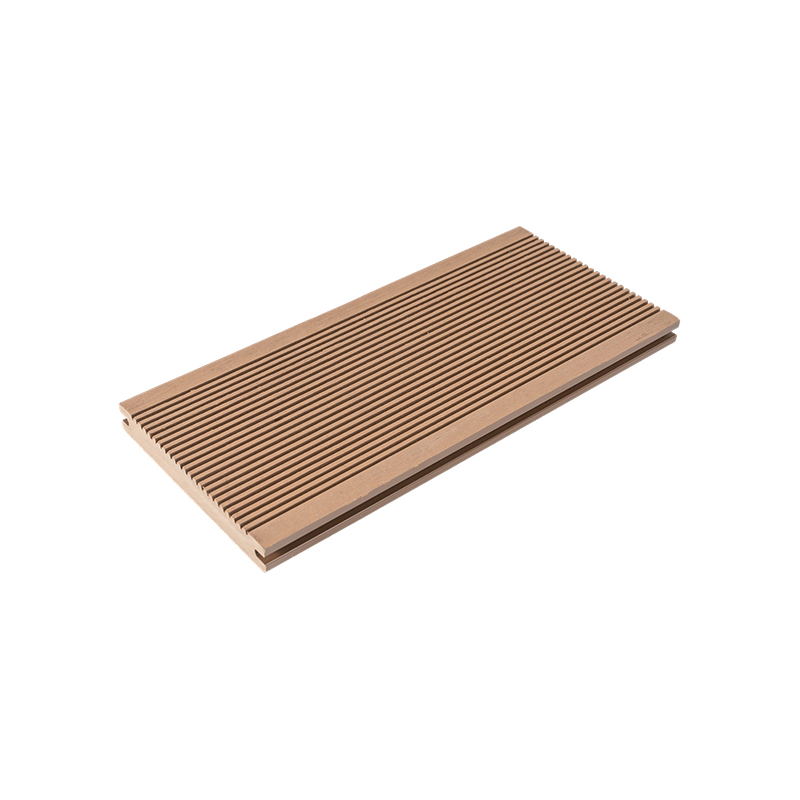
For a more thorough clean, mix warm water with a small amount of mild dish soap, scrub the boards with a soft nylon bristle brush, and rinse well with a hose. This routine is generally recommended every one to two months in average climates, and more frequently in coastal areas exposed to salt spray or homes with heavy tree cover.
| Tool or Cleaner | Purpose |
| Soft bristle broom | Weekly sweeping of dust and debris |
| Nylon deck brush | Scrubbing without scratching the board surface |
| Mild dish soap | General surface cleaning |
| Diluted white vinegar | Removing light organic stains such as juice or wine |
| Oxygen based deck cleaner | Treating mold or mildew spots |
| Garden hose with spray nozzle | Rinsing away soap and loosened dirt |
Because the outer cap layer on most WPC boards is low porosity, stains generally sit on the surface rather than soaking in, which gives a wider window to clean them successfully.
Testing referenced under the ASTM D7032 standard for wood plastic composite decking shows that fully capped composite boards resist mold staining significantly better than uncapped alternatives, since the sealed surface limits moisture absorption into the core material. To keep mold from forming in the first place:
Certain cleaning habits that work fine on natural wood can actually damage the surface finish on WPC boards.
One of the main reasons homeowners choose WPC decking is the reduced cleaning and maintenance burden compared to natural timber. Industry maintenance guidance from the North American Deck and Railing Association (NADRA) notes that composite and WPC surfaces typically require routine cleaning only two to four times per year for most climates, compared to wood decking, which often needs more frequent cleaning along with annual staining or sealing to prevent moisture damage.
| Task | Wood Decking | WPC Decking |
| Routine washing | Every 4 to 6 weeks | Every 6 to 8 weeks |
| Sealing or staining | Annually | Not required |
| Sanding | Every few years | Not required |
Keeping WPC decking clean does not require special products or a demanding schedule. A regular sweep, an occasional soap and water wash, and prompt attention to spills are enough to keep the surface looking new for years. Avoiding harsh chemicals and abrasive tools protects the cap layer that gives the boards their stain and mold resistance in the first place. For homeowners looking for outdoor flooring that stays clean with minimal effort, WPC decking offers a practical, low maintenance alternative to traditional wood.



 English
 Français
 Español
 Deutsch