2026-08-21
Content
The main advantages of WPC wall cladding are its resistance to moisture and rot, minimal maintenance requirements, long service life, and consistent appearance across weather conditions that typically degrade solid wood siding within a decade. Because the wood fiber inside each panel is encapsulated within a plastic polymer matrix, WPC cladding avoids the swelling, cracking, and insect damage that commonly affect natural timber. Industry testing commonly cited by composite building material manufacturers shows that WPC panels can last 20 to 30 years with minimal upkeep, compared to 10 to 15 years for solid wood cladding that requires regular sealing and refinishing.
Moisture damage is the leading cause of premature failure in exterior wall materials, and this is where WPC wall cladding offers its clearest advantage over natural wood. The polymer coating that surrounds the wood fiber inside each panel limits water absorption, which in turn prevents the fungal growth that causes wood rot.
This is particularly relevant for buildings near coastlines or in tropical climates, where WPC Wall Cladding is frequently chosen specifically because it withstands prolonged humidity exposure far better than untreated or even sealed solid wood siding.
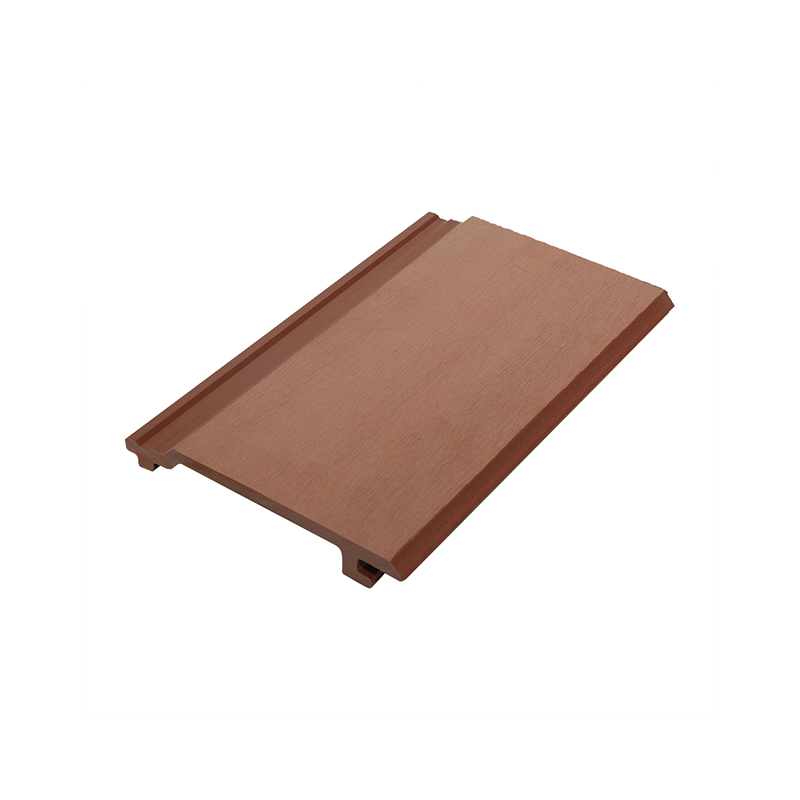
Beyond moisture resistance, one of the most practical advantages of WPC wall cladding is the reduction in ongoing maintenance labor and cost. Solid wood siding typically requires periodic staining, sealing, or painting to maintain both its appearance and its protective barrier against the elements.
| Material | Maintenance Frequency | Typical Task |
| Solid wood cladding | Every 2 to 3 years | Staining or sealing |
| WPC wall cladding | As needed, typically minimal | Water and soft brush cleaning |
Over a 20-year period, this reduction in maintenance labor represents a significant cost saving for property owners, since repeated staining and sealing on solid wood facades adds up in both material and labor expenses.
UV exposure is another major factor that affects exterior cladding materials over time, causing color fading and surface degradation. WPC wall cladding formulations include UV stabilizing additives that help panels retain their color and finish far longer than untreated wood.
These additives are blended into the polymer base during manufacturing and act as a barrier against the sun's ultraviolet rays, slowing the breakdown of surface pigments that would otherwise cause visible fading or chalking on the panel surface.
This means buildings clad in WPC panels tend to maintain a more uniform appearance across sun-exposed and shaded sections of a facade, whereas solid wood often shows noticeable color variation between areas with different sun exposure levels within just a few years.
Termites and wood-boring insects are a persistent risk for buildings using solid timber cladding, particularly in warmer climates where insect activity is more prevalent throughout the year. WPC wall cladding largely eliminates this risk since the wood fiber content is fully encased within the plastic polymer structure.
This advantage is especially valuable for property owners in regions where termite damage is a known risk to building exteriors, since pest-related repairs to solid wood siding can be both costly and structurally serious if left unaddressed.
Solid wood expands and contracts with changes in humidity and temperature, which over time can lead to warping, cupping, or gaps between boards. WPC wall cladding is engineered to maintain more consistent dimensions across a wider range of environmental conditions.
Panels that hold their shape more consistently reduce the risk of joint separation and fastener loosening over time, which helps maintain a tighter, more weather-resistant building envelope throughout the cladding's service life.
This dimensional stability is particularly valuable in regions with significant seasonal temperature swings, where solid wood siding often requires more frequent inspection and repair due to expansion-related movement.
WPC wall cladding is manufactured in a range of textures, colors, and profiles that replicate the appearance of natural wood grain while offering the practical benefits of a composite material. This gives architects and builders design flexibility without sacrificing performance.
This variety allows WPC wall cladding to be used across residential, commercial, and mixed-use developments while still achieving a consistent, natural aesthetic that matches the design intent of the building.
Many WPC wall cladding products are manufactured using recycled wood fiber, such as sawdust and manufacturing byproducts, rather than freshly harvested timber. This reduces the demand on virgin wood resources while still delivering the visual character of natural wood.
Additionally, because WPC panels have a longer service life than solid wood cladding, fewer replacement cycles are needed over the lifespan of a building, which can reduce the overall material footprint associated with exterior wall maintenance over several decades.
The advantages of WPC wall cladding are most valuable for property owners and builders working in humid, coastal, or termite-prone regions where solid wood siding tends to underperform. Commercial developers and homeowners seeking a low-maintenance, long-lasting exterior finish also benefit significantly, since the combination of moisture resistance, UV stability, and reduced upkeep translates directly into lower lifecycle costs for the building.



 English
 Français
 Español
 Deutsch