2026-04-10
Content
WPC (Wood Plastic Composite) doors are generally better than PVC doors for most applications due to superior strength, durability, and a longer lifespan of up to 50 years compared to PVC's typical 20-35 years. While PVC doors offer affordability and good moisture resistance, WPC doors provide comprehensive advantages including waterproofing, termite resistance, sound insulation, and zero formaldehyde emissions, making them the preferred choice for main entrances, bedrooms, and high-humidity areas.
PVC (Polyvinyl Chloride) doors are manufactured entirely from plastic material. They typically use MDF board or plywood as a substrate with 6-8mm thickness, filled internally with solid wood strips or bridge hole mechanical board. The door frame is constructed entirely of solid wood for added strength, while the surface is treated with PVC film available in various colors and patterns. PVC doors are lightweight, economical, and offer good resistance to moisture and corrosion.
WPC (Wood Plastic Composite) doors combine wood powder with thermoplastic polymers such as PVC, PE, or PP using high-temperature and high-pressure extrusion molding technology. This eco-friendly composite material integrates the natural aesthetics of wood with the durability of plastic. The manufacturing process incorporates additives for anti-mold and anti-rot properties, resulting in a material that is 100% waterproof and termite-proof while maintaining the warm appearance of natural wood.
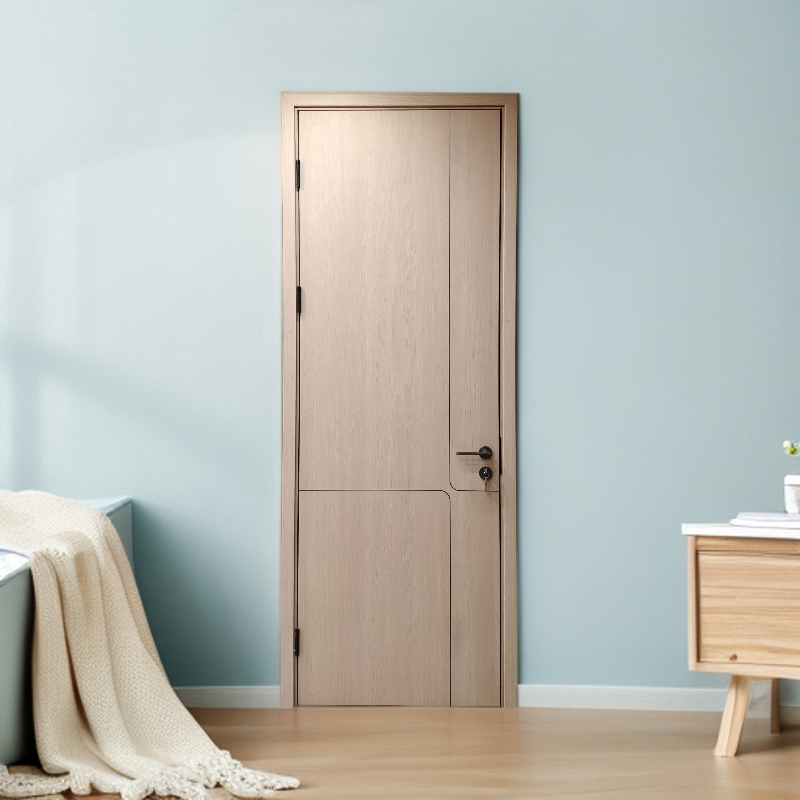
WPC doors demonstrate exceptional durability with a design lifespan of up to 50 years. They resist moisture, termites, warping, and decay without requiring frequent maintenance. The composite material maintains dimensional stability across temperature variations and does not swell, crack, or peel like traditional wood. WPC doors can stay soaked in water for 24 hours without damage, truly achieving complete waterproof capability.
PVC doors typically last 20-35 years under normal conditions. While they resist moisture effectively, they are relatively weaker than WPC alternatives and may warp or break under frequent use or impact. PVC doors can become brittle over time when exposed to heat and UV rays, and they are susceptible to scratches and dents. Their lightweight structure may not withstand forceful use, making them less suitable for high-traffic areas.
The following table summarizes key durability differences:
| Performance Factor | PVC Doors | WPC Doors |
|---|---|---|
| Expected Lifespan | 20-35 years | Up to 50 years |
| Water Resistance | Good | Excellent (24-hour soak tested) |
| Impact Resistance | Moderate | High |
| Termite Resistance | Good | 100% termite-proof |
| Warping Risk | Possible under heat | Minimal |
WPC doors offer comprehensive performance benefits that surpass both PVC and traditional wooden doors. They feature a honeycomb structure that provides excellent soundproofing and thermal insulation. The material achieves zero formaldehyde emissions, making it safe for indoor applications including hospitals, classrooms, and households. WPC doors demonstrate good flame retardant performance—they do not support combustion when exposed to open flames and automatically extinguish after the fire source is removed.
PVC doors offer good weather resistance, resisting damage from sunlight, rain, and climate change. They feature smooth surfaces that are easy to clean with just water, and they do not require frequent painting or maintenance. PVC provides moderate abrasion resistance through its surface film treatment. However, PVC doors offer limited design flexibility compared to WPC alternatives and generally provide lower strength for load-bearing applications.
PVC doors are the most economical option upfront, making them attractive for budget-conscious projects. WPC doors typically cost 15-20% more than PVC doors initially. However, when evaluating total cost of ownership, WPC doors provide superior value due to their extended lifespan and minimal maintenance requirements.
From a return on investment perspective, WPC doors fully surpass all other door materials. Despite the higher initial investment, WPC doors last 50% longer than PVC alternatives. The elimination of maintenance costs—including polishing, termite treatment, and replacement due to water damage—further enhances their economic advantage over time. For commercial projects and long-term residential applications, WPC doors deliver superior ROI.
WPC doors are the optimal choice for main entrance doors due to their strength, weather resistance, and aesthetic appeal that mimics natural wood. PVC doors are generally not recommended for main entrances as they lack the necessary strength and visual sophistication for primary door applications.
Both WPC and PVC doors perform well in moisture-prone areas. However, WPC doors offer superior strength and style while maintaining complete waterproofing. PVC doors serve as a budget-friendly alternative for bathrooms and kitchens where moisture resistance is essential but heavy impact resistance is less critical.
For bedrooms, living rooms, and corridors, both WPC and wooden doors are suitable. WPC doors provide easier maintenance and consistent appearance over time, while wooden doors offer traditional aesthetics at higher maintenance costs. PVC doors are less ideal for these areas due to their appearance limitations and lower rigidity.
Recommended applications summary:
WPC doors utilize recycled wood fiber and plastic materials, reducing dependence on natural resources and minimizing deforestation. The manufacturing process incorporates sustainable practices, and the final product is recyclable. PVC doors also offer environmental benefits through recyclability and energy-efficient production, though they rely entirely on petroleum-based materials.
WPC doors achieve zero formaldehyde content, making them safe for indoor environments including hospitals, schools, and homes with children. The material is free from harmful chemicals and provides excellent fire-resistant properties. PVC doors offer moderate fire resistance but may emit fumes under extreme heat conditions. Both materials are safe for general residential use when sourced from reputable manufacturers.
WPC doors feature a fast installation structure with convenient door frame mounting. The door cover line connects to the door frame using a bayonet system that does not require gun nails or glue, saving time and labor during installation. WPC doors require minimal maintenance—no polishing or painting is needed, and cleaning requires only a damp cloth with mild detergent.
PVC doors are lightweight and easy to install, making them suitable for DIY projects. They require cleaning twice yearly with mild soap and water to maintain appearance. While PVC doors do not need painting, their surface may show wear over time, and color options are more limited compared to WPC alternatives.



 English
 Français
 Español
 Deutsch