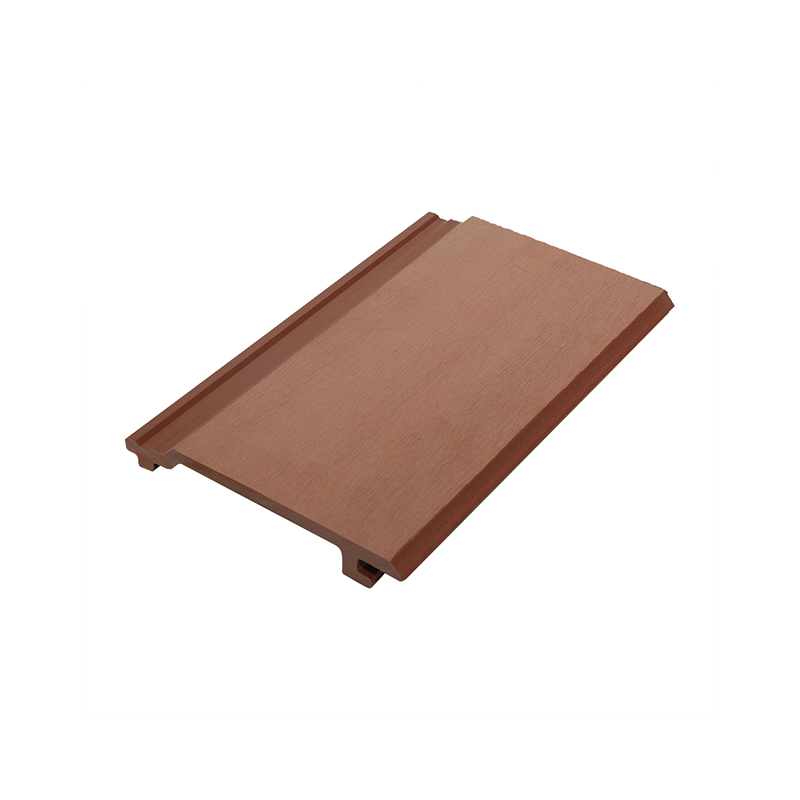
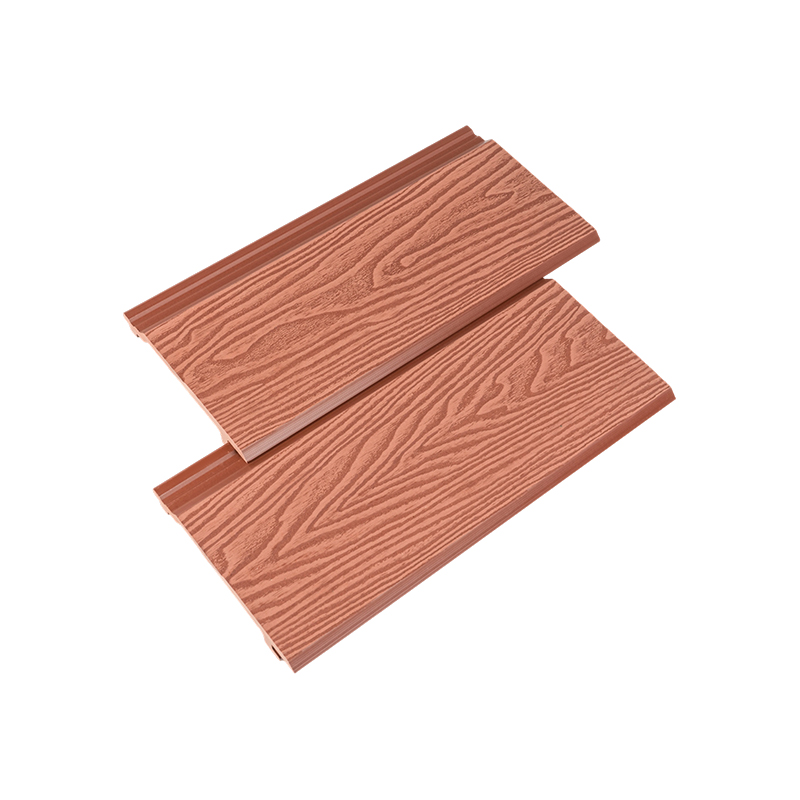
WPC decking — Wood-Plastic Composite decking — is one of the most established and trusted outdoor flooring materials available, with a long history of successful use in both residential and commercial applications across the globe. It combines reclaimed wood fibre with recycled thermoplastic polymers to produce boards that carry the warmth and natural grain character of traditional timber while completely eliminating the problems that make real wood difficult to own outdoors: rot, mildew, cracking, and ongoing treatment costs.
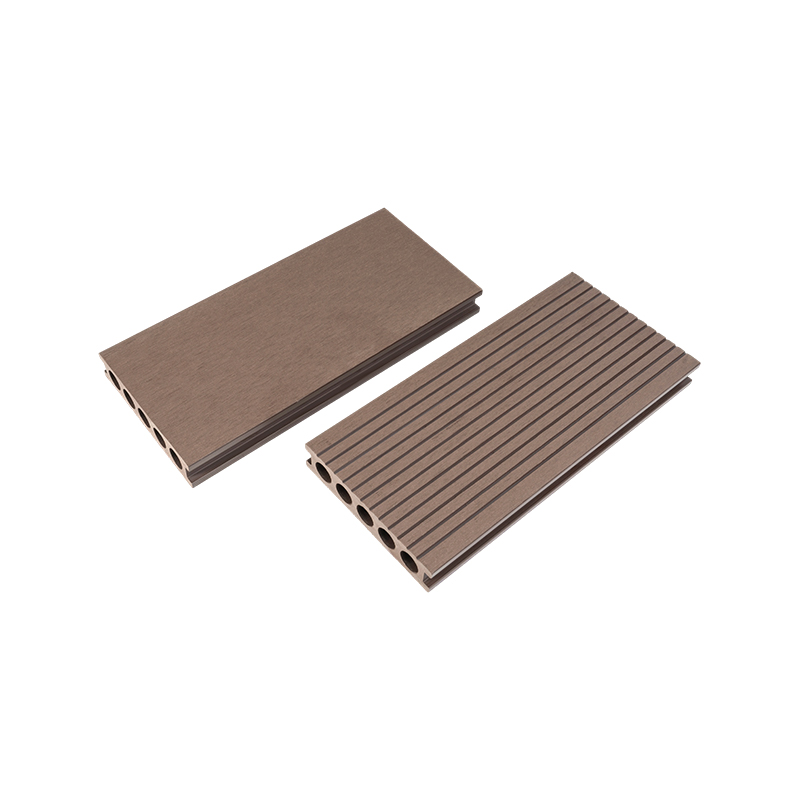
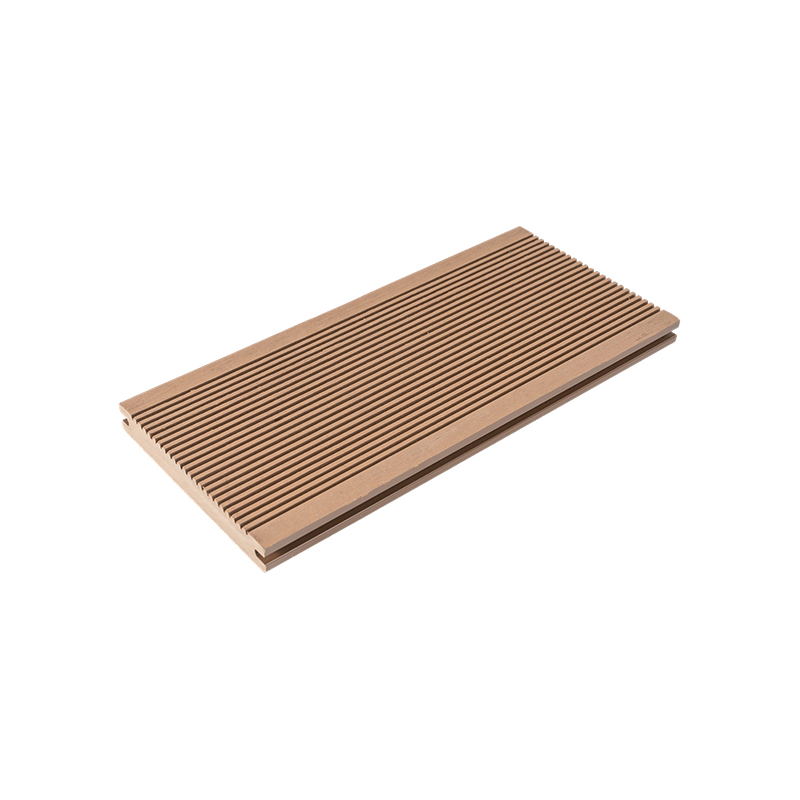
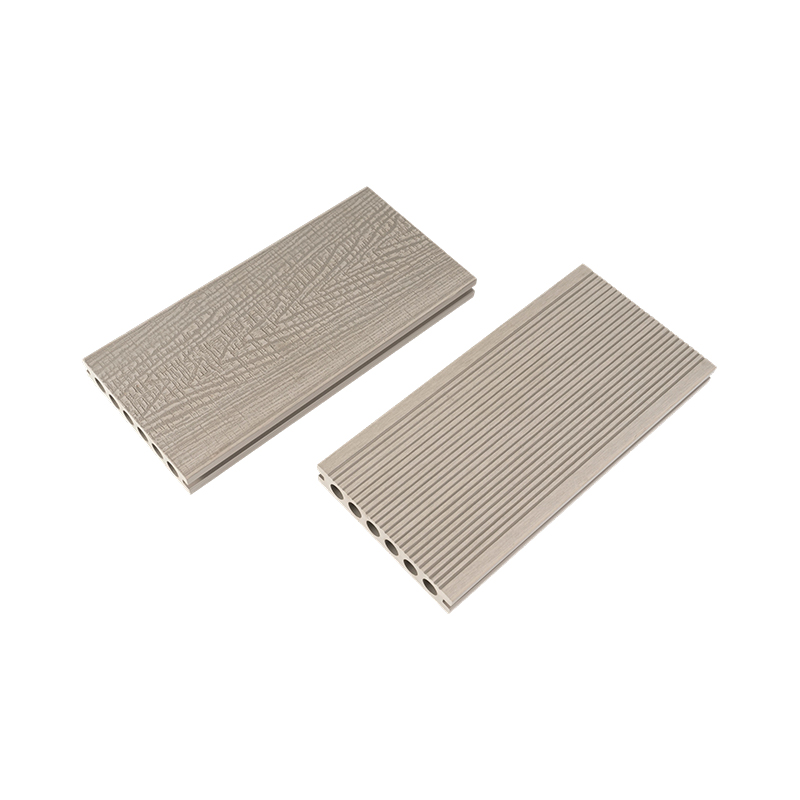
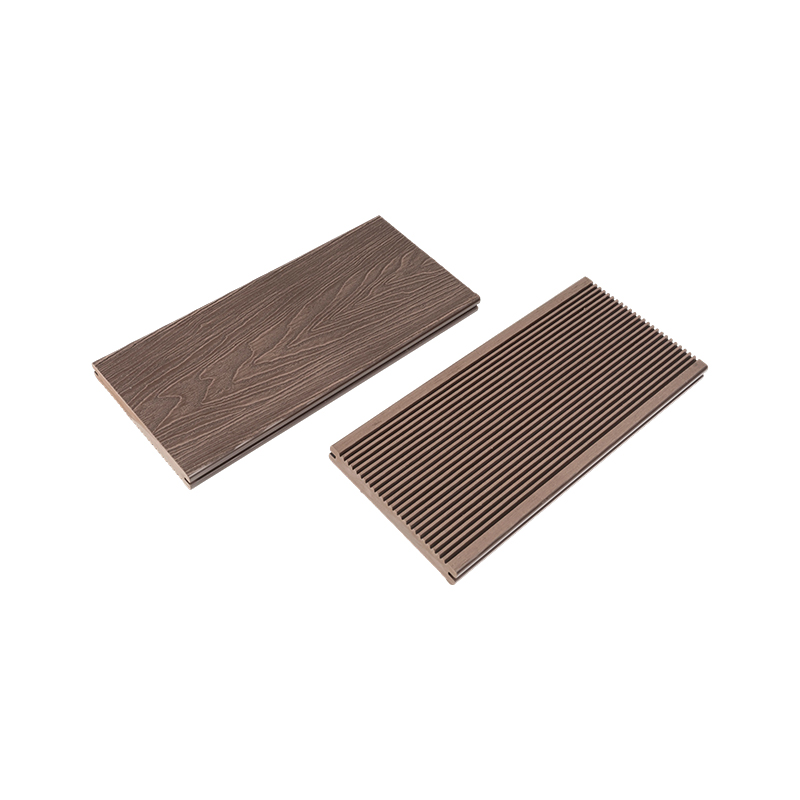
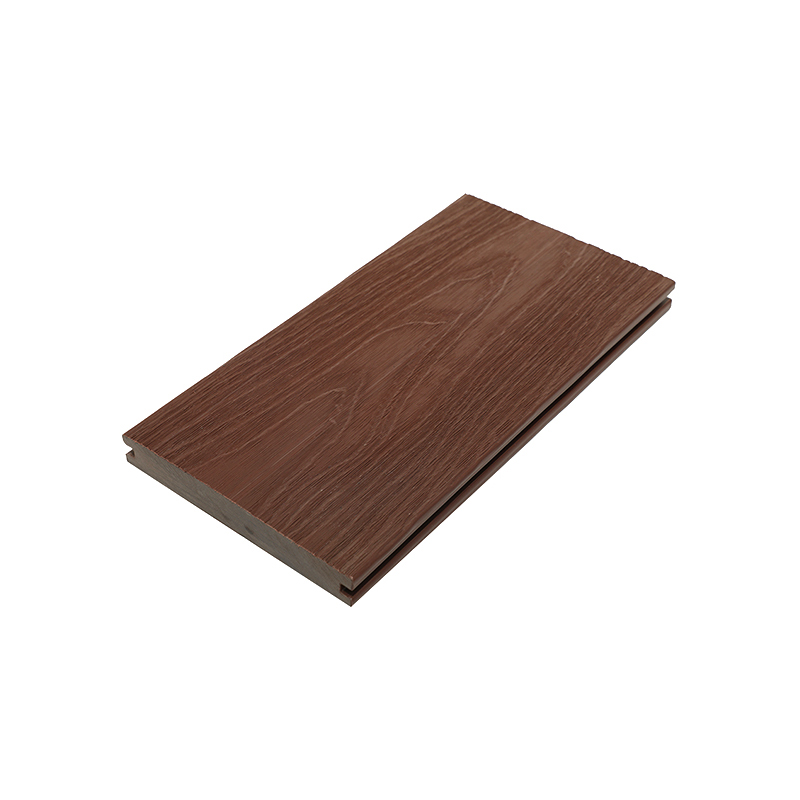
WPC decking offers two surface options — grooved and flat — that balance visual simplicity with practical function. Neither monotonous nor overly ornate, these profiles suit a wide range of architectural styles while providing the traction and drainage performance that outdoor decks require. It is this combination of honest aesthetics and reliable durability that has made WPC decking increasingly popular among homeowners, architects, and commercial developers worldwide.
How WPC Decking Works: Material Composition and Manufacturing
What WPC Is Made From
The core of every WPC decking board is a precisely proportioned blend of two recycled material streams. Wood fibre — typically 50–70% of the total board weight — is sourced from sawmill offcuts, wood manufacturing waste, and agricultural by-products. This is combined with 30–50% recycled thermoplastic polymer, most commonly polyethylene (PE) or polypropylene (PP), along with UV stabilisers, inorganic colorants, fungicide additives, and processing agents. The polymer locks the wood fibre within a protective matrix, shielding it from the moisture cycling, biological attack, and UV degradation that degrade natural timber over time.
Extrusion: How Boards Are Formed
The blended raw material is fed into an industrial extruder, heated to the required processing temperature, and forced at high pressure through a precisely shaped die that defines the board's cross-section profile. As the material exits the die, it is cooled under controlled conditions to lock in the finished shape. Boards are then cut to length and embossed with either a grooved or flat surface texture. Because colour pigment is distributed throughout the entire material during mixing, the board colour is consistent from surface to core — shallow surface marks or minor abrasion do not reveal a differently coloured layer beneath.
Grooved vs Flat Surface: Choosing the Right Profile
WPC decking boards are produced in two surface configurations suited to different applications and aesthetics:
- Grooved profile: Longitudinal channels embossed into the board surface provide enhanced grip in wet conditions, achieving slip resistance ratings of R11 or higher under DIN 51130. The channel geometry also creates subtle light-and-shadow variation across the deck surface, adding visual depth. Grooved boards are the standard choice for pool surrounds, coastal installations, and any application where wet-surface safety is a priority.
- Flat (smooth) profile: A refined, relatively smooth surface that closely resembles planed or dressed timber. Flat boards suit contemporary residential gardens, elevated terraces, and interior-outdoor transition spaces where a clean, minimal aesthetic is the design priority. When specifying flat boards, ensure adequate deck gradient (minimum 1–2%) is incorporated to prevent standing water.
Solid Core vs Hollow Core
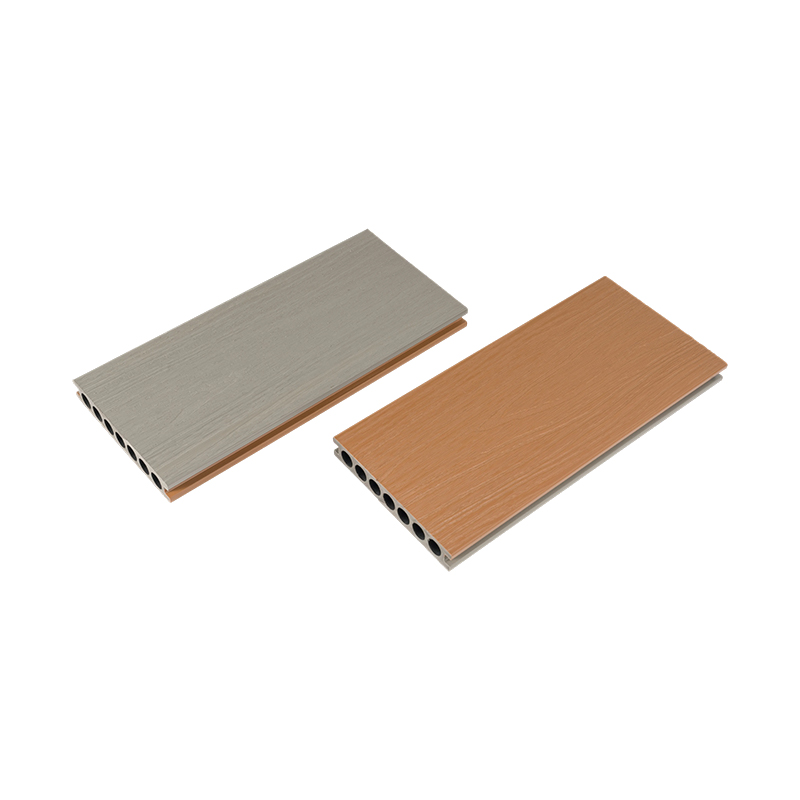
WPC boards are available in solid and hollow cross-section formats. Solid-core boards are dense throughout, providing higher rigidity, better impact resistance, and lower thermal movement — the preferred choice for commercial and heavy-traffic installations, dock decking, and applications requiring maximum structural performance. Hollow-core boards incorporate internal voids that reduce weight by 30–40%, making them easier to handle during installation and significantly reducing imposed loads on subframes — important for rooftop terraces, balconies, and elevated structures. Hollow boards require joist spacing of no more than 300 mm centres to prevent surface deflection under load.
Why WPC Decking Outperforms Natural Timber
No Rot, No Mildew, No Cracking
The three most common failure modes of natural timber decking — rot, mildew, and cracking — are structurally eliminated in WPC boards. Rot requires moisture to penetrate wood cell walls and provide conditions for fungal decomposition; the polymer matrix surrounding the wood fibre in WPC prevents this moisture pathway. Mildew growth within the board is inhibited both by the plastic content — which provides no nutritional substrate for fungal organisms — and by the fungicide additives incorporated during manufacturing. Cracking from moisture cycling, which causes softwood boards to split and check as they repeatedly swell and contract, does not occur in WPC boards because the composite material responds to moisture differently from solid wood. These are not incremental improvements — they are the elimination of failure modes that end natural timber decks' service lives.
Maintenance-Free Ownership
Natural timber decking demands annual or biennial treatment — oiling, staining, or painting — to maintain weather resistance and appearance. Without consistent treatment, softwood decking begins to grey, crack, and decay within 2–3 years of outdoor exposure. WPC decking requires no treatment of any kind. Maintenance consists entirely of periodic sweeping and washing with water and mild detergent. The total annual maintenance time for a typical residential deck is under two hours per year, compared to a full day or more for an equivalent timber deck. Over 20 years on a 30 m² installation, this represents an estimated saving of $1,800–$4,800 in treatment products alone, before any labour costs are considered.
Long Service Life with Lower Lifetime Cost
Quality WPC decking carries warranties of 10–15 years and realistic service lives of 15–25 years under normal outdoor conditions. Pressure-treated softwood, by comparison, typically requires partial or full replacement within 10–15 years even with diligent annual maintenance. Despite WPC's higher initial material cost, the combination of longer lifespan and eliminated maintenance expenditure means the total 20-year ownership cost of a WPC deck is consistently lower than an equivalent softwood installation.
Splinter-Free Safety Throughout the Product's Life
Timber deck surfaces develop progressive splinter risk as UV radiation and moisture cycling break down surface wood fibres over time — typically becoming hazardous within 5–8 years on untreated softwood. WPC boards do not splinter at any stage of their service life. This safety advantage is particularly relevant for households with young children and pets, properties with barefoot pool users, and commercial spaces with high foot traffic and public liability considerations.
Consistent Colour and Appearance
Natural timber boards vary in colour, grain, and density from piece to piece, requiring sorting and grading to achieve a uniform deck appearance. WPC decking delivers consistent colour and surface texture across every board in a production batch. UV stabilisers built into the material during manufacturing maintain colour stability — premium WPC products with quality UV stabilisers sustain their colour for 10–20 years with minimal fading, particularly when co-extrusion technology is applied.
Environmentally Responsible Choice
WPC decking is manufactured primarily from recycled materials — reclaimed wood fibre and post-consumer plastic — diverting industrial waste from landfill while reducing demand for virgin timber. Quality products meet the E0 formaldehyde emission standard (less than 0.5 mg/L) and are manufactured without chemical adhesives, making them safe for both outdoor and indoor applications. The long service life further reduces lifetime environmental impact by replacing multiple shorter-lived timber installations with a single durable WPC deck.
WPC Decking vs Natural Timber: Key Metrics Compared
Comparison of WPC decking against softwood and hardwood timber across the criteria that matter most to buyers
| Criterion |
WPC Decking |
Softwood Timber |
Hardwood Timber |
| Typical service life |
15–25 years |
10–15 years |
20–25 years (if maintained) |
| Maintenance required |
Wash only — <2 hrs/year |
Treat every 1–2 years |
Oil every 1–2 years |
| Rot resistance |
Excellent |
Poor without treatment |
Moderate |
| Mildew resistance |
Excellent |
Poor |
Moderate |
| Cracking / splitting |
Does not crack |
Common with age |
Moderate risk |
| Splinter risk |
None |
High with age |
Moderate with age |
| Colour consistency |
Uniform across all boards |
Varies board to board |
Varies board to board |
| 20-year total cost |
Lower overall |
Medium–high |
High |
Where WPC Decking Is Used: Residential and Commercial Applications
WPC decking's versatility across different environments and load requirements makes it suitable for a broad range of outdoor and indoor applications:
Common WPC decking applications and their specific performance requirements
| Application |
Recommended Profile |
Key Requirement |
| Home gardens and patios |
Grooved or flat; hollow or solid core |
Natural aesthetic; low maintenance |
| Balconies and rooftop terraces |
Flat or grooved; hollow core |
Lightweight; drainage gradient required |
| Swimming pool surrounds |
Grooved; light colours recommended |
R11+ slip resistance; splinter-free; moisture resistance |
| Restaurant and café terraces |
Grooved or flat; solid core preferred |
Stain resistance; heavy-traffic durability |
| Parks and public walkways |
Grooved; solid core |
High foot-traffic durability; minimal upkeep |
| Ports and waterfront boardwalks |
Grooved; solid core |
Salt-air resistance; structural rigidity; moisture resistance |
| Indoor feature floors |
Flat; hollow or solid core |
E0 emission compliance; clean aesthetic |
WPC Decking Installation: What You Need to Know
WPC decking installs on a joist subframe using a hidden clip system that produces a clean, fastener-free surface. Key installation requirements:
Subframe and Joist Spacing
Joists — aluminium, steel, or pressure-treated timber — should be set at 300–400 mm centres for hollow-core boards and up to 400 mm for solid-core boards. Aluminium joists are the highest-performance subframe material: corrosion-resistant, dimensionally stable, and compatible with a full 25–30 year system lifespan. The subframe must be level and incorporate adequate ventilation gaps to allow airflow beneath the deck surface.
Expansion Gaps: Critical for Preventing Buckling
WPC boards expand along their length as temperature rises. A 5 mm gap must be left at each board end (where the board meets a fixed element such as a wall, post, or trim) to accommodate this longitudinal expansion. The lateral gap between boards — typically 5–8 mm — is automatically maintained by the hidden clip system. Boards installed without adequate end gaps will buckle in summer heat, potentially causing permanent deformation that requires board replacement.
Sealing Cut Ends
Every cut board end must be sealed with manufacturer-approved end-grain sealant immediately after cutting. The board's colour and UV protection extend through the through-colour material, but cutting exposes raw wood fibre at the cut face. Sealing this face prevents moisture from entering the board core — the primary cause of swelling and structural degradation at board termini in installations where sealing has been omitted.
System Compatibility
WPC decking systems are engineered as integrated products — boards, clips, posts, and trim profiles are designed to work together dimensionally and structurally. Mixing components from different manufacturers risks incompatible fit, voided warranties, and compromised long-term performance. Always source the complete system — boards, fixings, trims, and finishing accessories — from the same manufacturer.
Frequently Asked Questions About WPC Decking
Does WPC decking really not need any treatment?
Correct — no painting, oiling, staining, or protective treatment is ever required. The UV stabilisers, polymer content, and fungicide additives built into the board during manufacturing provide ongoing weather protection throughout the product's service life without any supplementary treatment. Applying oil-based timber treatments to WPC boards is not recommended — they do not penetrate effectively and can leave oily residue that attracts surface soiling.
Will WPC decking get slippery when wet?
Grooved WPC decking boards achieve slip resistance ratings of R11 or higher under DIN 51130 — the same classification used for commercial wet-area floors — providing reliable traction even when saturated. Flat-profile boards provide less wet traction and should be specified with adequate deck gradient to prevent standing water accumulation. For pool surrounds, coastal decks, or any persistently wet application, always specify grooved boards and verify the specific product's certified slip resistance rating.
Can surface mould develop on WPC decking?
Surface mould or algae can develop on any outdoor material when organic debris — leaf litter, pollen, soil — accumulates and is not removed. This is a surface cleaning issue, not a structural decay issue: mould does not penetrate into the WPC board material the way rot attacks timber. Regular sweeping and periodic washing with mild detergent prevent surface biological growth entirely. If mould does develop, it responds readily to a dilute white vinegar solution or a purpose-formulated composite cleaner.
Is WPC decking suitable for use around a swimming pool?
Yes — WPC decking is one of the most appropriate materials for pool surround applications. Grooved boards provide the required R11+ wet slip resistance, the surface is splinter-free, and the material resists pool chemical exposure at standard treatment concentrations. For pool areas, specify grooved (not flat) boards, choose light-coloured boards to limit surface heat absorption in direct sun, and ensure adequate deck drainage gradient away from the pool edge.
How do you clean WPC decking properly?
Routine cleaning: sweep to remove loose debris, then wash along the board length with warm water and mild household detergent using a soft brush or low-pressure hose. For surface mould, use dilute white vinegar or a manufacturer-approved composite cleaner. A pressure washer can be used at below 1,500 PSI (100 bar), always working along the board direction. Never use bleach-based products, solvents, or metal abrasive scrubbers — these permanently damage the board surface and void most warranties.
Why do WPC boards sometimes buckle after installation?
Buckling is almost always caused by omitted or undersized expansion gaps at board termini. A 4 m WPC board can expand 4–6 mm along its length between cold winter temperatures and peak summer heat. Without a 5 mm end gap to absorb this expansion, the board has nowhere to move and buckles upward. Check end gaps first if buckling occurs. Boards that have buckled may recover shape as temperatures drop; permanently deformed boards require replacement. Following manufacturer expansion gap specifications precisely at installation prevents this entirely.
What is the difference between standard WPC and co-extruded WPC decking?
Standard WPC decking exposes the wood-plastic composite material on all board surfaces. Co-extruded (capped) WPC adds a dense polymer cap layer bonded to all surfaces of the WPC core during manufacturing, creating a non-porous barrier that significantly improves resistance to moisture ingress, UV fading, staining, and surface abrasion. Co-extruded decking carries the longest warranties — typically 20 to 25 years — and is the recommended specification for commercial installations, coastal environments, pool surrounds, and any project where maximum long-term performance is the priority. Standard WPC provides a more accessible price point for typical residential applications.
Choosing the Right WPC Decking: A Practical Checklist
- Match product tier to application demands. Standard WPC for sheltered residential decks; co-extruded WPC for commercial, coastal, high-UV, or pool applications. The performance gap between tiers is significant, and upgrading is always more cost-effective than replacing early.
- Choose grooved profile for wet-use areas. Any application with regular water exposure — pool surrounds, coastal decks, rainy climates — should specify grooved boards with a verified R11 or higher wet slip resistance rating.
- Select board core type by structural requirement. Solid core for commercial, dock, and heavy-traffic applications; hollow core for residential and weight-sensitive elevated installations, with joist spacing at maximum 300 mm centres.
- Request a written warranty covering fade and structural performance. A written fade warranty of 10+ years is the clearest indicator of quality UV stabiliser specification. Products without written fade warranties likely have insufficient UV protection for long-term outdoor use.
- Assess physical samples outdoors before specifying colour. Composite decking colours appear significantly different in outdoor light compared to screen or showroom displays. Evaluate samples in your actual site conditions — in both direct sun and shade — before committing.
- Order the complete project quantity from a single production batch. Include a minimum 10% waste allowance to account for cuts and provide matching spare boards for future repairs. Colour can vary between batches; ordering all material together guarantees a consistent finish across the entire installation.

 English
 Français
 Español
 Deutsch